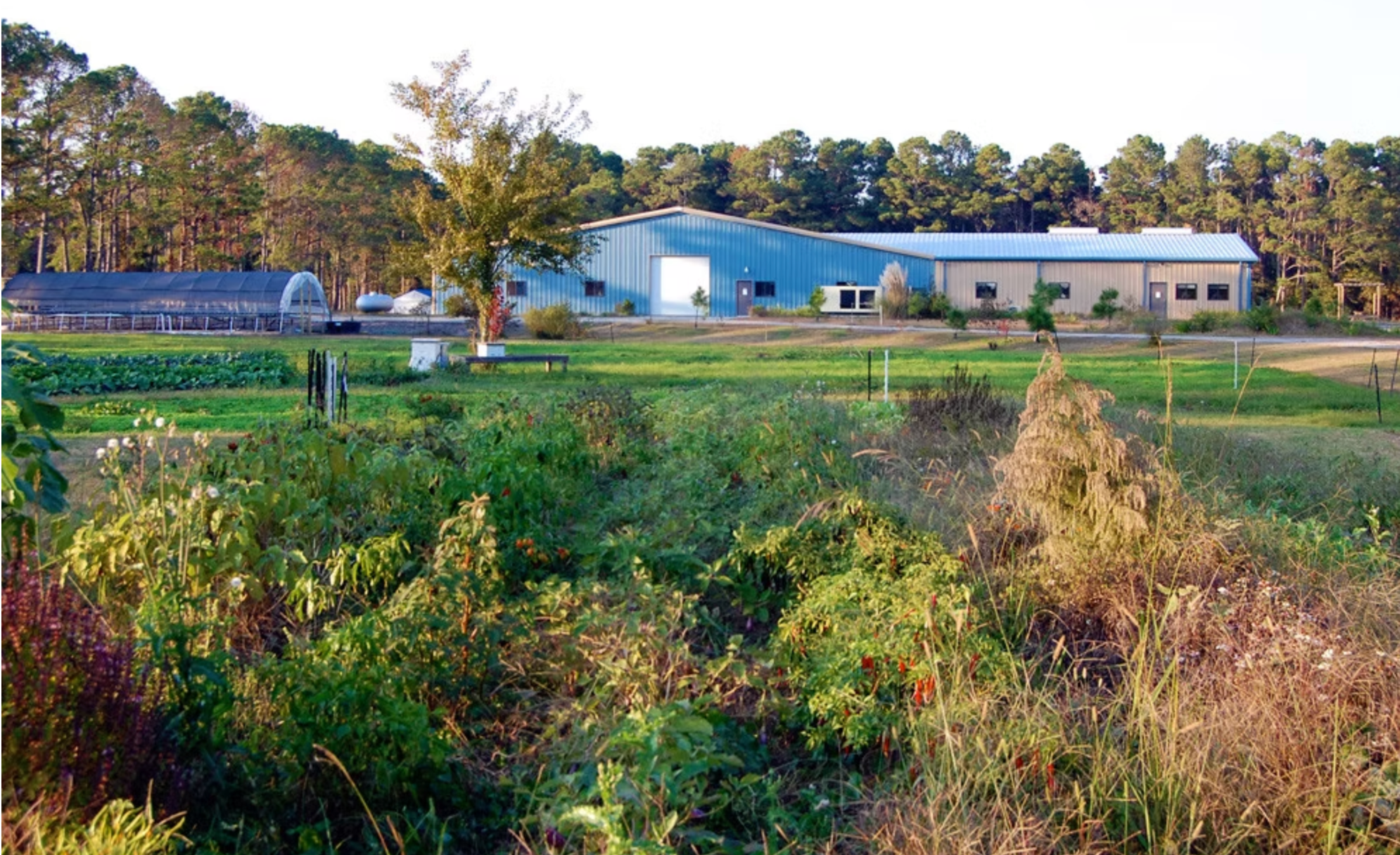
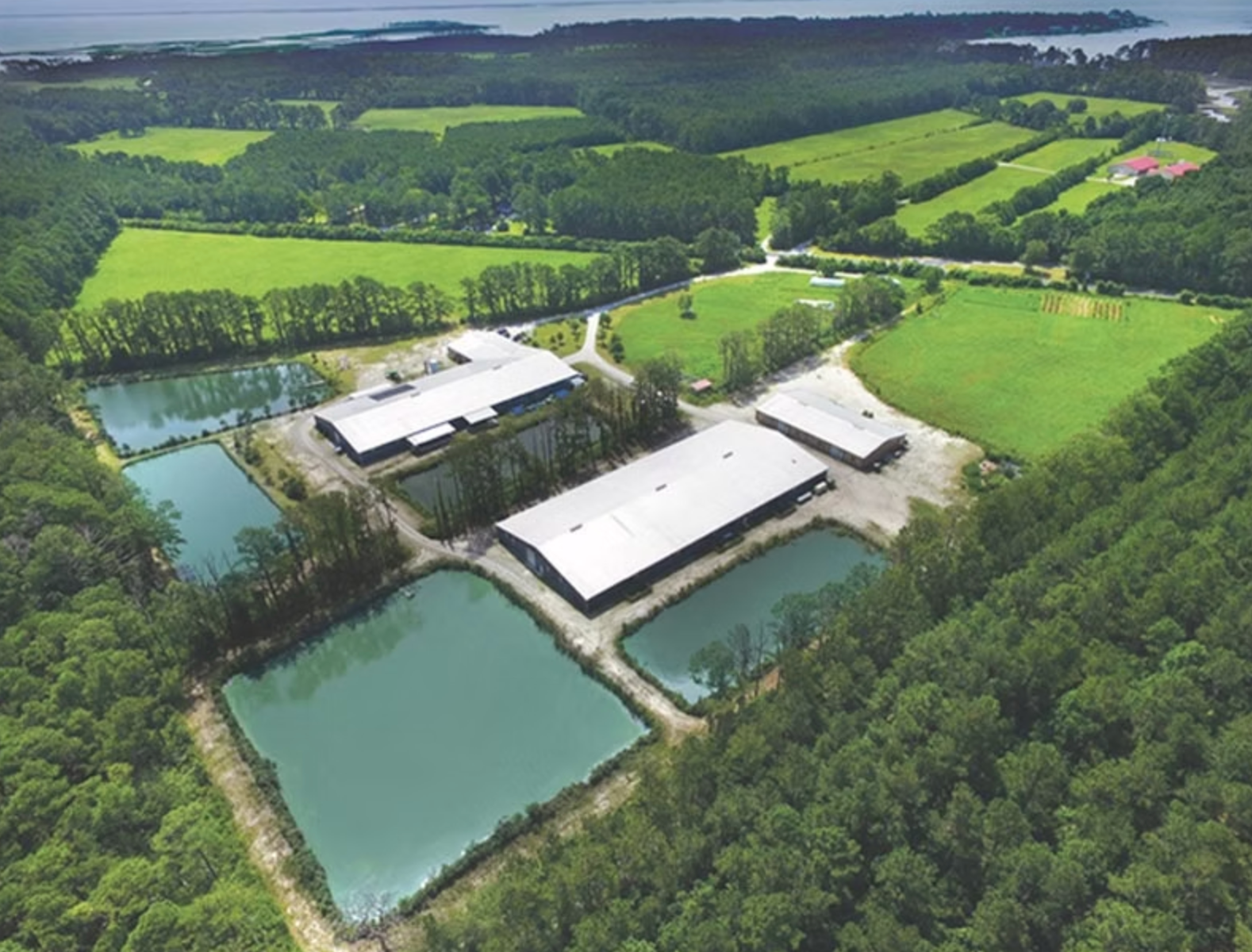
In the rolling countryside of North Carolina, Marshallberg Farm is redefining what caviar can be—and where it comes from. While over 80% of caviar consumed in the U.S. is imported from Chinese farms, this family-owned operation is producing world-class Osetra caviar right here at home. Using state-of-the-art recirculating aquaculture systems (RAS), Marshallberg raises Russian sturgeon in crystal-clear, filtered water that’s recycled and purified over 95% of the time - ensuring pristine conditions, zero environmental discharge, and world-class product purity. The result is caviar that’s fresh, buttery, and made without borax or added preservatives - just pure, hand-harvested Osetra pearls. Rated a “Best Choice” for sustainability by the Monterey Bay Aquarium’s Seafood Watch, Marshallberg stands as one of America’s most advanced and responsible sturgeon farm. When you choose their caviar, you’re not just savoring a delicacy - you’re supporting sustainable U.S. aquaculture and a new era of American craftsmanship in luxury seafood.
Russian sturgeon cultivated in harmony with nature
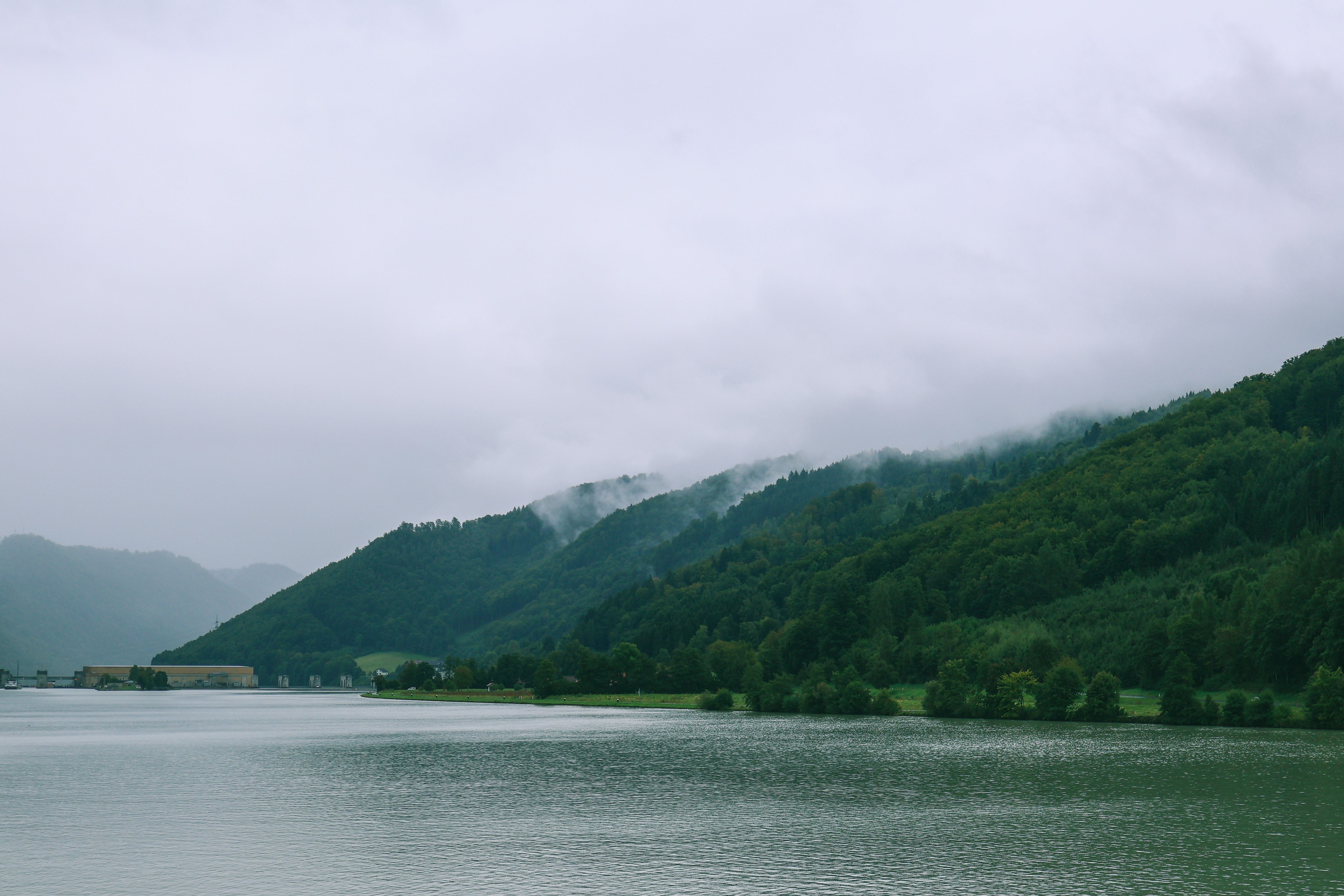
Located in the heart of North Carolina’s coastal plains, Marshallberg Farm draws on the region’s pure freshwater sources and temperate climate to cultivate Russian sturgeon in harmony with nature. The farm sits near jƒust inland from the Atlantic, where the balance of clean well water and advanced filtration technology creates ideal growing conditions for these ancient fish. Through a state-of-the-art recirculating aquaculture system (RAS), more than 95% of the water is continuously purified and reused, eliminating discharge to surrounding waterways. This closed-loop environment mirrors the flow of a pristine river system—oxygen-rich, stable, and meticulously controlled for purity. Far from industrial ports or pollution sources, Marshallberg’s location embodies precision and environmental stewardship, showcasing how inland aquaculture can produce ocean-quality seafood while protecting the watersheds of the American South.
Patience and precision
Marshallberg Farm is the vision of the Marshall family—American pioneers bringing the legacy of Russian Osetra caviar into a new era of sustainability. Founded by brothers Ivars and Tryggvi, and guided by a shared belief that the U.S. could produce caviar to rival the best in the world, the family built their dream from the ground up on North Carolina soil. Their team of aquaculture engineers and fish biologists manage every stage of production—from hatch to harvest—within fully recirculating aquaculture systems, ensuring complete control over water quality and fish welfare. It’s meticulous work that blends Old World tradition with American ingenuity. Every tin of caviar represents years of patience, precision, and respect for a species once pushed to the brink of extinction. For Marshallberg’s team, this isn’t just farming—it’s conservation in action, and proof that the world’s finest caviar can be produced sustainably, right here in the USA.
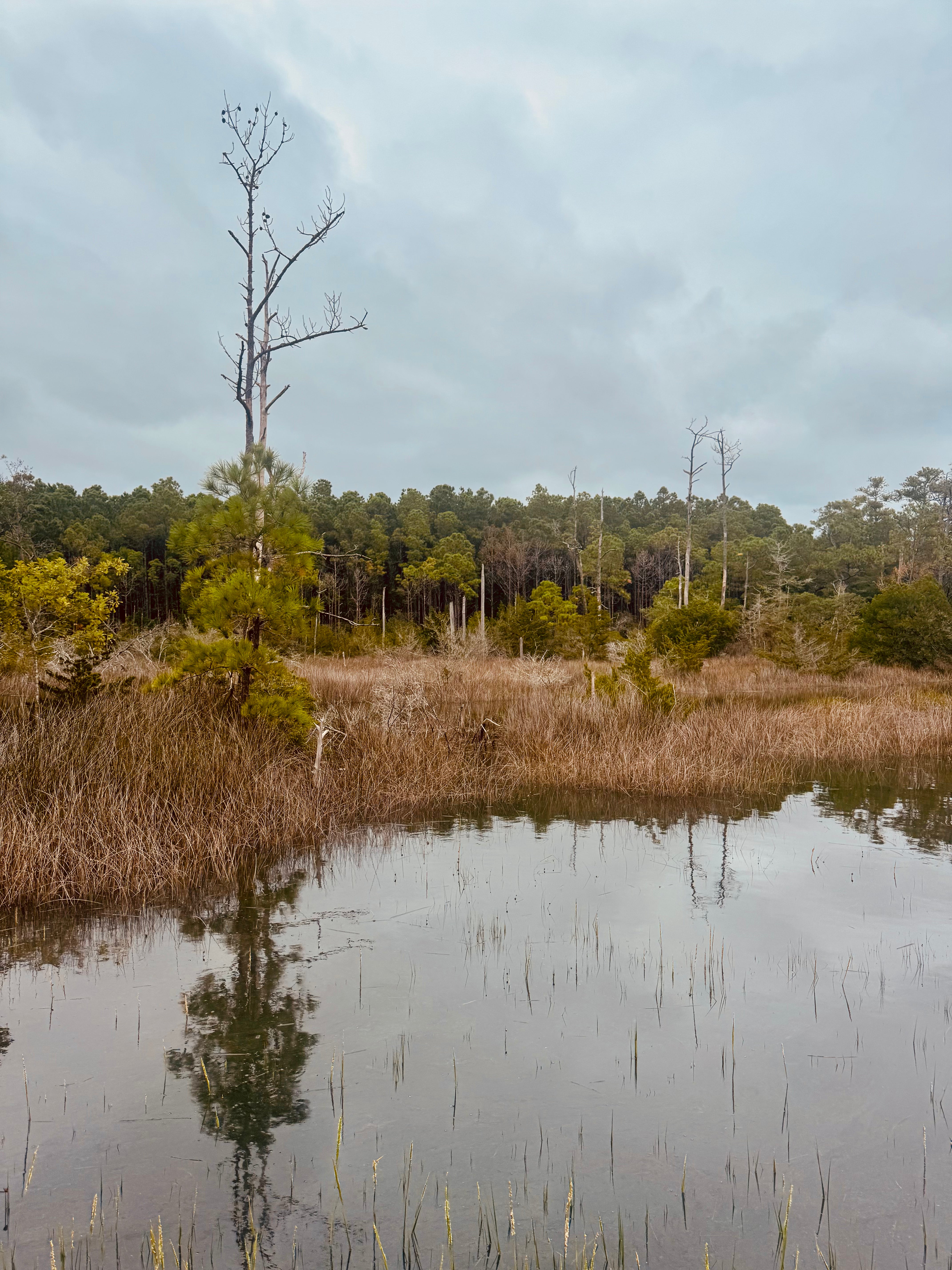
from Marshallberg Farm
Award-Winning Ostera Caviar
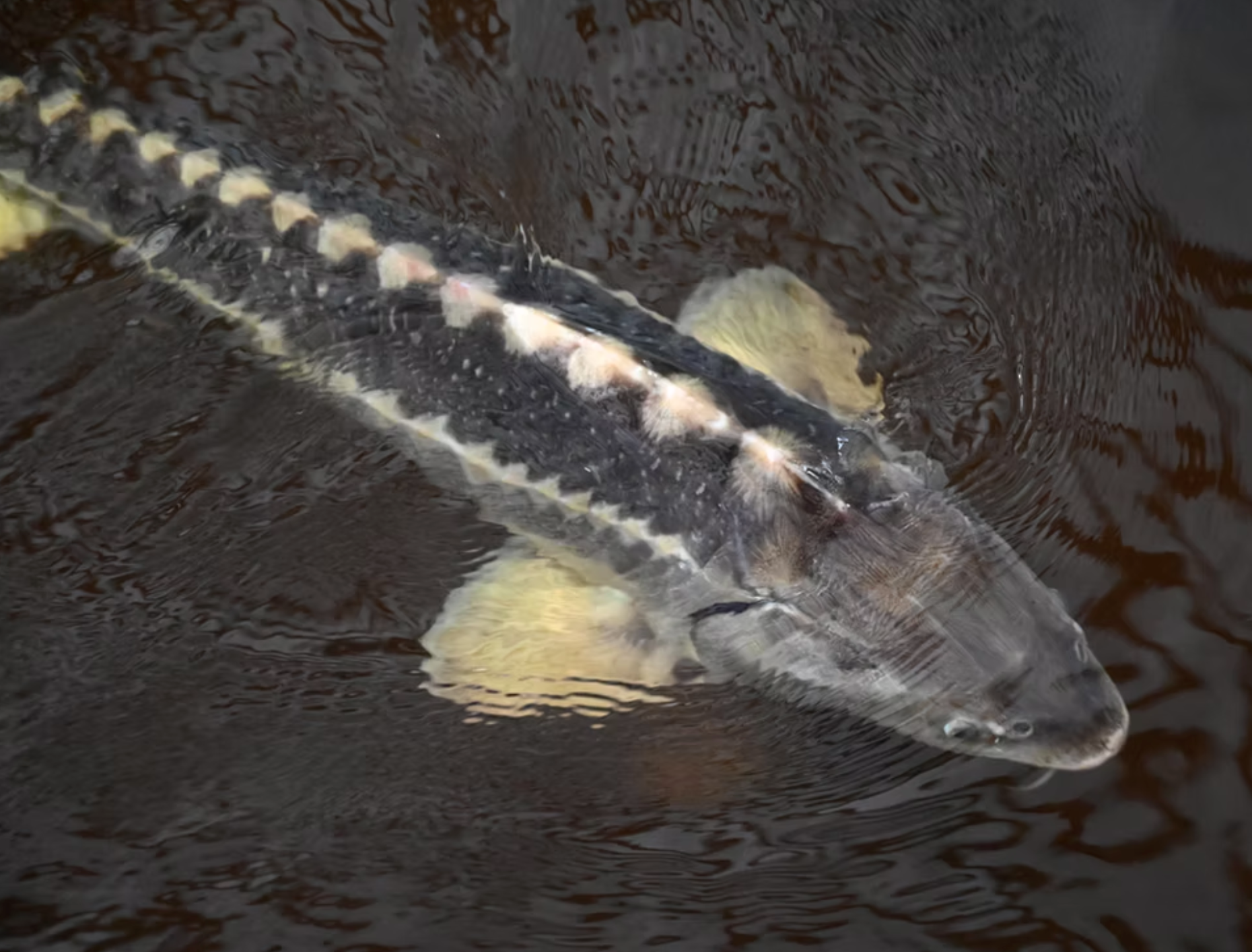
The Russian sturgeon is a living fossil—a prehistoric species that has swum the Earth’s rivers and seas for over 200 million years. These ancient fish, once abundant throughout the Caspian and Black Sea basins, are among the oldest lineages still alive today, predating dinosaurs and outlasting ice ages. Slow-growing and long-lived, they can take over a decade to mature, which has made them especially vulnerable to human pressures. Decades of overfishing, poaching, habitat loss, and industrial pollution in the Caspian Sea have driven wild populations to the brink of extinction; today, virtually all Osetra caviar comes from aquaculture.
At Marshallberg Farm, Russian sturgeon are raised in a fully closed-loop, recirculating aquaculture system (RAS) that safeguards the species’ future while producing caviar of extraordinary quality. Every fish is nurtured from hatch to harvest under pristine, meticulously filtered water conditions, free from antibiotics, hormones, or chemical preservatives. Fed a premium diet formulated specifically for Acipenser gueldenstaedtii, these sturgeon develop the firm texture and nutty, buttery flavor that define true Osetra caviar. Beyond luxury, each harvest represents a conservation victory—a sustainable alternative that relieves pressure on one of the planet’s most endangered animal families. Majestic, resilient, and deeply symbolic, the Russian sturgeon embodies the possibility of restoration through responsible aquaculture.

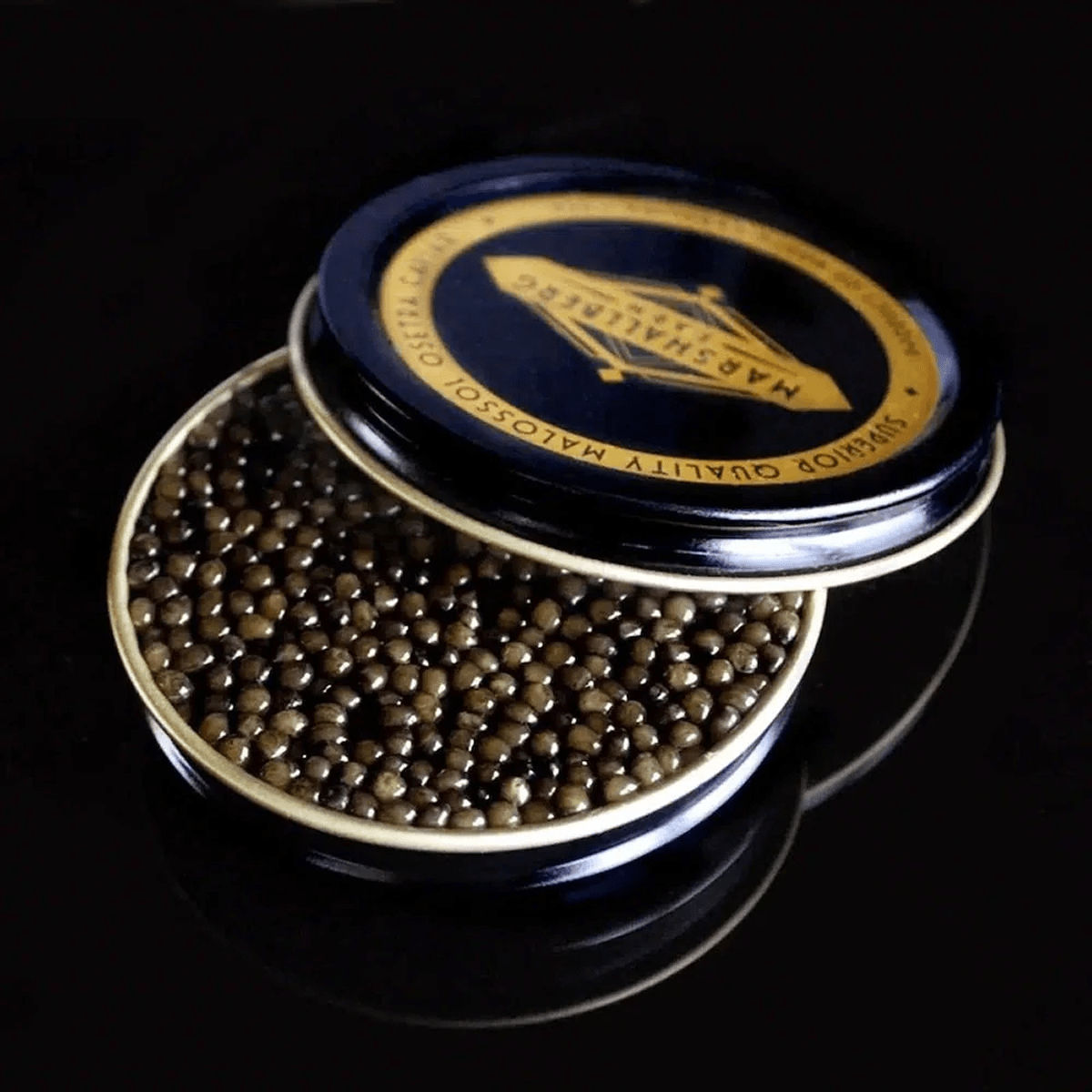
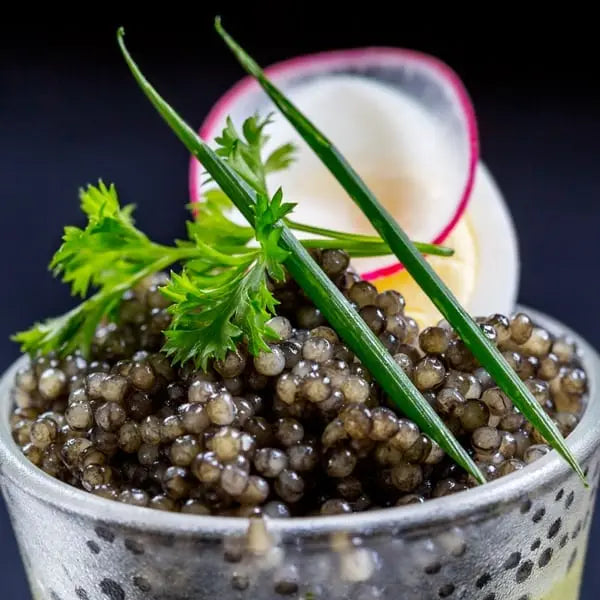
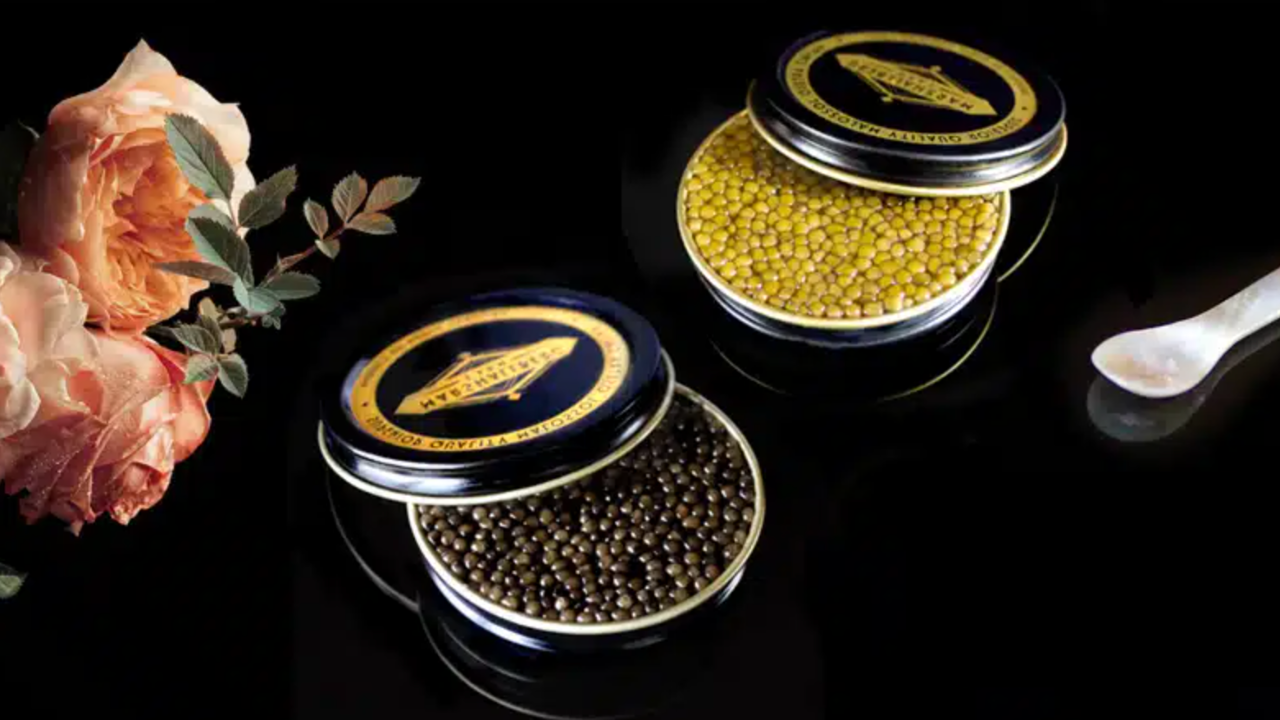
Firm, glossy dark amber gems brimming with buttery, nutty elegance. Elevate blinis, canapés, or champagne toasts with these timeless treasures.
What do the fish eat? - Fish feed FAQ
Feed is the single biggest factor in how clean and how nutritious a fish is. A fish is built from what it eats, which means the feed decides its omega-3s, its mineral profile, and how much mercury or microplastic it carries. That's why we treat feed as a sourcing requirement rather than a farm detail, and why every farm we work with has to tell us exactly what goes into the pellet.
Feed varies by farm, by species, and by stage of growth. The ingredients and the rules below hold across all of them.
What can be in it?
Algae oil:
The original source of EPA and DHA omega-3s. Fish don't make omega-3s, they accumulate them from what they eat. Algae is where those fats come from in the ocean too.
Marine ingredients (fishmeal, fish oil):
Protein and fats in the form fish evolved to digest. We work to reduce this share over time, not eliminate the nutrition it provides. A large amount of marine ingredients already come from offcuts, meaning parts of fish that are not suitable for human consumption, and so reducing ocean impact further.
Plant proteins (soy, pea, barley, corn, pistachio):
Non-GMO, high-protein, highly digestible. Replaces wild-caught protein without issues for the fish, reducing ocean impact.
Amino acids and minerals:
Fills the specific nutritional gaps plant proteins leave, so nothing is missing from the diet.
Astaxanthin:
A naturally occurring carotenoid, the same one found in kelp, krill and shellfish. It's an antioxidant for the fish and the reason salmon flesh is pink.
What's never in it?
Preventative antibiotics, hormones, GMOs, synthetic colouring agents.
Why is there plant protein in fish feed?
Because the alternative is more wild fish. Aquaculture used to run almost entirely on fishmeal and fish oil, which meant catching enormous volumes of small wild fish to grow larger ones. Swapping part of that for high-protein plants takes pressure off those wild stocks while still giving the fish bioavailable protein.
There's a second reason: wild fish carry what the ocean carries. Less wild fish in the feed means less mercury, fewer microplastics and lower parasite risk arriving in your fillet. A controlled diet is what makes a clean fish possible.
Are the fish dyed?
No. Post-harvest colouring agents are prohibited across everything we sell. Colour comes from astaxanthin in the feed, a natural carotenoid found in kelp, krill and shellfish. Wild salmon get their colour the same way. So do flamingos.
Lab tested to ensure it meet's the Seatopia Standard™
At Marshallberg Farm, Russian sturgeon are raised in a fully closed-loop, recirculating aquaculture system (RAS) that safeguards the species’ future while producing caviar of extraordinary quality. Every fish is nurtured from hatch to harvest under pristine, meticulously filtered water conditions, free from antibiotics, hormones, or chemical preservatives. Fed a premium diet formulated specifically for Acipenser gueldenstaedtii, these sturgeon develop the firm texture and nutty, buttery flavor that define true Osetra caviar. Beyond luxury, each harvest represents a conservation victory—a sustainable alternative that relieves pressure on one of the planet’s most endangered animal families. Majestic, resilient, and deeply symbolic, the Russian sturgeon embodies the possibility of restoration through responsible aquaculture.