Get started quantifying your Omega Index with Seatopia
Register your test kit below. You'll need the barcode printed on your kit and the email address where you want your results sent.

What happens next
Three steps from here:
- Take your sample. Follow the instructions inside your kit. It takes a few drops of blood from a finger prick, done at home in a few minutes.
- Send it to the lab. Seal your sample in the return packaging and mail it to OmegaQuant.
- Get your number. Results typically arrive within 2 to 4 weeks.
Your results, and what to do with them
Test, eat, test again
Your first result is a baseline. Retest in a few months to see how your eating is reflected in your number.
Log in to your Seatopia account to see your results and track them over time.
Mini FAQ
Lost your barcode?
Contact us at nemo@seatopia.fish and we'll help you locate it.
Already mailed your sample but didn't register?
Register now with the barcode on your kit so the lab can match it. Use the above form on this page to register your kit.
Who sees my results?
Your results are private to you in your Seatopia account.
What impact does Omega 3 have on my health?
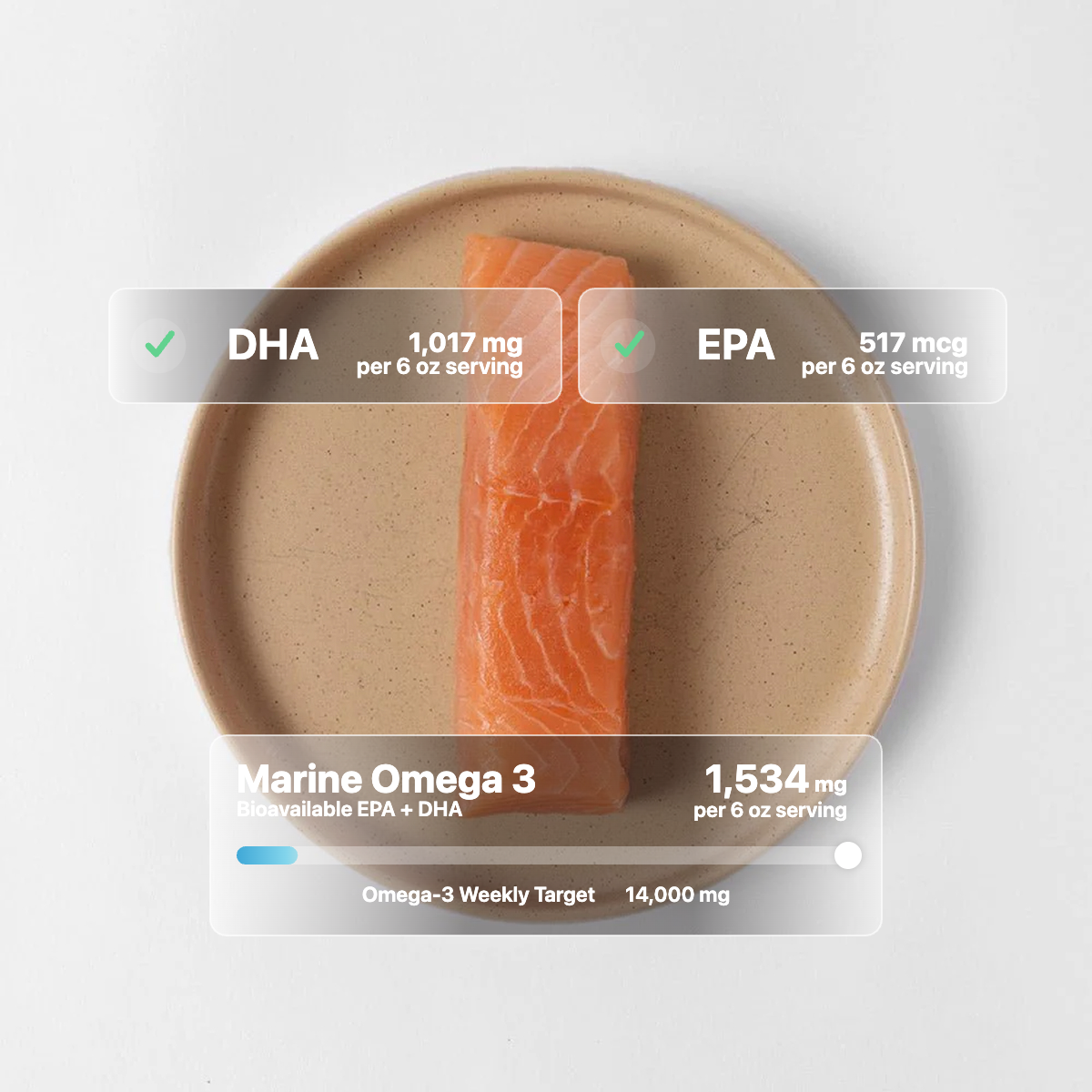
EPA and DHA, the omega-3s your Omega Index measures, contribute to the normal function of the heart, and DHA contributes to the maintenance of normal brain function, with a daily intake of 250 mg. EPA and DHA are also building blocks for resolvins and protectins, compounds your body uses in its natural inflammation response. Seafood is the most direct food source of both.
How the Index Ranges Affect Your Health
The index is typically divided into three primary health risk zones:
- Optimal Range (8% to 12%): This is the ultimate target zone. Individuals in this range have the lowest risk of sudden cardiac death and display better overall brain and joint function. This level is common in countries with high-fish diets, such as Japan.
- Intermediate Range (4% to 8%): This indicates moderate health protection. You are getting some omega-3s, but your tissues are not fully saturated.
- High-Risk Range (Below 4%): This represents a severe deficiency. Research indicates that individuals in this zone face up to a 90% higher risk of sudden cardiac death compared to those in the optimal range. Unfortunately, due to Western dietary patterns, nearly 89% of the U.S. population falls into this high-risk category.