The Seatopia Journal · Food science
Freshness is something you preserve.
What fishy odors, delicate omega-3s, and the journey from farm to fork reveal about truly exceptional seafood.
By Seatopia · Science, sourcing & a better dinner

We’ve learned to look for “fresh” seafood. Somewhere along the way, we also learned to expect it to smell fishy.
Those two expectations deserve a closer look.
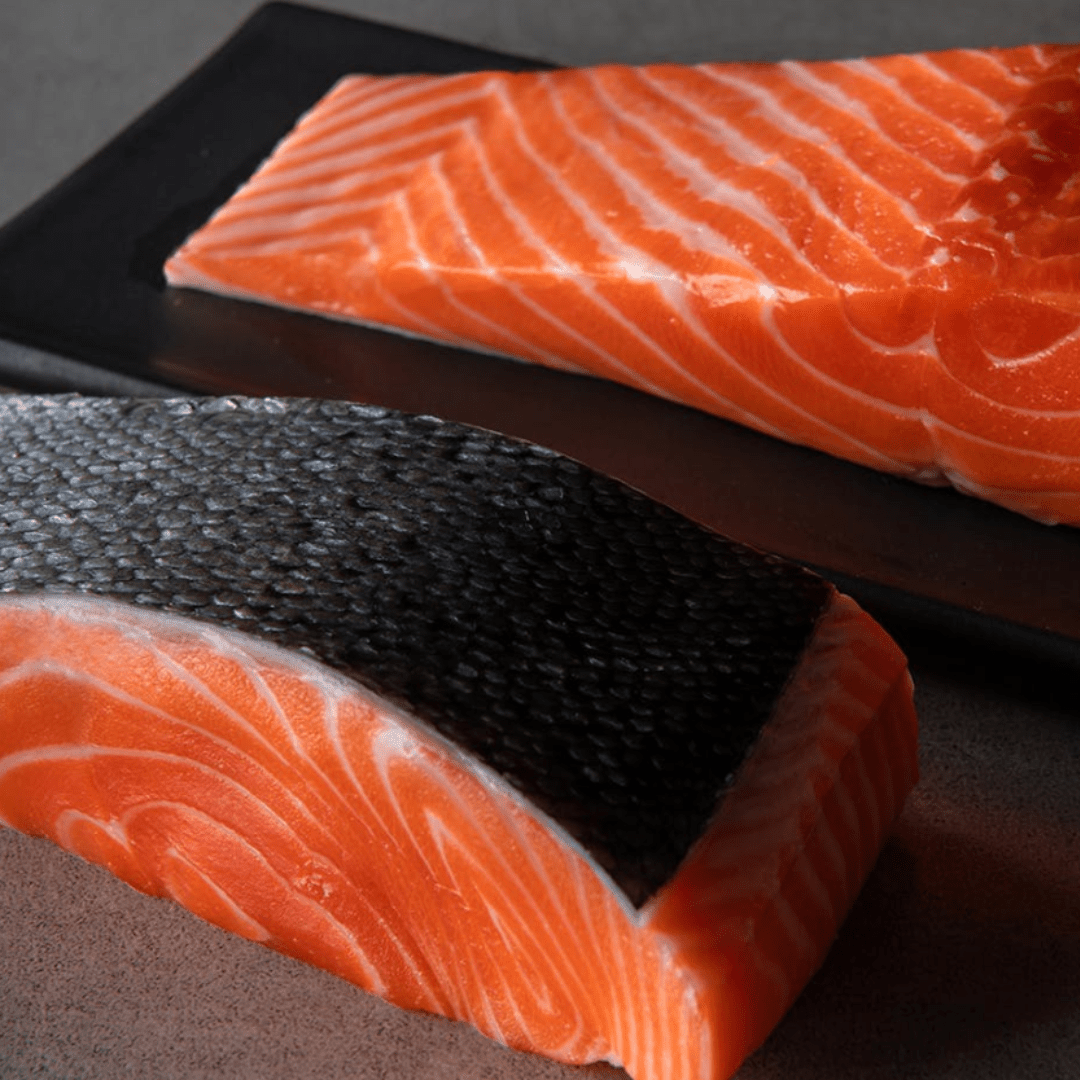
A beautiful fillet on crushed ice can look like the very definition of freshness. But a display tells you surprisingly little about the time, temperatures, and handling that brought it there.
The more useful question is: how well has this fish been cared for?
At Seatopia, that question connects everything: the farms we choose, the way seafood is handled, the freezing and packaging that protect it, and the independent testing that helps us understand what’s inside. The chemistry explains why.
01 / Follow the chemistry
That fishy smell has a story.
Many marine fish naturally contain trimethylamine N-oxide, usually shortened to TMAO. After the fish dies, certain spoilage bacteria can convert it into trimethylamine, or TMA: a compound associated with that familiar fishy odor. Species, temperature, and handling all influence how spoilage develops. (FAO, n.d.)
That helps explain a useful piece of shopping advice: the FDA says fish should have a mild, fresh smell. Strong fishy, sour, rancid, or ammonia-like odors are reasons to pass it by. (FDA, n.d.)
Different species have different natural aromas. The point is that a powerful off-odor is something to take seriously, rather than something to disguise with lemon.
A mild smell is a quality clue, not proof of safety. Safe handling and temperature control still matter.
02 / Protect what makes fish valuable
Omega-3s deserve careful treatment.
Odor tells another story, too. Fish fats can react with oxygen in a process called lipid oxidation. In oily fish, that process contributes to rancid aromas and flavors, and it can continue during frozen storage. (FAO, n.d.)
EPA and DHA, the long-chain omega-3 fatty acids found in seafood and marine oils, are particularly susceptible to oxidation. Their chemistry makes protection from oxygen, light, and heat an important part of maintaining oil quality. As oxidation progresses, it creates primary products such as lipid peroxides and a changing mixture of secondary breakdown products. (Albert et al., 2013)
Bacterial spoilage
The TMA pathway
Certain bacteria transform TMAO into a compound associated with fishy odor.
Lipid oxidation
The rancidity pathway
Fats react with oxygen, producing compounds that can affect aroma and flavor.
These are different processes. Smelling a fillet cannot tell you its EPA and DHA content or give you a complete measurement of its oxidative condition. (FAO, n.d.)
How researchers measure oxidation.
Oil testing commonly looks at more than one stage of the process:
- PVPeroxide value
- Measures primary oxidation products. A 2015 survey of fish oils used a voluntary limit of 5 mEq/kg.
- AVAnisidine value
- Assesses certain secondary oxidation products. The same survey used a limit of 20.
- TOTOXTotal oxidation value
- Combines the two: TOTOX = 2 × PV + AV. The same survey used a limit of 26.
Peroxides can break down as oxidation advances, so a low PV alone can be misleading. These voluntary benchmarks assess oil quality; they are not established thresholds for harm in people. (Jackowski et al., 2015) (Albert et al., 2013)
A review of oxidized marine oils highlighted gaps in the human evidence. Laboratory and animal findings do not, by themselves, demonstrate that oxidation levels measured in retail supplements cause human illness. (Albert et al., 2013)
We can make the case for thoughtful preservation without overstating the health evidence. Flavor, quality, and transparency are already worth protecting.
What happened to the fish matters more than a word on the label.
03 / Preserve the quality you start with
Rethinking the freezer.
“Never frozen” tells you one thing about a fish’s history. It doesn’t tell you how quickly it was chilled, how long it traveled, or how consistently it stayed cold.
NOAA notes that frozen seafood can be an excellent choice because a catch may be processed and frozen promptly. A well-managed frozen supply chain offers a way to preserve quality early, rather than relying on a short refrigerated selling window. (NOAA Fisheries, 2023)
Freezing technique matters. Ice formation affects muscle structure, which is one reason researchers study how freezing and thawing methods influence fish texture. Methods that produce finer, more uniform crystals can reduce structural damage. (Alizadeh, 2012)
But freezing cannot restore quality already lost. It also doesn’t stop every change: fats can still oxidize during frozen storage. Temperature, time, and packaging remain part of the story. (FAO, n.d.)
That’s why our seafood is blast-frozen to -10°F at harvest and vacuum sealed: the aim is to protect the quality the farm starts with.

A smaller detail with a big role
Less air. More care.
Freezing and packaging work together. Vacuum sealing removes much of the air around a portion, while suitable packaging helps limit oxygen exposure and moisture loss.
NC State Extension recommends airtight protection to help prevent freezer burn and preserve seafood quality. (NC State Extension, n.d.)
At Seatopia, vacuum-sealed portions and frozen distribution are part of how we care for the fish all the way to your freezer.

04 / Start long before the freezer
Better seafood begins with better care.
Preservation is one chapter in a much longer story.
Harvest and handling affect the quality a producer has available to preserve. Prompt dispatch, careful handling, and rapid chilling are practical measures that help protect fish quality. Rough treatment can bruise flesh; delays in chilling create opportunities for deterioration. (NC State Extension, n.d.)
At Seatopia, we look at the whole journey: how seafood is raised, what it is fed, how it is harvested, and how it is handled afterward.
Well-run aquaculture offers an opportunity to plan that journey. Producers can coordinate harvests, processing, and preservation, and document the steps along the way. That’s an opportunity we value, and a reason to ask detailed questions of every farm.
Excellent handling also exists in wild fisheries, and farming alone guarantees nothing. The practices are what count.
The Seatopia Standard
Some things deserve a lab report.
You can appreciate a fillet’s texture and aroma. You can’t determine its mercury concentration or count its milligrams of EPA and DHA by looking at it.
That’s why independent testing is part of our approach to transparency. Our published program includes:
- Mercury.Our limit is 0.1 ppm methylmercury – a tenth of the FDA action level.
- Microplastics.Tested for microplastics down to 1 micron. No microplastics detected in third-party testing.
- Nutrition.We test and publish omega-3, protein, selenium, vitamin D and B12.
Every supplier is third-party tested for nutrition, mercury and microplastics, then randomly audited to ensure consistent compliance with the Seatopia Standard.
“Not detected” means below the detection capability of the method used. It doesn’t prove the absolute absence of every particle in every portion. Nutrient results also describe tested samples and can vary by lot. (Seatopia, n.d.)
A nutrient panel and an oxidation test answer different questions. Reporting EPA and DHA content alone does not establish a fillet’s oxidative condition.
A whole-food way to enjoy omega-3s.
For people who enjoy fish, whole seafood brings something a capsule cannot: a meal.
Alongside marine omega-3s, you’re enjoying protein, flavor, and naturally occurring nutrients whose amounts vary by species and sample. You’re also building a habit around food you look forward to eating.
Supplements can have a useful place, including for people who don’t eat seafood or have specific nutritional needs. Oil quality is a reason to choose carefully, not a reason to dismiss an entire category.
Our focus is the seafood on your plate: thoughtfully raised, carefully handled, and preserved with attention to temperature, oxygen, and time.

From the science to your supper
Expect more from your seafood.
A mild aroma. Beautiful texture. A clear story about where your fish came from and how it was cared for.
Those are better expectations than accepting a questionable smell as simply “how fish is.”
Thoughtful sourcing gives us quality worth protecting. Careful preservation helps us bring it home to you.
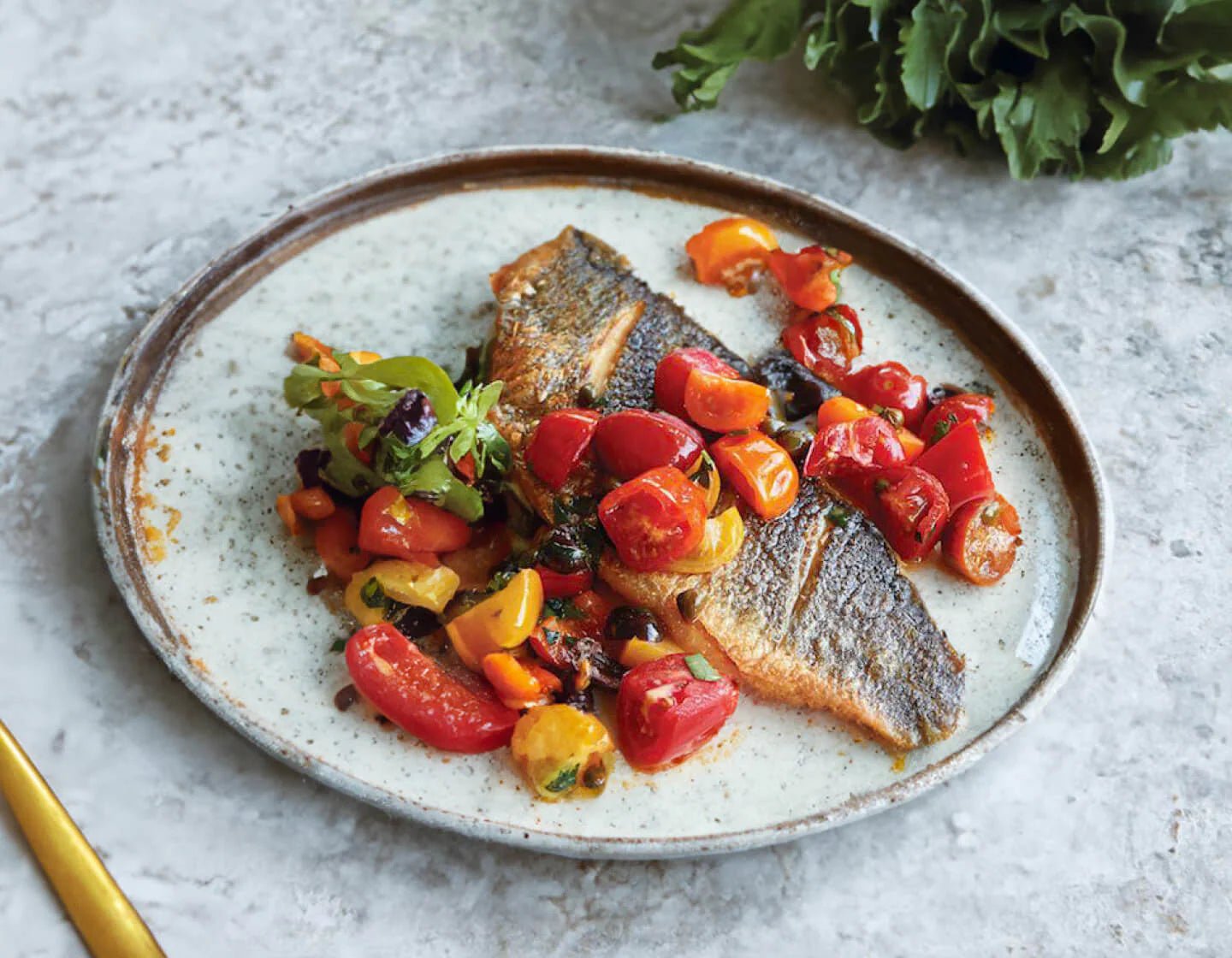
A little sea salt. A hot pan. An appetite.
Freshness worth sitting down for.
References & further reading
Peer-reviewed research informs the chemistry and oil-quality discussion. Seatopia’s own testing program is linked separately. Supplement surveys do not establish that Seatopia seafood is less oxidized than other seafood or supplements.
- Food and Agriculture Organization of the United Nations. (n.d.). Non-sensory assessment of fish quality.
- U.S. Food and Drug Administration. (n.d.). Selecting and serving fresh and frozen seafood safely.
- Albert, B. B., Cameron-Smith, D., Hofman, P. L., & Cutfield, W. S. (2013). Oxidation of marine omega-3 supplements and human health. BioMed Research International, 2013, 464921. https://doi.org/10.1155/2013/464921
- Jackowski, S. A., Alvi, A. Z., Mirajkar, A., Imani, Z., Gamalevych, Y., Shaikh, N. A., & Jackowski, G. (2015). Oxidation levels of North American over-the-counter n-3 (omega-3) supplements and the influence of supplement formulation and delivery form on evaluating oxidative safety. Journal of Nutritional Science, 4, e30. https://doi.org/10.1017/jns.2015.21
- NOAA Fisheries. (2023). Tips for buying quality seafood.
- Alizadeh, E. (2012). Freezing / thawing and cooking of fish. https://doi.org/10.5772/33396
- NC State Extension. (n.d.). Preserving your catch & purchase: A guide to freezing and thawing seafood at home.
- Seatopia. (n.d.). Our testing program.