Seafood 201: Nobu-Style Miso-Glazed King Salmon Bento Box
- por Miriam Thom

From the Seatopia kitchen In-house
Recipe by Miriam Thom
Culinary Education at Seatopia — she develops the recipes that ship with the boxes and teaches the member cooking classes
Serves 4 · 48 hours in the marinade, 10 minutes under the broiler
A 48-hour miso cure, then five minutes under the broiler. That is the whole recipe, and the long wait is doing something specific: saké, miso and coconut sugar reduced to a glaze, then given two days to work into the fillet so the caramelised edge is not just a coating on the outside.
Built into bento boxes it becomes a week of lunches. The salmon is as good at room temperature as it is warm, which is unusual for fish and the reason this one is built for meal prep rather than for dinner tonight.
48 hours, almost all of it waiting
The glaze takes about 10 minutes on the stove, the broiler takes 5. Everything in between is the refrigerator doing the work. Start it Friday, eat it all week.
Serves 4, or four lunches
Four fillets and a cup of sushi rice fills four bento boxes. Scaling up is just more fillets — the marinade quantity stretches further than you expect.
1,140 mg EPA + 2,290 mg DHA
Per 8.5 oz Seatopia King Salmon fillet, marine-derived, as listed on the pack. The roe on top adds a little more.
As good cold as hot
The miso glaze keeps its caramelised edge at room temperature, which most cooked fish does not. That is what makes these work as grab-and-go boxes.
Know the marinade
This is a cure more than a marinade. Miso is salty and full of enzymes, and given two days it draws moisture out of the fillet and pushes flavour in, firming the flesh and leaving sugars at the surface that caramelise the moment they meet the broiler. Rush it and you get salmon with sauce on it — pleasant, but not the thing Nobu made famous.
48 hours As written
Flavour all the way through, flesh noticeably firmer, and a glaze that lacquers rather than sits on top. Turn the fillets once at the halfway mark.
24 hours
The honest compromise, and still very good. The outer quarter-inch is seasoned; the centre tastes of salmon. Caramelises almost as well.
4 hours or less
A glaze, not a cure. Fine on a weeknight if you brush extra marinade on before broiling, but do not expect the texture change — that is what the time buys.
Pips are relative depth across the three, not a measurement. Past about 72 hours the salt starts working against you and the texture turns dense, so 48 is a ceiling as well as a target.

Fully submerged, covered, and turned once at the halfway mark.
Chef Miriam Thom
4
48 hours
10 minutes
Japanese
Seafood Entrée
Allow us to introduce the most mouthwatering way to prepare King Salmon. Marinated for 48 hours in saké, miso, and coconut sugar, this salmon turns deeply caramelized served warm, yet stays delicate and refined at room temperature — one of our favorite proteins for meal prep.
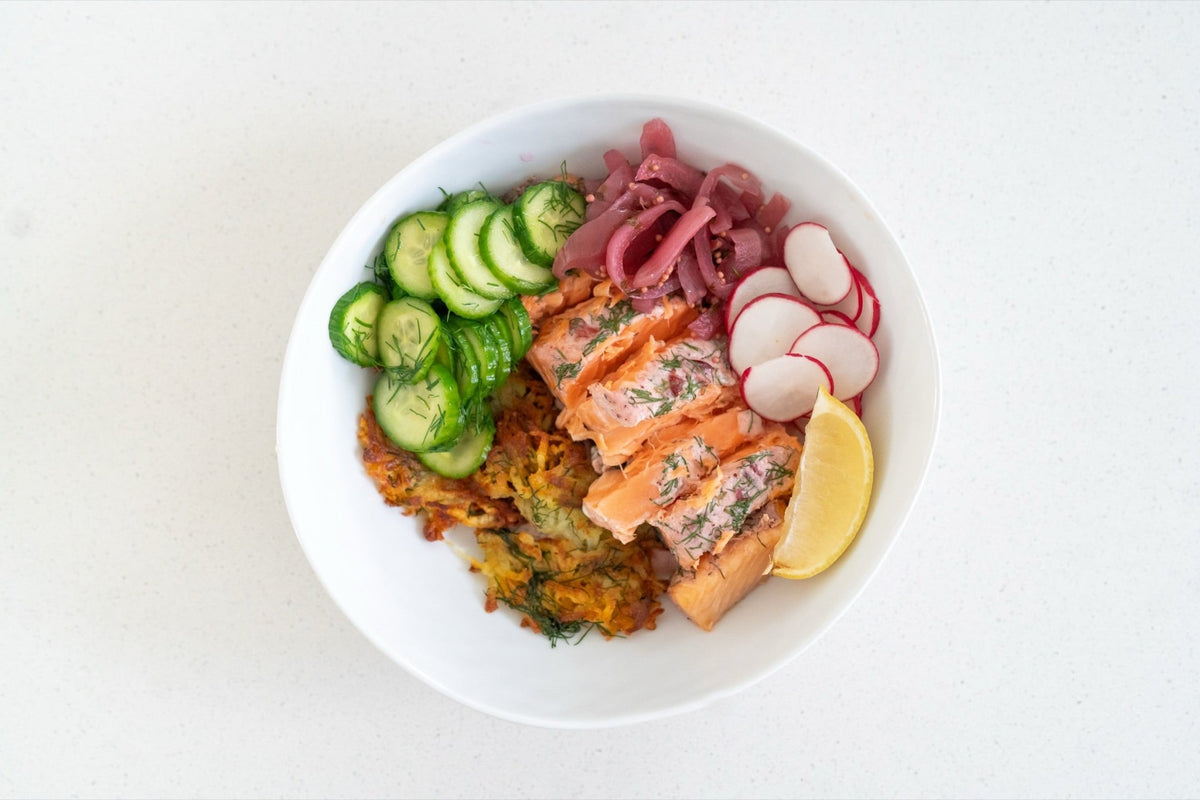
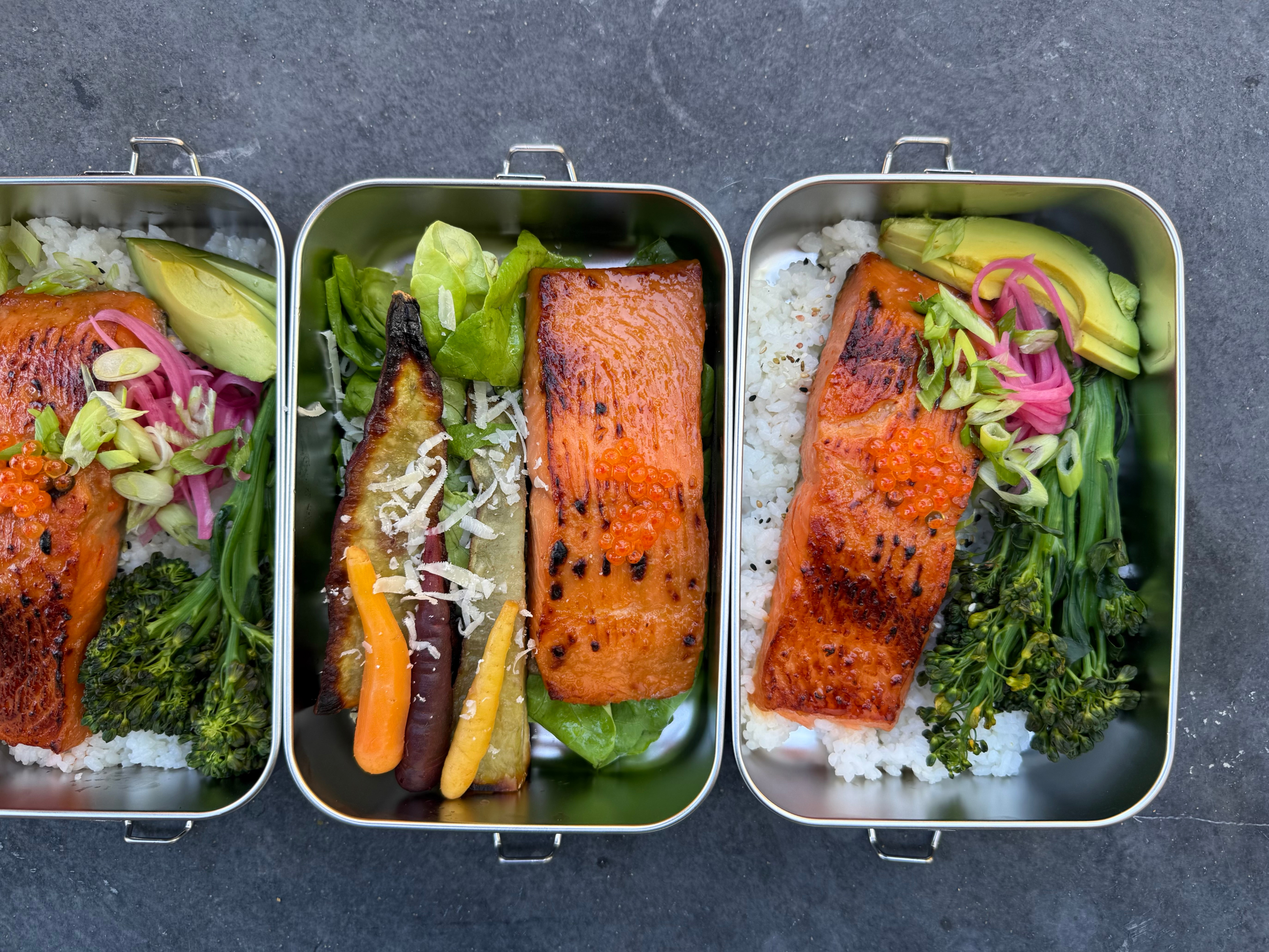
Building it into bento boxes means every meal is ready to grab for lunch, dinner, or a picnic. Start with the salmon as your protein, add a whole-food starch for steady energy, something green for fiber, something pickled for brightness, and finish with a healthy fat. Ours: sushi rice, blanched broccolini, pickled red onions, avocado, and a spoonful of salmon roe — but the formula holds for whatever's in season.

Gather your ingredients: King Salmon, organic saké, organic miso paste, organic coconut sugar, cooked organic sushi rice, organic purple broccolini, organic pickled red onions, organic avocado, fresh scallions, and salmon roe. You'll also need a saucepan, whisk, mixing bowl, parchment paper, baking sheet, and a broiler-ready oven. Each ingredient contributes to a dish loaded with omega-3s, antioxidants, and rich flavors, supporting heart health and overall wellness.
In a medium saucepan, pour 1/2 cup of organic saké and bring it to a gentle simmer over medium heat. Stir in 1/4 cup of organic miso paste, whisking until fully dissolved. Gradually add 2 tbsp of organic coconut sugar, whisking continuously. Simmer gently, stirring frequently, as the mixture thickens and reduces by half—about 10 minutes. Ensure the sauce does not stick or burn. Once reduced, remove from heat and let it cool completely before using. This miso glaze offers a blend of umami and sweetness, supporting digestive health with its probiotic-rich miso.
Transfer the hot marinade into a shallow bowl and place it in the refrigerator for 10–15 minutes to cool quickly. This step is essential to ensure the marinade doesn’t cook the salmon prematurely, preserving its delicate texture and flavor.
While the marinade cools, rinse the sushi-grade King Salmon fillets under cold water and pat them dry with paper towels, or tuna paper. Gently run your fingers over the flesh to check for any remaining pin bones, and remove them with tweezers if needed. This ensures a smooth and enjoyable dining experience.
Once the marinade has cooled, place the salmon fillets into a shallow dish. Pour the miso marinade over the salmon, ensuring all sides are evenly coated. Use your hands or a brush to gently massage the marinade into the fillets for maximum flavor absorption. Cover the dish with a reusable silicone lid or beeswax wrap and refrigerate for 48 hours, turning the fillets once halfway through to ensure even marination. This extended marination process allows the flavors to deeply penetrate, creating a rich, umami-packed glaze.
Remove the salmon from the refrigerator and gently scrape off any excess marinade using the back of a spoon or your fingers, taking care not to remove all the marinade—just the excess that might burn during cooking. Place the salmon fillets on a prepared baking sheet, then brush a thin, fresh layer of the reserved marinade over the top to enhance the glaze.
Place the baking sheet under the preheated broiler and broil the salmon for about 5 minutes, watching closely for deep golden-brown caramelization on the edges. Rotate the pan halfway through to ensure even cooking. For optimal results, use a meat thermometer to check the internal temperature, aiming for around 130°F for medium-rare.
Remove the salmon from the oven and let it rest on the baking sheet for 3–5 minutes. The residual heat will gently finish cooking the salmon, bringing it up to about 150°F for a perfectly tender and flavorful finish.
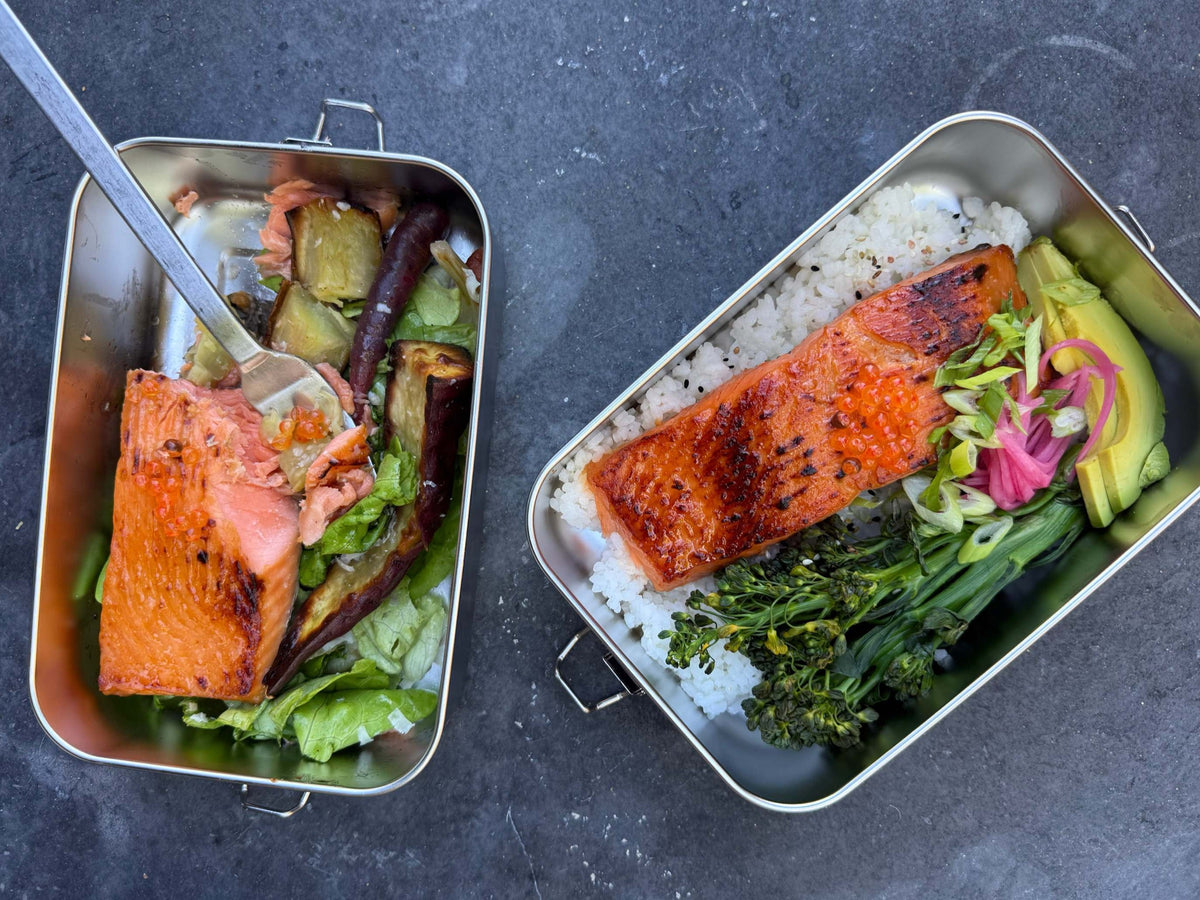
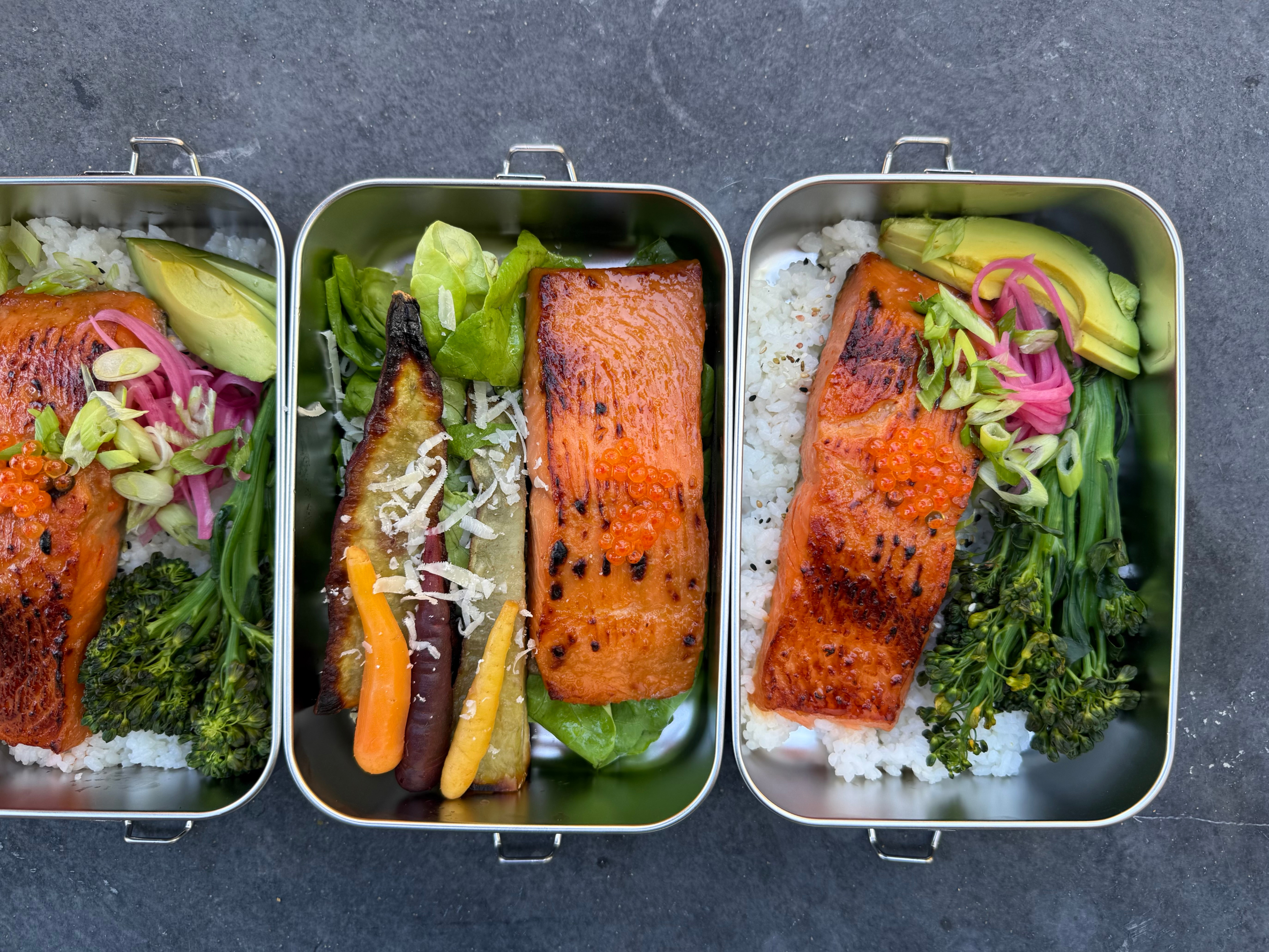
Build your bento. Divide the sushi rice evenly across your bento containers, then add the blanched broccolini, sliced avocado, and pickled red onions to each. Nestle the broiled salmon on top.
For the final touch, finish each box with a spoonful of salmon roe and a scatter of fresh scallions or brightness, a pop of color, and prebiotic benefits that support gut health.
Store for the week. Seal and refrigerate — the salmon holds its caramelized edge warm or at room temp, making these effortless grab-and-go meals for lunch, dinner, or a picnic.
Four King Salmon fillets is one full round of bento boxes. The roe goes on at the end and is the difference between a good lunch and one that looks like it came from somewhere expensive.
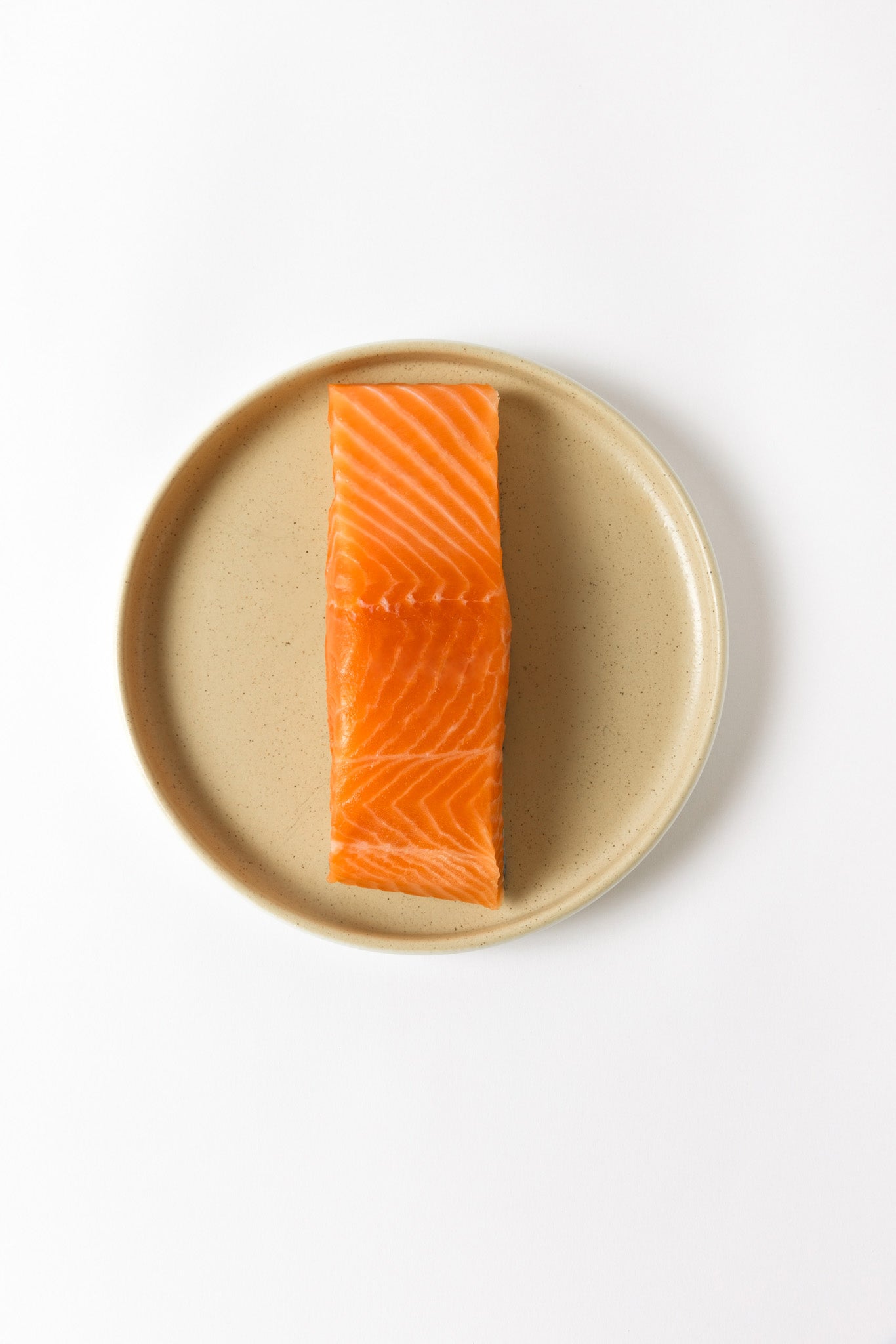
Unapologetically rich and velvety—Ōra King salmon, the gold standard for celebratory seafood
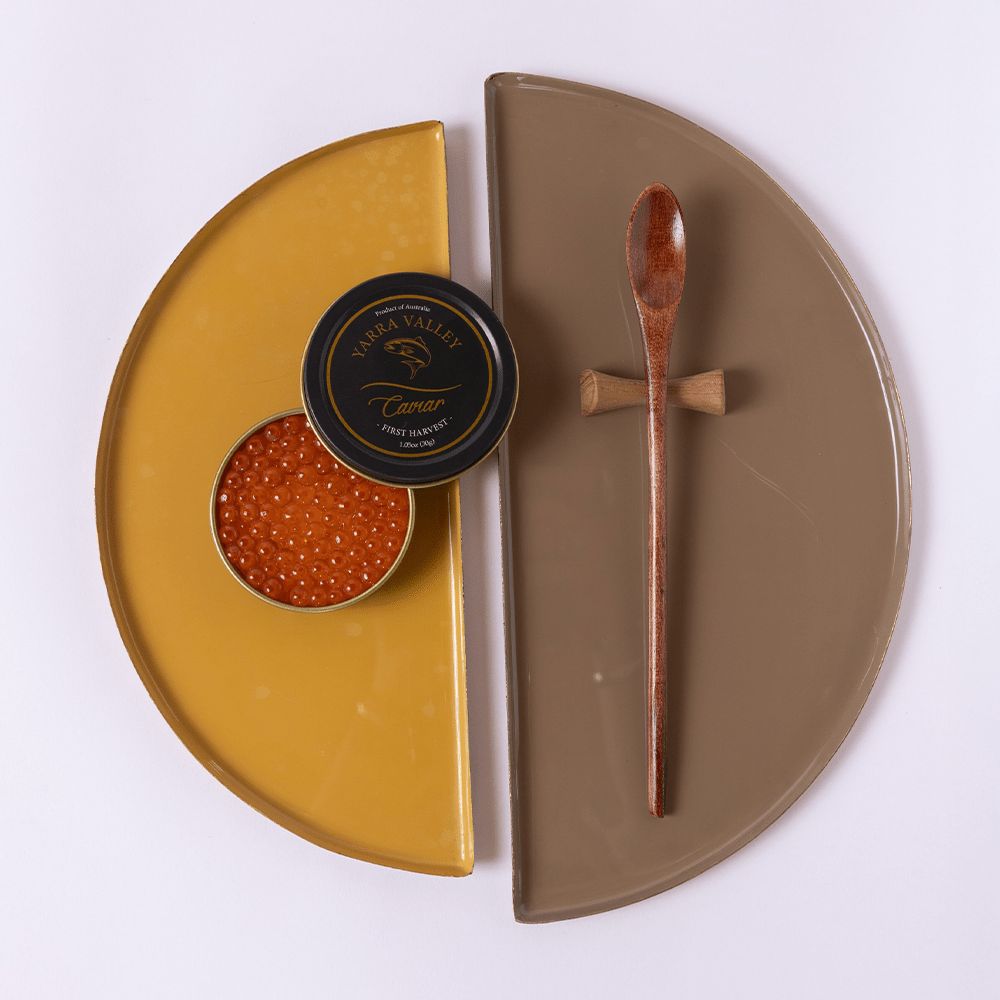
Plump, briny pearls bursting with oceanic flavor. Adorn sushi and sashimi with these gourmet gems
Only two moments need attention: cooling the marinade fully before the fish goes in, and standing at the broiler for five minutes. The two days in between look after themselves.
The night before
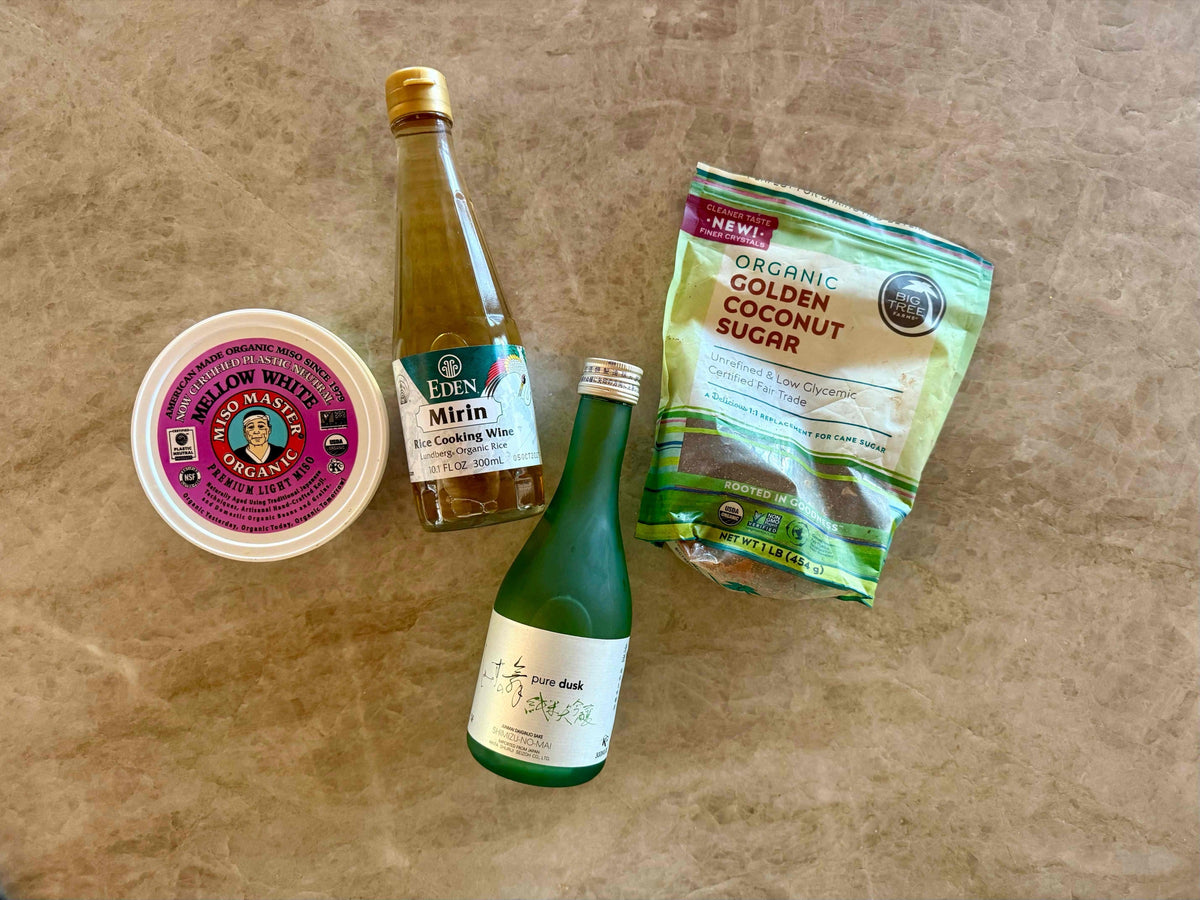
Move the sealed packs from the freezer to the refrigerator about 12 hours ahead. You will also want saké, miso, coconut sugar, sushi rice, broccolini, avocado, pickled red onions, scallions and a tin of salmon roe.
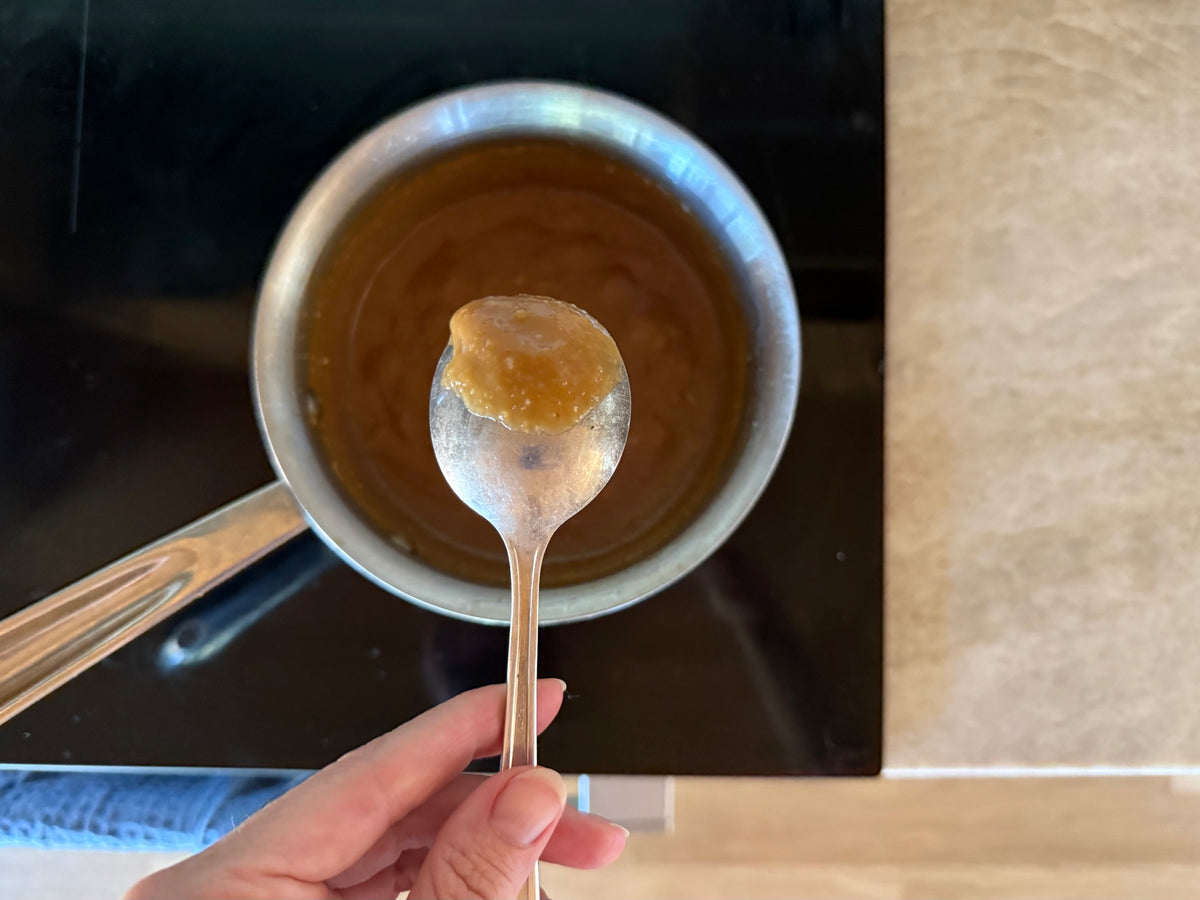
Step 1
Half a cup of saké to a gentle simmer. Whisk in the miso until it fully dissolves, then the coconut sugar. Keep it moving for about 10 minutes until it thickens and reduces by half. It catches easily at the end, so do not walk away.
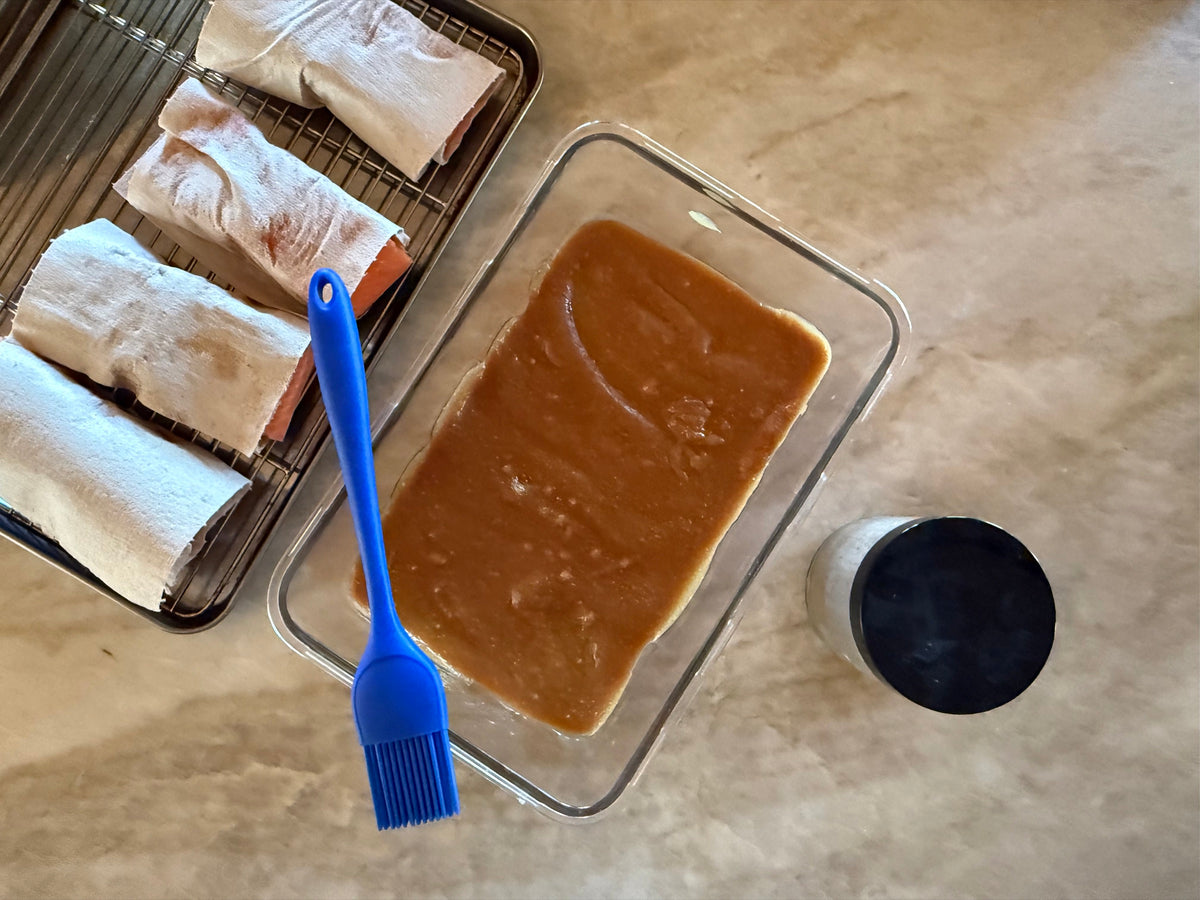
Step 2
Into a shallow bowl and straight into the refrigerator for 10–15 minutes. Warm marinade starts cooking the surface of the fish, and you lose the texture the cure is supposed to give you. Cold to the touch before it meets the salmon.
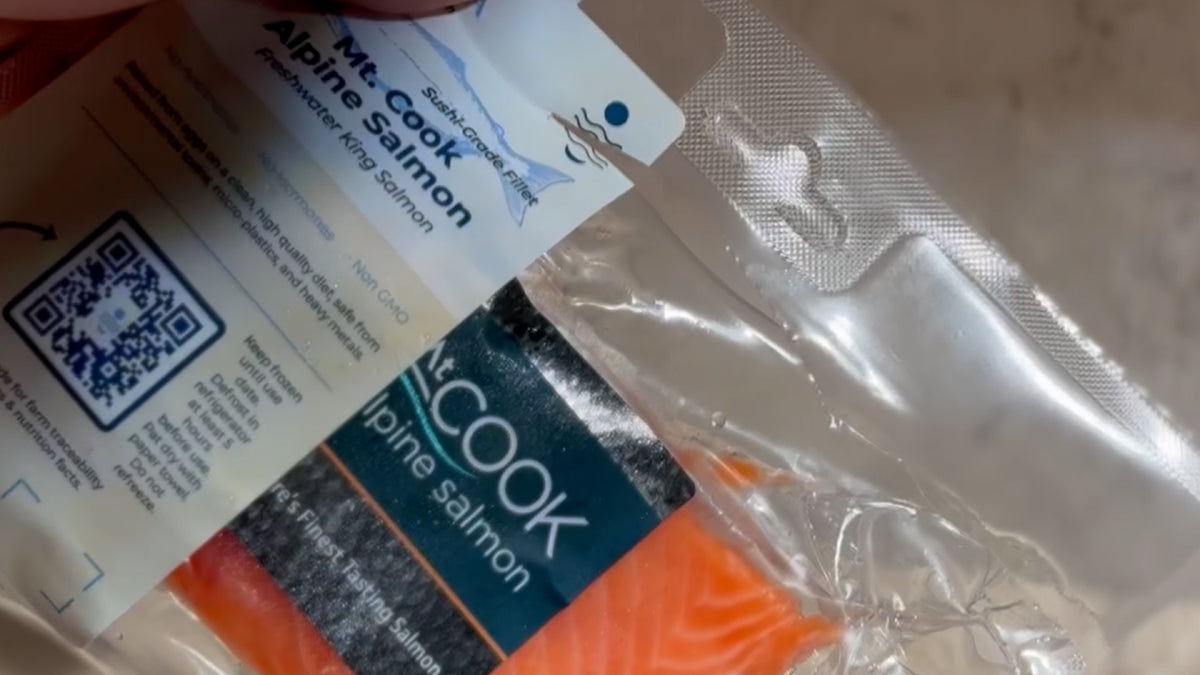
Step 3
Rinse under cold water and pat thoroughly dry. Run your fingers along the flesh and pull any pin bones with tweezers. Dry fish takes the cure evenly; wet fish dilutes it.
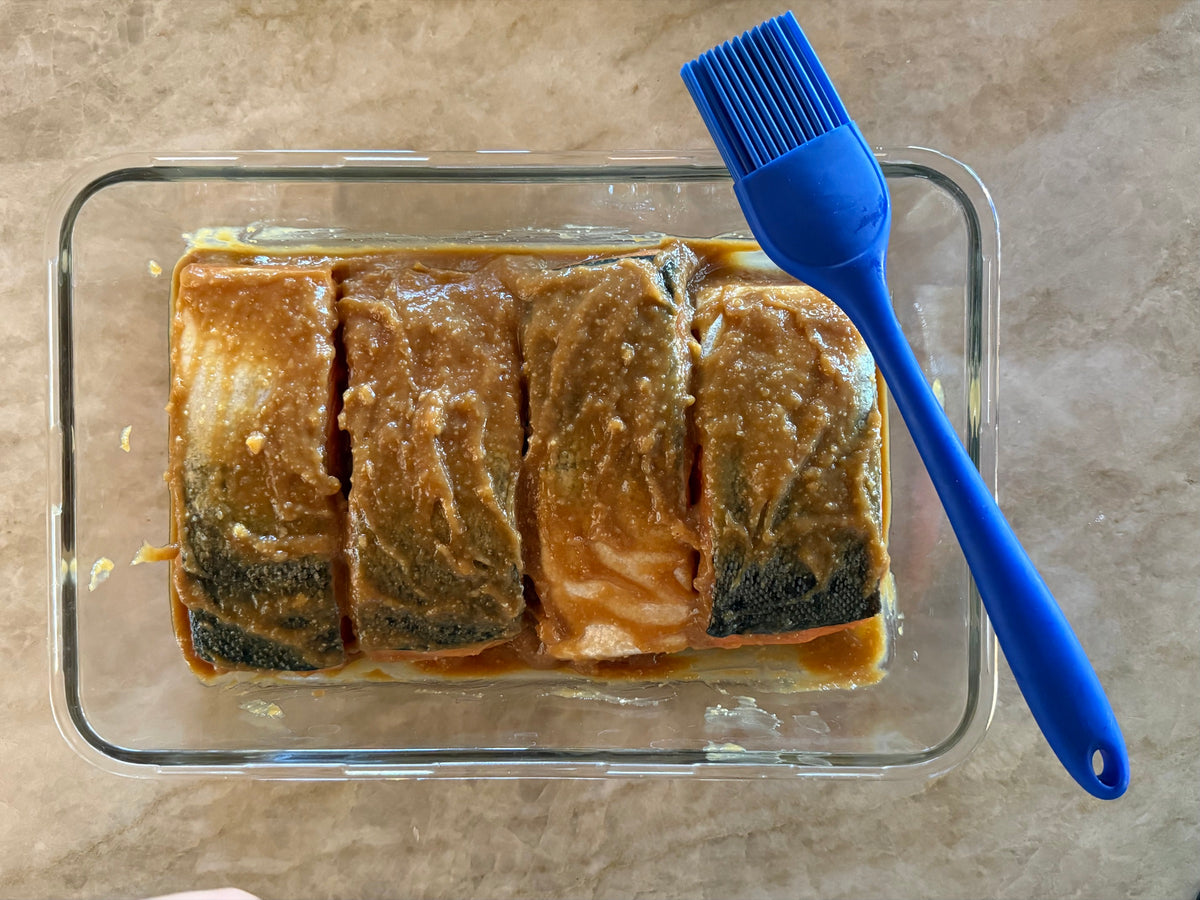
Step 4
Fillets into a shallow dish, marinade poured over, every surface coated. Cover and refrigerate 48 hours, turning once at the halfway point. Reserve a little marinade for brushing before it goes under the heat.
Step 5
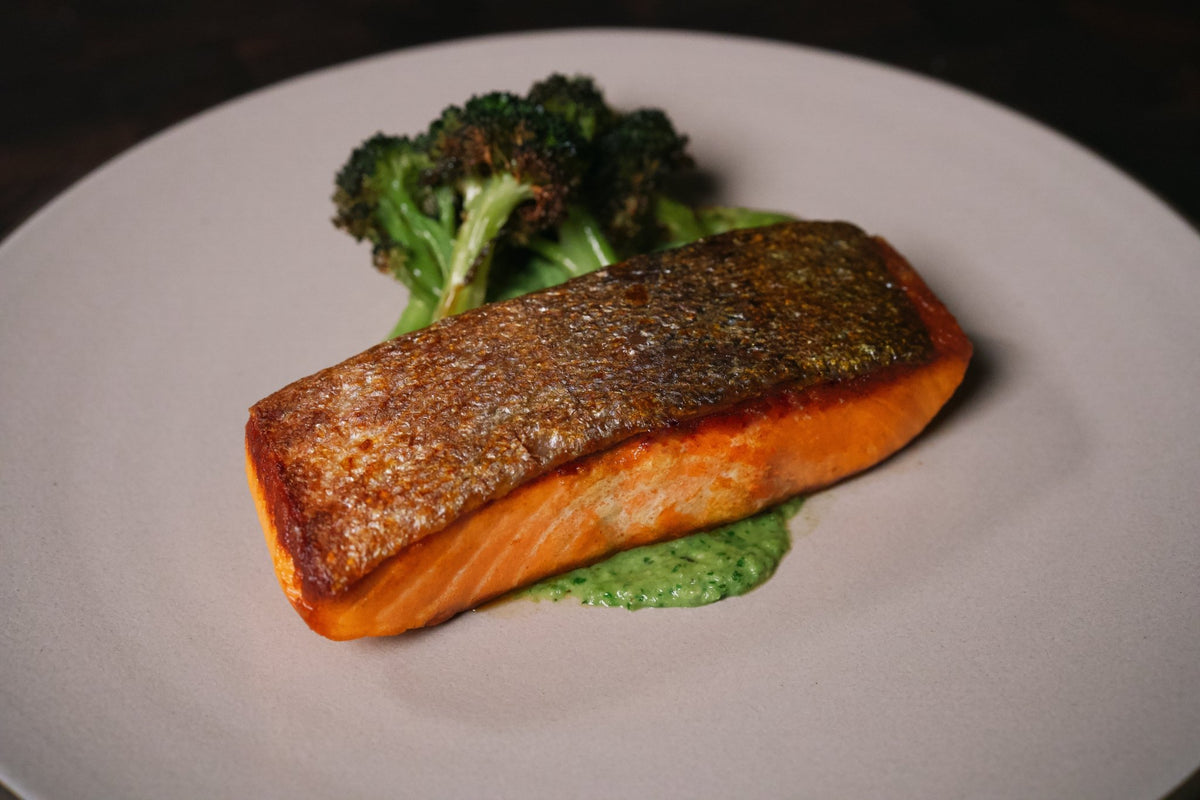
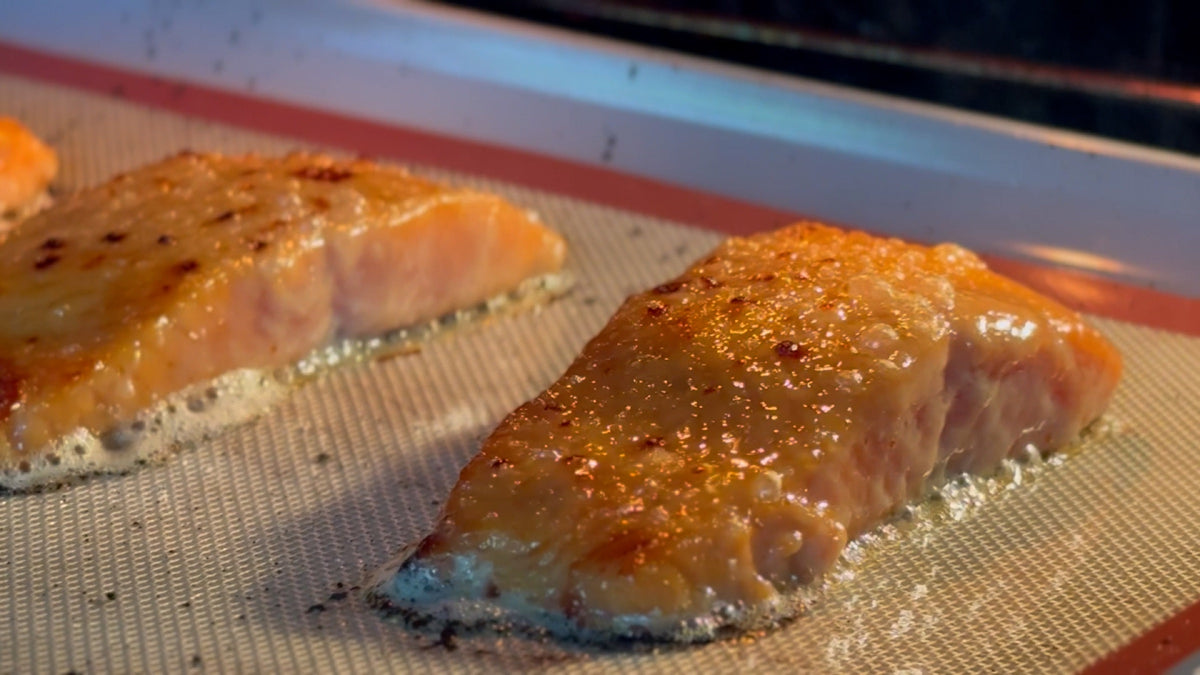
Scrape off the excess — what is left will burn before the fish cooks — then brush a thin fresh layer on top. Under a preheated broiler about 5 minutes, rotating halfway, until the edges go deep golden. Pull it around 130°F.
Step 6
Rest 3–5 minutes on the sheet; carryover heat takes it the rest of the way. Sushi rice into each box, then broccolini, avocado and pickled onion, salmon on top, and finish with roe and scallions.
The only part that can go wrong
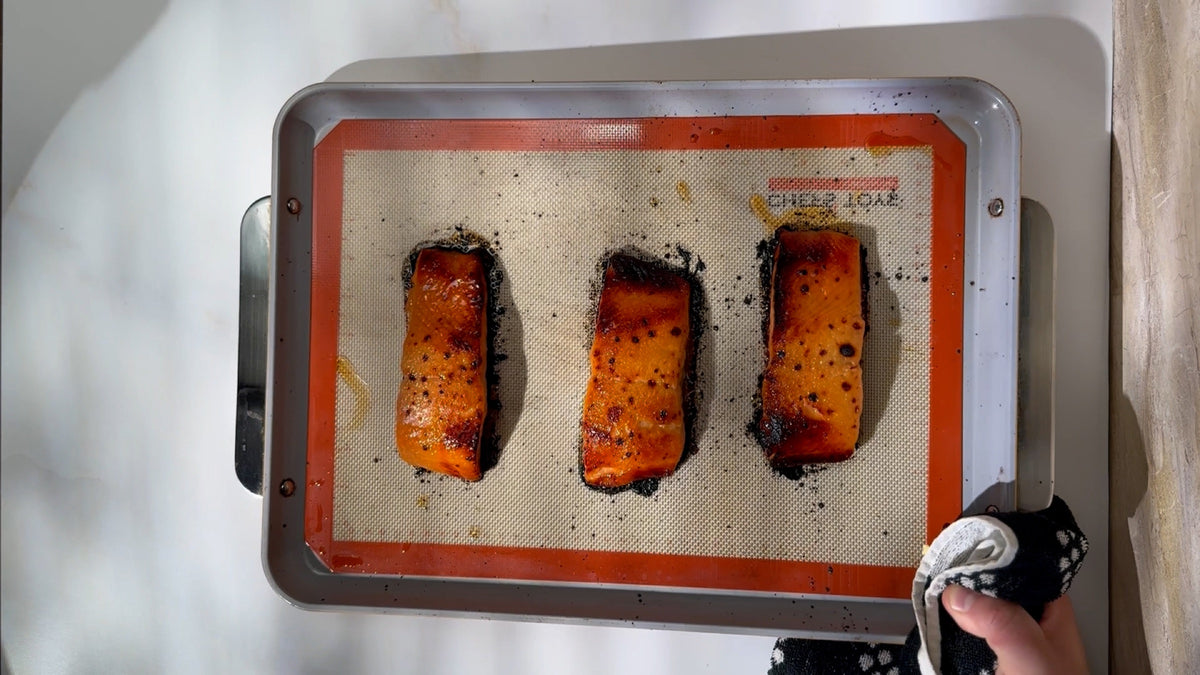
There is sugar in this glaze, and sugar under a broiler goes from caramelised to black in well under a minute. Everything else in this recipe is forgiving. This is the part that is not, and it is the reason to scrape the excess marinade off before the fish goes in rather than leaving a thick layer that will burn before the centre is warm.
Thick marinade, unattended pan
Excess marinade scorches and turns bitter while the fillet is still cold in the middle. Broilers are also wildly uneven, so one end of the tray browns minutes ahead of the other.
Scrape, brush thin, rotate halfway
Scrape the excess, brush on one fresh thin layer, and turn the tray at the halfway mark. Pull it around 130°F — it climbs to roughly 150°F while it rests, which is exactly where you want it.
If your broiler runs hot, drop the rack one level rather than shortening the time. You want the glaze to caramelise and the fillet to warm through at roughly the same rate.
Most of this bends. The 48 hours does not — that is the recipe rather than a preference, and everything else here is assembly.
| As written | Closest swap | If you are improvising | |
|---|---|---|---|
| The fish | 4 King Salmon fillets, 8.5 oz | Steelhead or any fatty salmon portion | Black cod is the traditional choice and takes the cure beautifully |
| The miso | ¼ cup organic white miso | Shiro or awase miso, same amount | Red miso works but is much saltier — use about two-thirds |
| The saké | ½ cup organic saké | Dry sherry or Shaoxing wine | Mirin plus water, and cut the coconut sugar back by half |
| The sweetener | 2 Tbsp coconut sugar | Light brown sugar or honey | Maple syrup — thinner glaze, so reduce a couple of minutes longer |
| The grain | 1 cup cooked sushi rice | Short-grain brown rice or barley | Soba noodles, dressed and cooled, for a lighter box |
| The green | 1 bunch purple broccolini, blanched | Regular broccolini or tenderstem | Green beans, snap peas or blanched bok choy |
| The pickle | ½ cup pickled red onions | Quick-pickled cucumber or daikon | Anything sharp — the box needs one acidic element |
That cadence is the whole point of the 48 hours. The fish thaws while you are at work, goes into the marinade that evening, and is ready to broil on Sunday when you are already in the kitchen.
Sealed boxes keep for three or four days. The salmon holds its caramelised edge cold, so there is nothing to reheat — which is the difference between meal prep you actually eat and meal prep that sits there.
A miso cure pulls moisture out. A lean fillet gives up too much and goes firm and dry; a fatty one has enough in reserve to come out silky after two days, which is why black cod became the classic and why King Salmon works just as well.
Fat also carries the caramelisation. The sugars in the glaze need something to sit against, and that deep lacquered edge is only possible on a fillet rich enough to take it.
For this version, yes — the time is what firms the flesh and drives the flavour past the surface. At 24 hours you still get a very good piece of fish, and under about 4 hours it is a glaze rather than a cure. Do not go past 72 hours; the salt starts to win and the texture turns dense.
Around 130°F. It climbs to roughly 150°F while it rests on the sheet, which lands it tender rather than firm. Take it out while the very centre still looks slightly translucent.
Almost always too much marinade left on. Scrape the fillets properly and brush on one thin fresh layer instead. If it still colours too fast, drop the oven rack a level rather than cutting the time short — you want the glaze and the fillet to finish together.
Three to four days sealed in the refrigerator. The salmon is designed to be eaten cold or at room temperature, so there is no reheating step; just pull a box out and go.
White or awase miso is what this is built around — mellow and slightly sweet. Red miso works if that is what you have, but it is considerably saltier, so use about two-thirds as much and taste the glaze before the fish goes in.
Overnight in the refrigerator in the sealed pack, about 12 hours. In a hurry, submerge the sealed pack in cold water for 30–60 minutes. Not at room temperature and not in warm water. There is a full guide to defrosting if you want the detail.
Miriam writes these and teaches them live. Every Seatopia box includes a FREE virtual cooking class where we work through a dish like this one together.
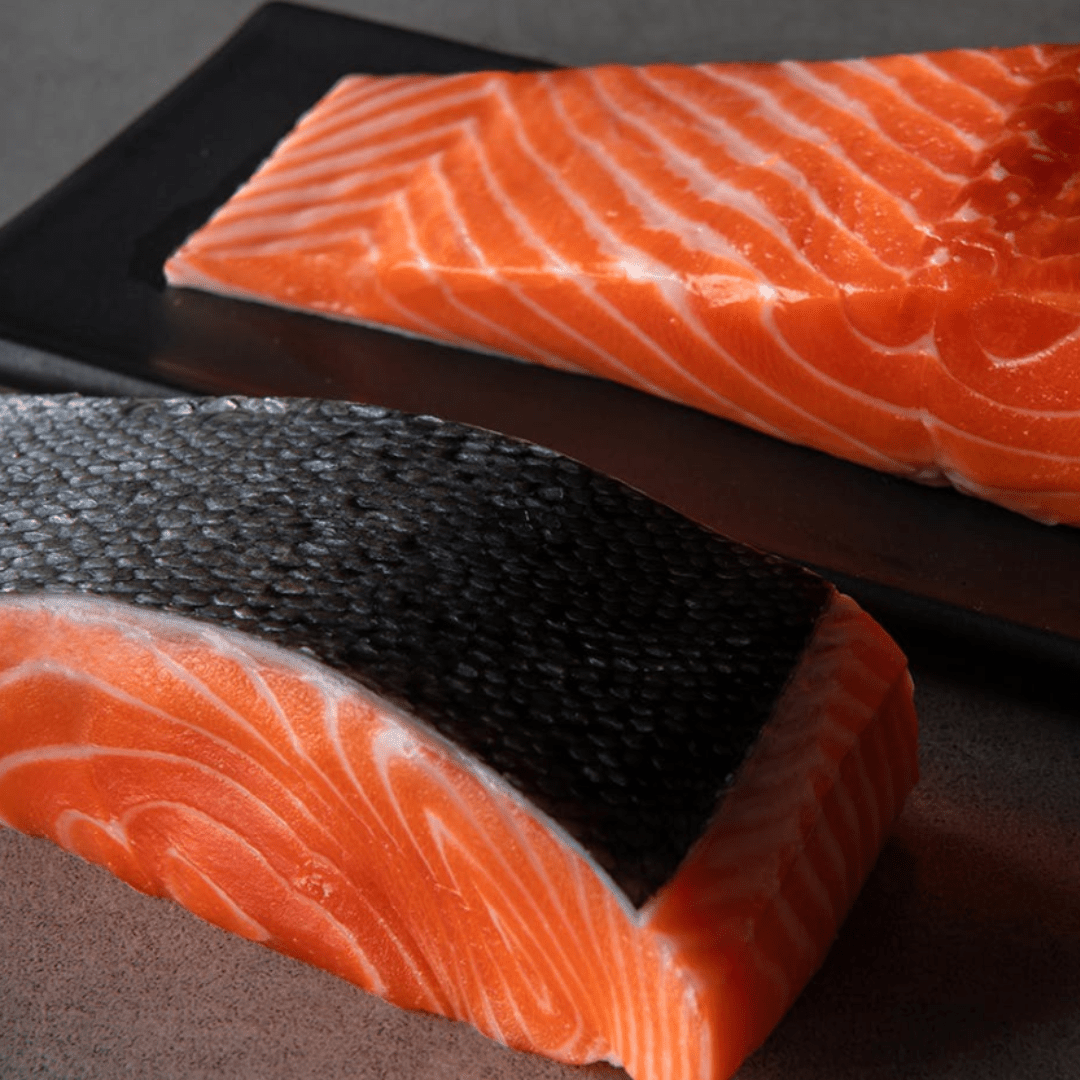
Rich flavor carrying oceanic depth and gentle sweetness across the palate. Contains a selection of King, Atlantic, and Steelhead.

A celebration of clean flavor and coastal elegance. Contains salmon, whitefish, and peruvian scallops.
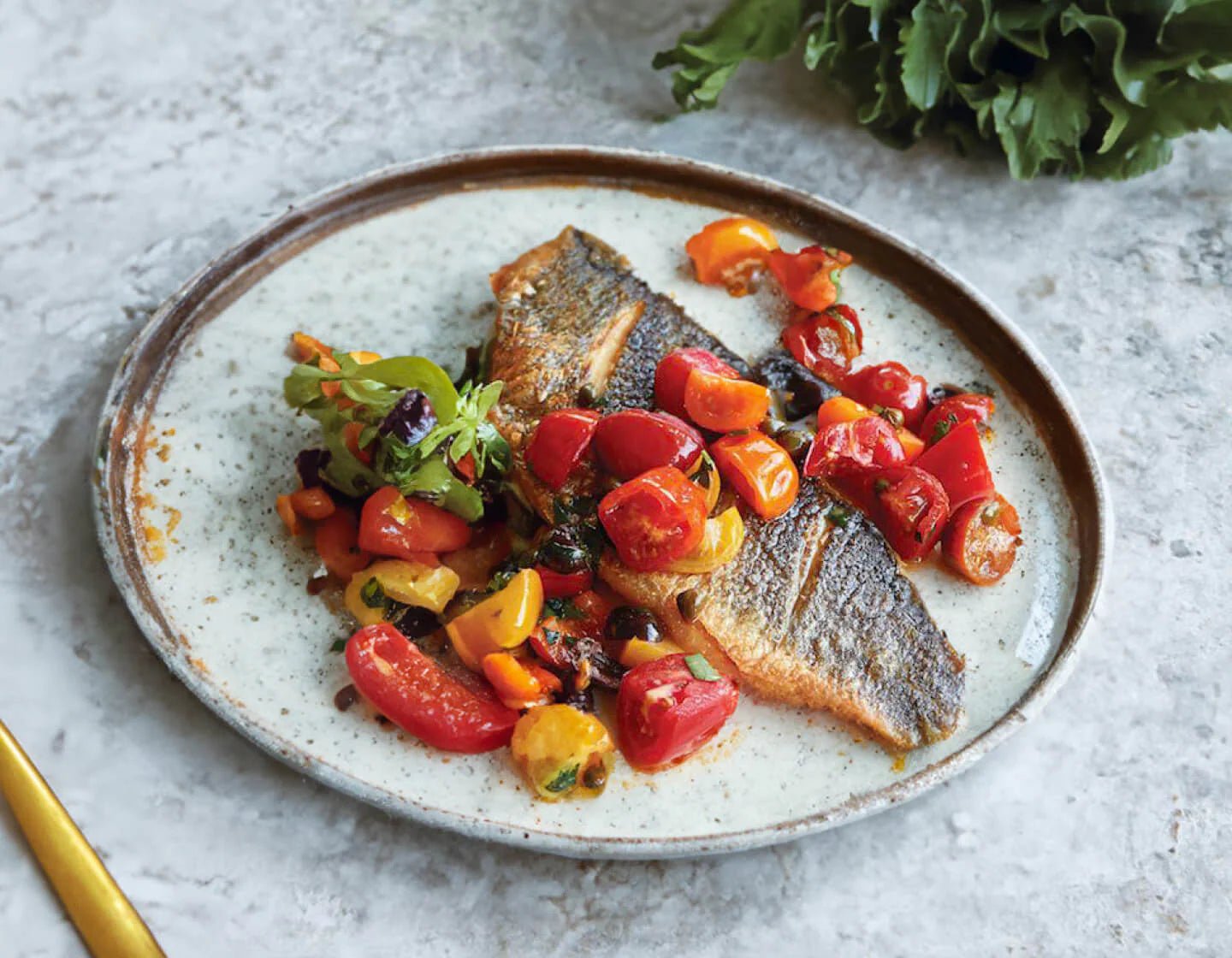
Expressive flavors from the clean, flavorful fish. Contains a selection of bream, branzino, yellowtail, and barramundi.