Spicy Green Salmon Crudo
- por Seatopia

Guest recipe Paid partner
Recipe by @valslittlekitchen
Developed for Seatopia using our King Salmon
Serves 2 as an appetizer · 15 minutes · nothing to cook
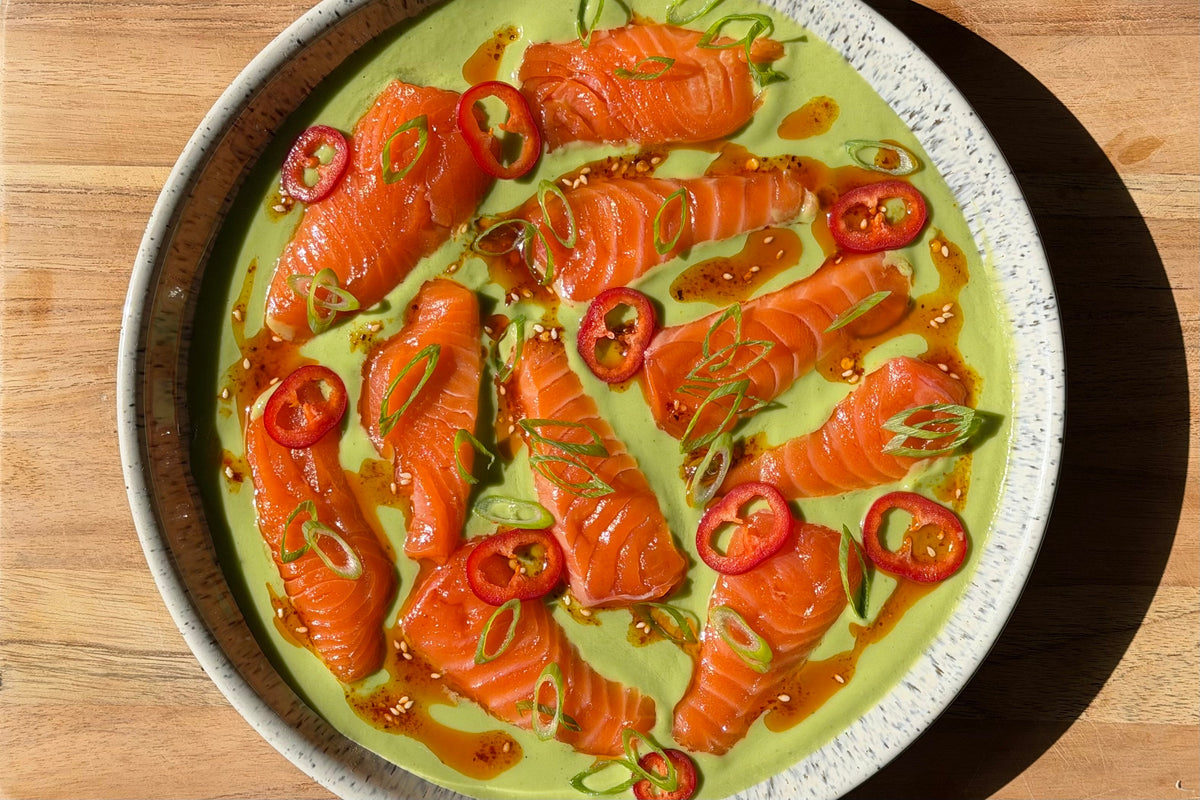
This spicy green salmon crudo is an easy way to make a weeknight meal feel a little more special without spending hours in the kitchen. Silky slices of our King Salmon sit on a creamy avocado-lime dressing, with Fresno chile, green onion and a drizzle of salsa macha on top.
There is no stove involved. Blend the dressing, slice the salmon, plate it, and it is on the table in about 15 minutes — bright, a little fiery, and the kind of dish that looks like it came from a restaurant.
Val makes the crudo, start to finish.
15 minutes
Five minutes for the dressing, five for slicing, five to plate. Nothing goes on the stove.
Serves 2
As an appetizer, from 8 oz of King Salmon. Double everything for four, or for a light dinner for two.
Three parts
A blended avocado-lime dressing, thinly sliced salmon, and the toppings: Fresno chile, green onion, salsa macha and flaky salt.
Keep the fish cold
The salmon is served raw, so keep it in the fridge until you slice it, and slice it last. It cuts most cleanly while it is still very cold.
Dial the heat
The “spicy” in this crudo comes from four places, and you control every one of them. Make it as Val does the first time, then turn each one up or down to suit your table.
Salsa macha The drizzle
Chile oil with toasted nuts, seeds and garlic. The boldest heat on the plate, and the crunch. Start with 2 tablespoons and pass the jar.
Fresno chile On top
Thin rounds scattered over the salmon. For less heat, scrape out the seeds before slicing, or use half.
Jalapeño In the dressing
Blended with the stem, seeds and membranes removed it is mild and green. Leave some seeds in, or add a second pepper, for more.
Chile vinegar In the dressing
A tablespoon brightens the dressing more than it heats it. Add a splash more at the end if it needs lift.
The dots show how much heat each one brings, hottest first. Taste the dressing before it goes on the plate — that is the easiest point to adjust.

Seatopia
15 minutes
15 minutes
Silky King Salmon on a creamy avocado-lime dressing with Fresno chile, green onion and salsa macha. No cooking, 15 minutes, from @valslittlekitchen.
Make the avocado-lime dressing. Add the avocado, cilantro, olive oil, jalapeño, lime zest, chile vinegar, lime juice and a generous pinch of kosher salt to a blender. Blend until smooth, adding cold water a little at a time until the dressing is creamy and pourable. Taste and adjust with more salt, lime juice or chile vinegar as needed.
Using a sharp knife, slice the chilled salmon against the grain into thin, even slices. Keep the slices uniform in thickness for the best texture and presentation. Refrigerate until ready to assemble.
Thinly slice the Fresno chile into rounds and finely slice the green onions. Set aside until ready to plate.
Spread a generous layer of the dressing across the bottom of a serving plate, creating an even base for the salmon.
Arrange the salmon slices over the dressing.
Scatter the Fresno chile and green onion over the salmon. Drizzle with salsa macha and finish with a sprinkle of flaky sea salt. Serve immediately.
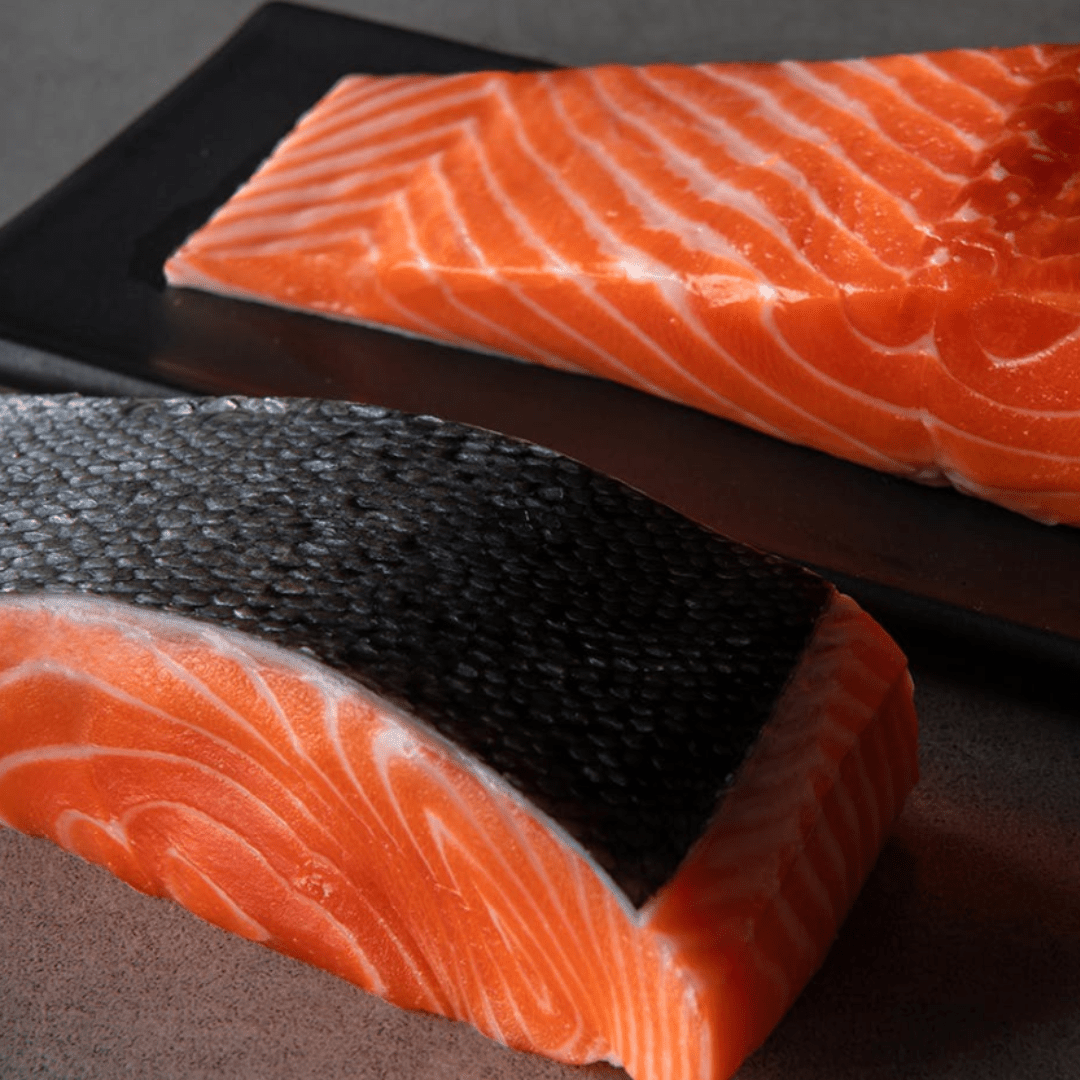
Our King Salmon is the star. Yellowtail Sashimi Loin is the swap if you want a leaner slice, and a spoonful of Salmon Roe Caviar on top makes it a party. The rest is an avocado, cilantro, a jalapeño, a Fresno chile, green onions, limes, chile vinegar and a jar of salsa macha.
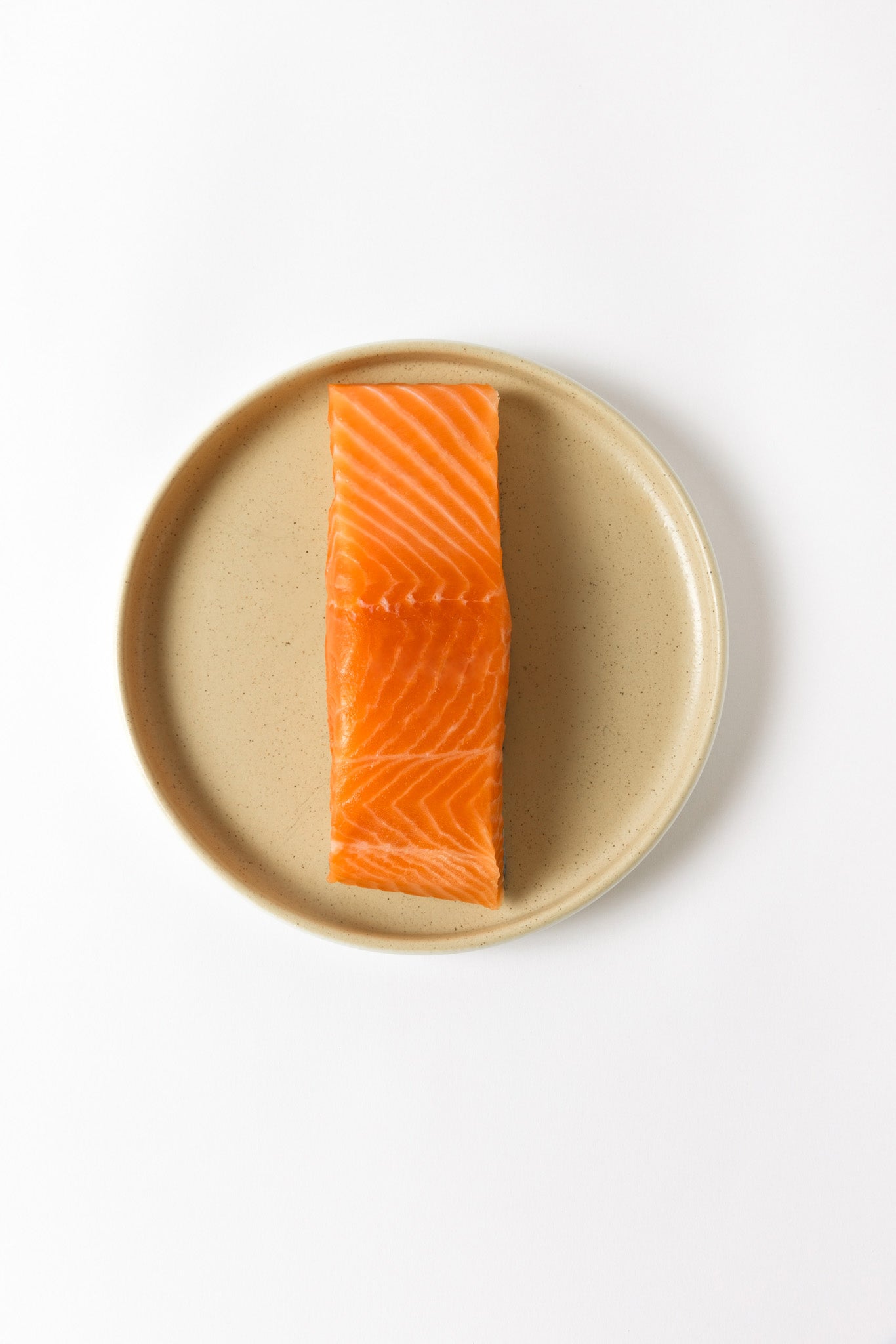
Unapologetically rich and velvety—Ōra King salmon, the gold standard for celebratory seafood
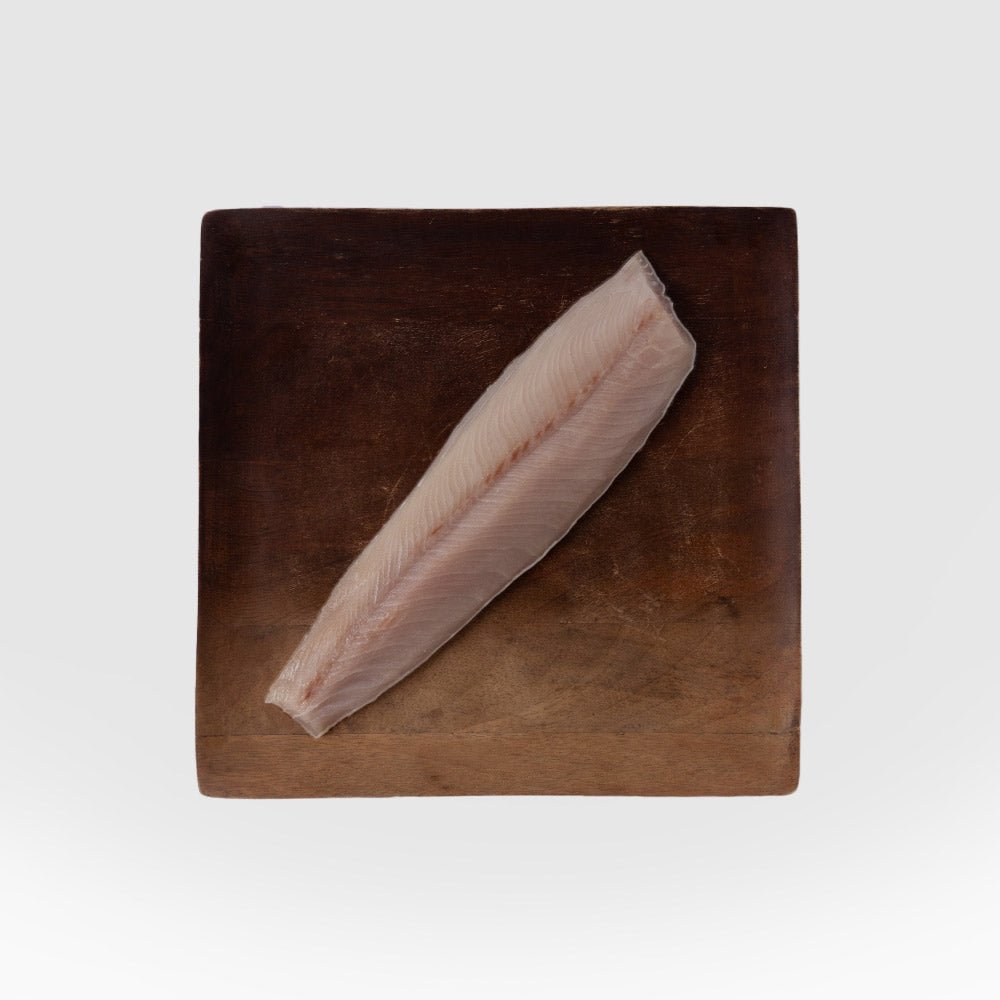
Bright, clean, and high in healthy fat — built for raw preparations like sashimi, ceviche, or crudo
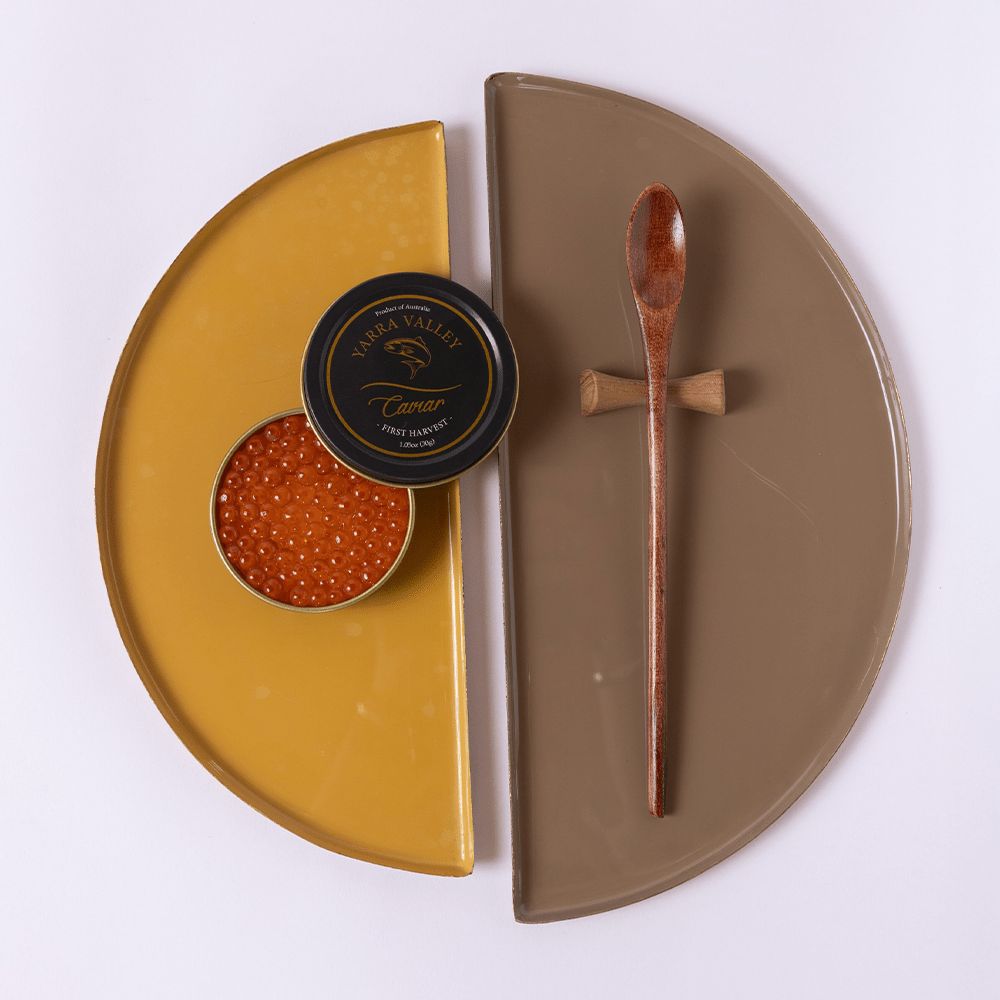
Plump, briny pearls bursting with oceanic flavor. Adorn sushi and sashimi with these gourmet gems
The avocado-lime dressing
Everything goes in the blender at once. The only judgement call is the water: you want the dressing to spread across the plate on its own, like a thick cream, not sit in a mound like guacamole.
Avocado, cilantro, olive oil, the seeded jalapeño, lime zest and juice, chile vinegar and a generous pinch of kosher salt. Blend until completely smooth.
Add the cold water a little at a time, blending between additions, until it is creamy and pourable. You may not need the full half cup.
More salt if it tastes flat, more lime if it tastes heavy, a splash more chile vinegar if it needs a kick. Then spread it over the plate.

Val’s amounts are a starting point. Taste the dressing and adjust it before it goes on the plate, and swap in whatever you have.
| As written | Easy swap | What changes | |
|---|---|---|---|
| The fish | King Salmon | Yellowtail Sashimi Loin | Leaner and firmer, with a clean, mild flavor |
| The drizzle | Salsa macha | Chili crisp | Similar crunch and heat, a little more savory |
| The vinegar | Chile vinegar | Rice vinegar and a pinch of chile flakes | Softer acidity; add the flakes to taste |
| The herb | Cilantro | Parsley or basil | Parsley is milder; basil is sweeter and brighter |
| The chile on top | Fresno chile | Red jalapeño or serrano | Serrano is hotter — go easy |
| To serve | On its own | Tortilla chips or crackers | Turns it into a shareable appetizer |

Take the skin off first, then slice straight from the fridge with your sharpest knife. Cut across the white lines in the flesh, in one long stroke per slice rather than sawing, and keep every slice about the same thickness so they eat the same. Lay them on a plate and put them back in the fridge while you make the dressing and slice the toppings.
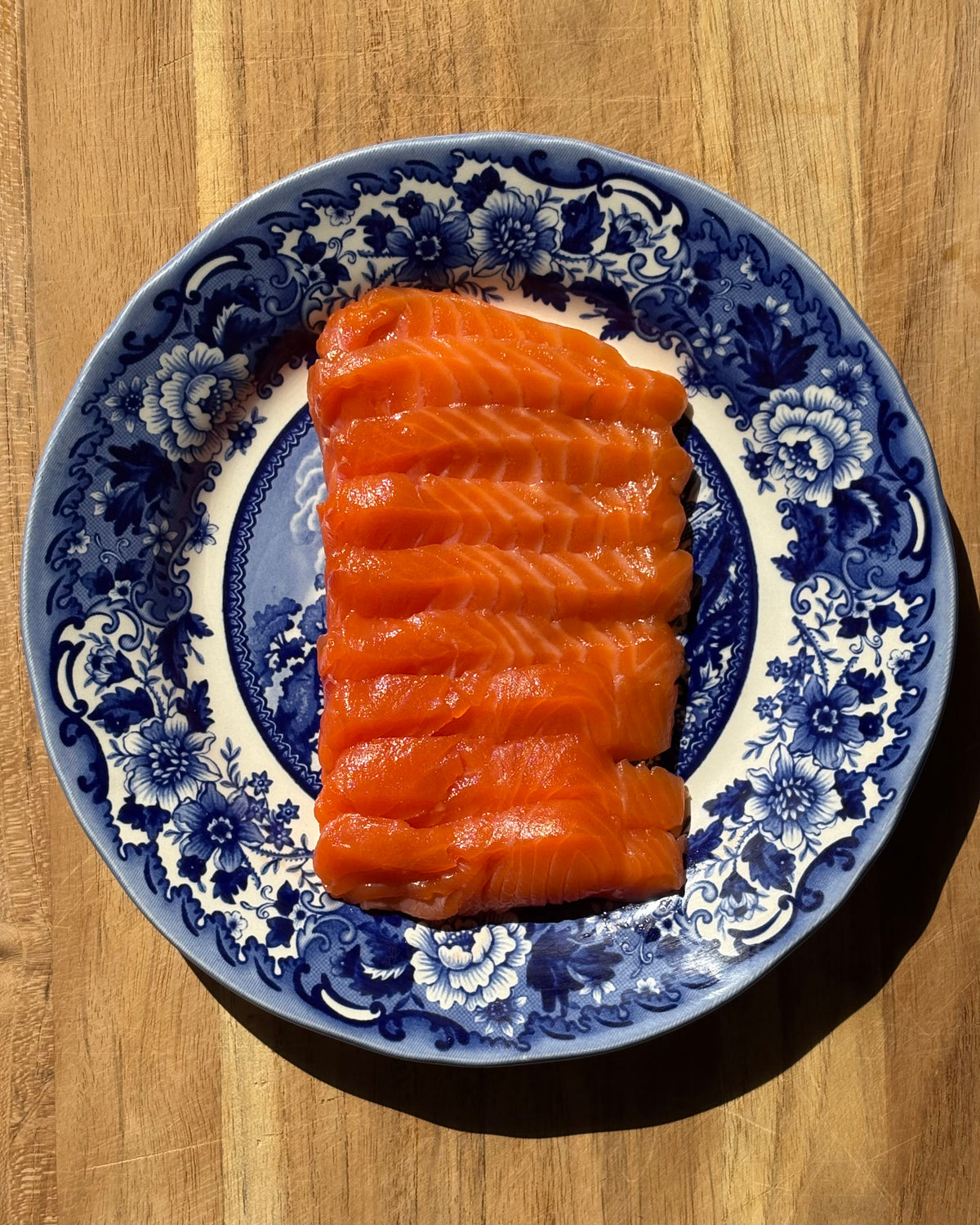
There is no official or regulated definition of “sashimi-grade” or “sushi-grade” fish in the United States. Sellers use the terms to signal that fish is safe to eat raw, but they are not a certification or a legal standard. So here is ours.
All of our seafood is vacuum sealed and blast frozen to -10 °F at peak freshness, which preserves taste, texture and colour, and is processed in an accredited facility. It is lab tested for mercury and microplastics. Farmed fish raised on formulated feed are exempt from the FDA Food Code’s parasite-freezing rule, and we blast-freeze at harvest anyway. That is what sashimi-grade means to us.
There is always some risk in eating anything raw or undercooked. If you are concerned or particularly sensitive, consult your doctor. The FDA conservatively suggests cooking to an internal temperature of 145 °F.
Val serves it raw here. Read what sashimi-grade means to us above. Eating raw or undercooked meat, poultry, seafood, shellfish or eggs may increase your risk of foodborne illness, especially with certain medical conditions. Consult your doctor if you think you may be sensitive.
In the refrigerator, in its sealed pack, overnight. Never on the counter or in warm water. Keep it cold until you slice it, and slice it while it is still very cold — it holds its shape and cuts cleanly. Eat it the day you thaw it.
Lay the fillet skin-side down with the narrow end toward you. Cut down to the skin at that end, then grip the skin with a paper towel and run your knife flat along it, angled slightly down, pulling the skin gently the other way. It is easiest while the fish is still very cold.
A Mexican chile oil made with dried chiles, garlic and toasted nuts or seeds, so it is crunchy as well as hot. Look for it in jars near the hot sauces or in Latin grocery stores. Most contain peanuts or sesame, so check the label if you are cooking for allergies. Chili crisp is the closest swap.
Make the dressing up to a few hours ahead and keep it in the fridge with plastic wrap pressed onto the surface so it stays green. Slice the toppings ahead too. Slice the salmon and plate everything right before you serve.
Val serves it as a light appetizer with tortilla chips or crunchy crackers for scooping up the dressing. For dinner, double it and add a simple rice or a green salad.
Recipes from our kitchen and from the people who cook with us.

Rich flavor carrying oceanic depth and gentle sweetness across the palate. Contains a selection of King, Atlantic, and Steelhead.

A celebration of clean flavor and coastal elegance. Contains salmon, whitefish, and peruvian scallops.
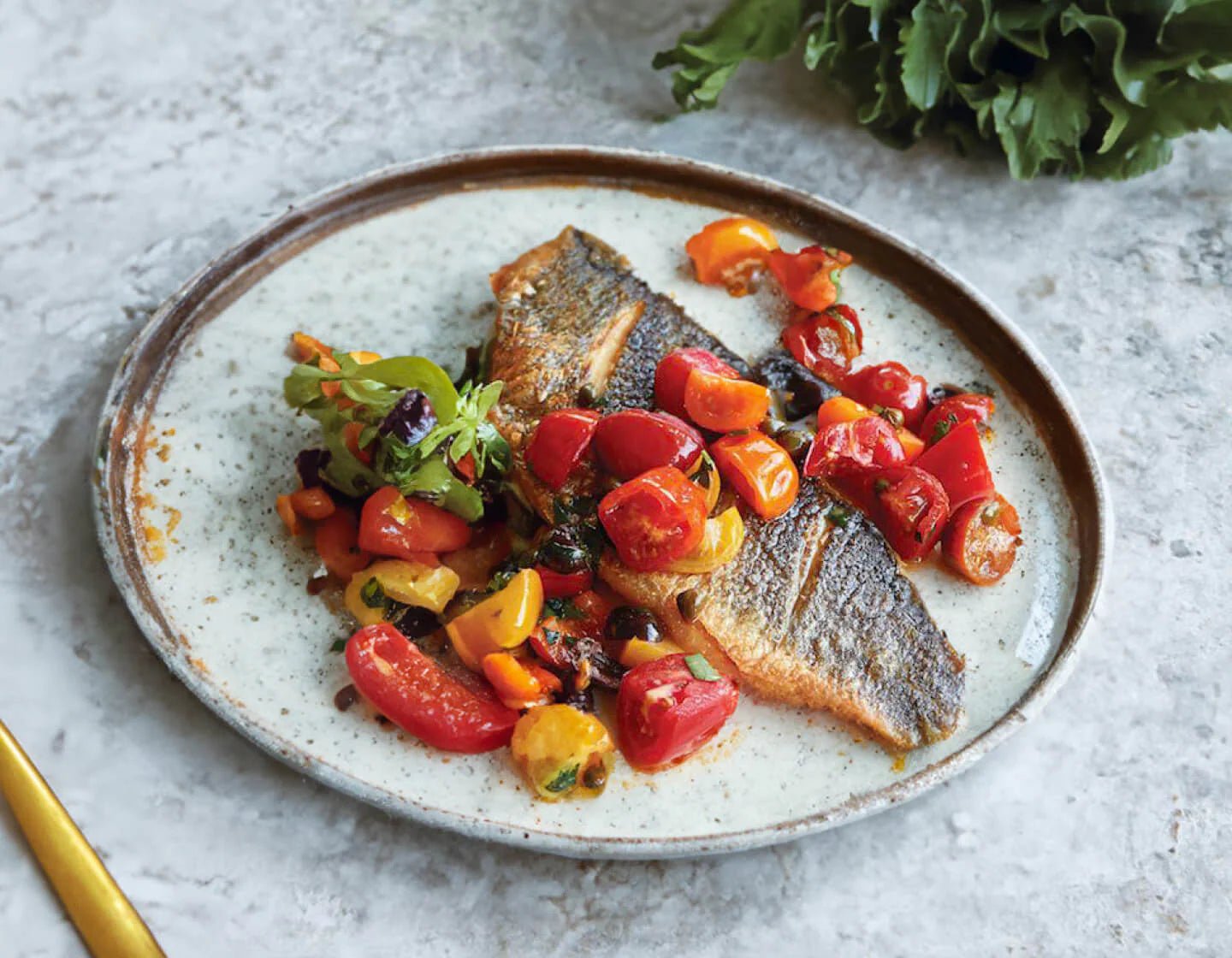
Expressive flavors from the clean, flavorful fish. Contains a selection of bream, branzino, yellowtail, and barramundi.