- por This Guy Cooks
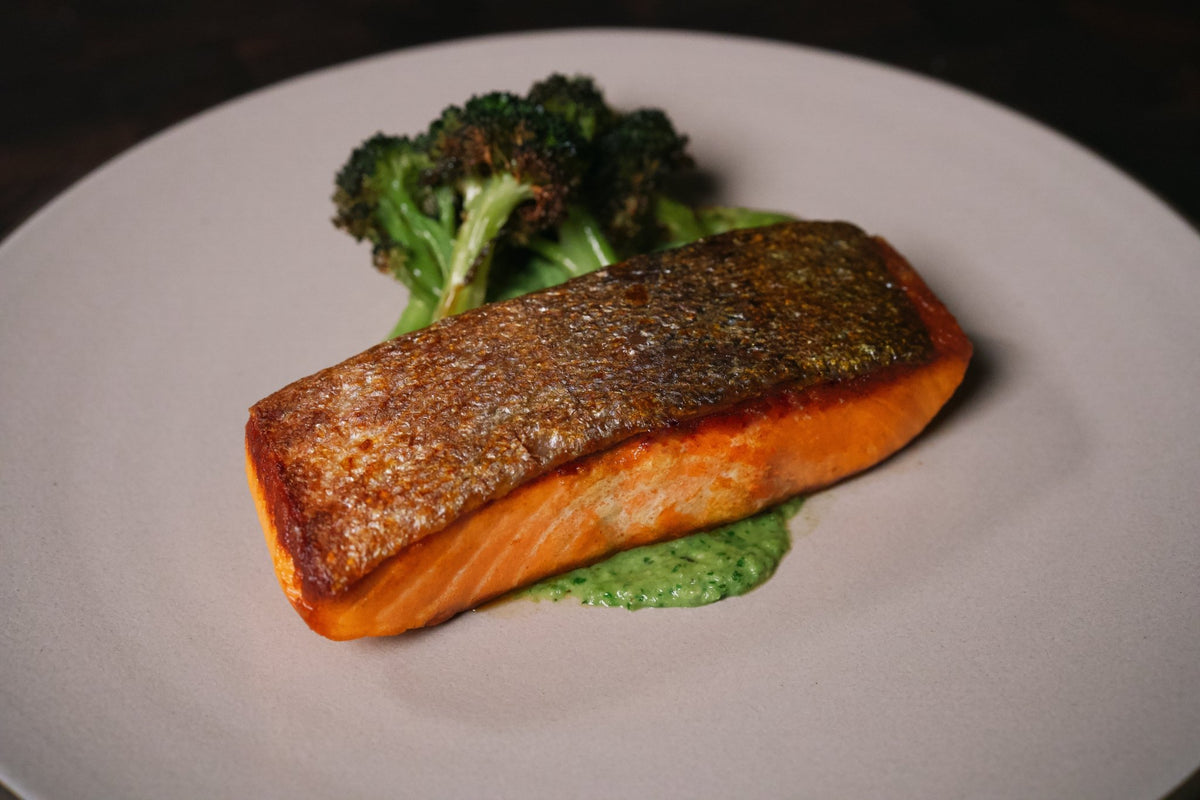
Crispy Skin King Salmon with Snap Pea Pesto and Roasted Broccoli
- por This Guy Cooks

Guest recipe Paid partner
Recipe by This Guy Cooks
Developed for Seatopia using our King Salmon, seared skin-on
Serves 2 · about 35 minutes, plus 1–3 hours to dry-brine if you can · stovetop and oven
King Salmon seared skin down until the skin shatters, lifted out to rest partway through, then finished in the pan. A spoonful of snap pea pesto underneath and roasted broccoli alongside.
The rest is the whole idea. Taking the fish off the heat for four minutes lets the middle catch up while the skin stays crisp instead of scorching — and salting it an hour or more ahead dries the skin so it crisps at all.
About 35 minutes
15 minutes of prep and 20 of cooking. The broccoli roasts while the salmon sears, so the two finish together. Add 1–3 hours up front for the dry brine if you have them.
Serves 2
Two skin-on King Salmon portions. The recipe is written for 6 oz; ours come as 8.5 oz, so go by the thermometer rather than the clock and pull at 130°F.
Salt it early
About ½ tsp Diamond Crystal per 6 oz portion, uncovered on a rack in the fridge for one to three hours. It seasons the flesh and dries the skin. Not overnight — fish firms up fast.
Rest off the heat
Partway through, the fillets come out and sit skin up on a rack for 4 minutes, with the pan off the burner. The middle catches up; the skin does not overcook.
Listen to the pan
Once the fillets go in skin down you cannot see the skin, so the sound is your gauge. Lay them in away from you, press them flat for 30 to 60 seconds, and then listen. Use little to no oil: King Salmon carries enough fat to grease its own pan inside the first minute.
Silence in the first ten seconds Too cold
The pan was not hot enough and the skin will stick and stew. Lift the fillets out, let the pan come up to heat, and lay them back in.
A loud, hard sizzle Too hot
The skin will scorch before the fat underneath has rendered. Turn the heat down a little and keep going.
A steady, fine crackle Right here
Fat rendering out from under the skin and frying it from below. Hold it here for 3–4 minutes skin down, then take the pan off the burner for the rest.
For doneness, lift a corner and look at the side of the fillet: the flesh turns opaque from the bottom up, and that line tells you how far along it is. Finish by thermometer — pull at 130°F in the thickest part and it settles around 135°F on the plate.

Seatopia
35 minutes
King Salmon carries a lot of fat, and this recipe puts it to work. That fat renders out from under the skin and crisps it from below, and what stays in the flesh keeps it moist and flaky all the way through.
Salt the fish at least an hour ahead. Two or three hours is the sweet spot, uncovered on a rack in the fridge. If you are cooking right now, salt the fillets as they go into the pan instead. Partway through the sear, the fillets come out and rest skin-up on a rack for four minutes, with the pan off the burner, so the skin does not overcook while the middle catches up.
The recipe has you press the fillets flat at the start of the sear. I recommend a kitchen weight instead, and the one I use is the Chef's Press.
It has slots cut into it so steam escapes while the weight holds the skin down. A flat weight—one solid piece of metal with no openings—traps that steam underneath, and that is what costs you the sear.
Serves 2. About 35 minutes, plus 1–3 hours to dry-brine the fish if you can.

Salt the salmon at least an hour ahead; two to three hours is the sweet spot. Leave it uncovered on a rack in the fridge. Use about ½ teaspoon of Diamond Crystal kosher salt per 6 oz portion, skin and all. That is all the salt the fish gets. If you are cooking right now, salt the fillets as they go into the pan instead.
Heat the oven to 450°F with a sheet pan inside it.
Cut the broccoli through the stem so every piece has one flat face. Toss it in a bowl with the olive oil and salt until every face is glossy. Tip it onto the hot pan and turn every piece cut side down, in a single layer with space around each one. Roast 15 to 18 minutes without moving it.
When the broccoli has about twelve minutes left, set a skillet over medium-high heat. Use little to no oil: this fish is fatty enough to grease its own pan inside the first minute.
Pat the salmon skin completely dry.
Spoon 1 tablespoon of snap pea pesto into the center of each plate. Set the fish on it, skin-side up, with the broccoli alongside.
Serve with lemon at the table.
Our King Salmon, in 8.5 oz skin-on portions. Everything else is a head of broccoli, olive oil, kosher salt, a lemon and a spoonful of snap pea pesto.
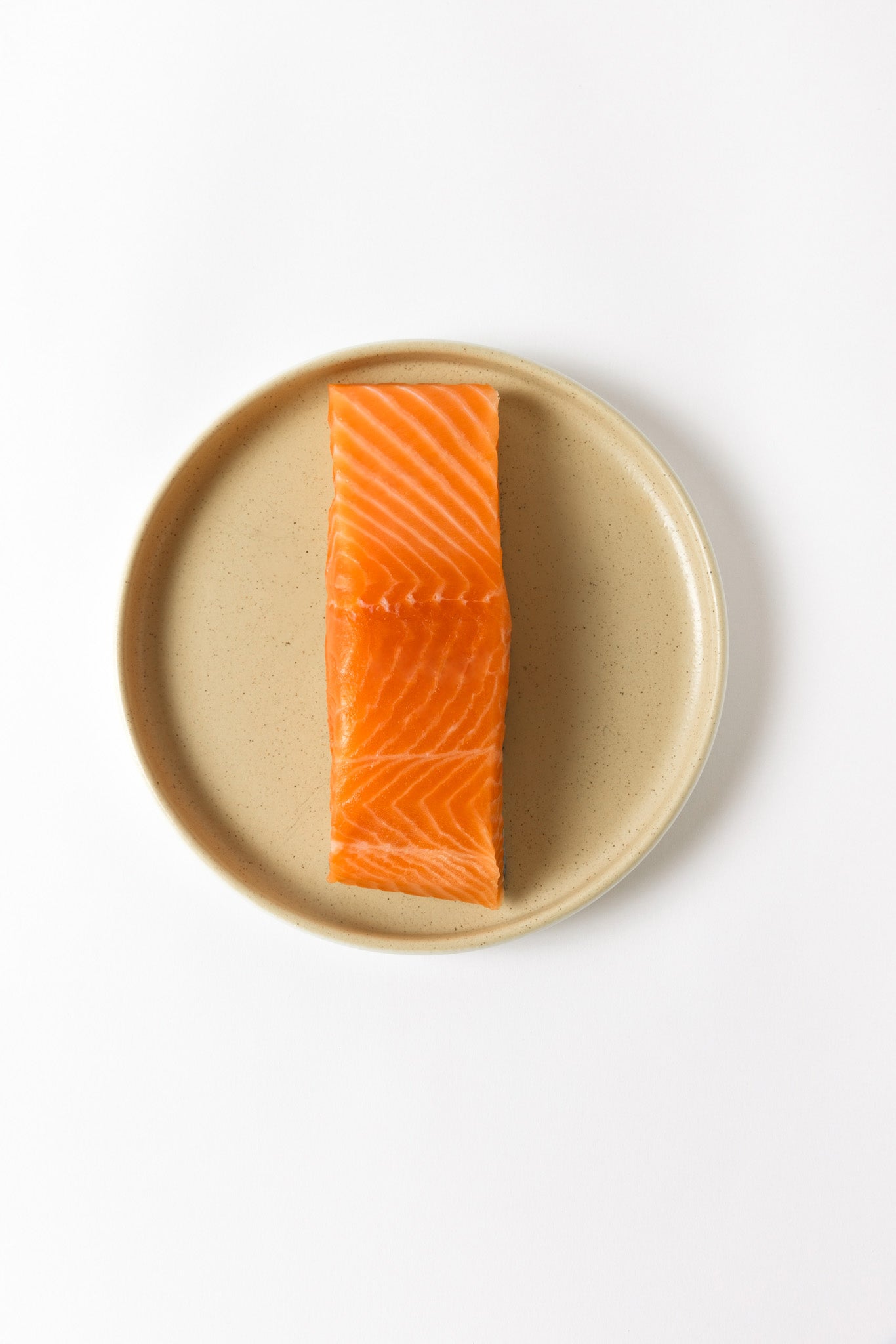
Unapologetically rich and velvety—Ōra King salmon, the gold standard for celebratory seafood
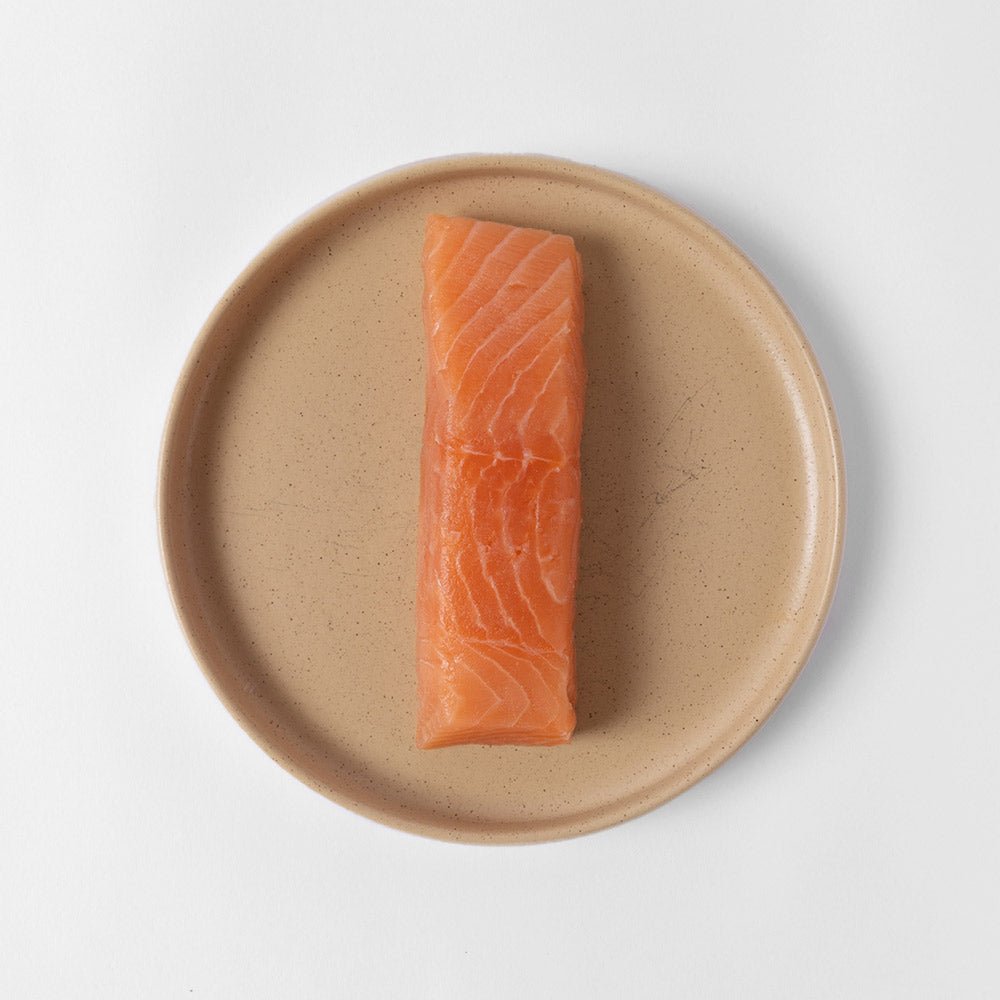
A buttery well marbled classic - ideal for everyday
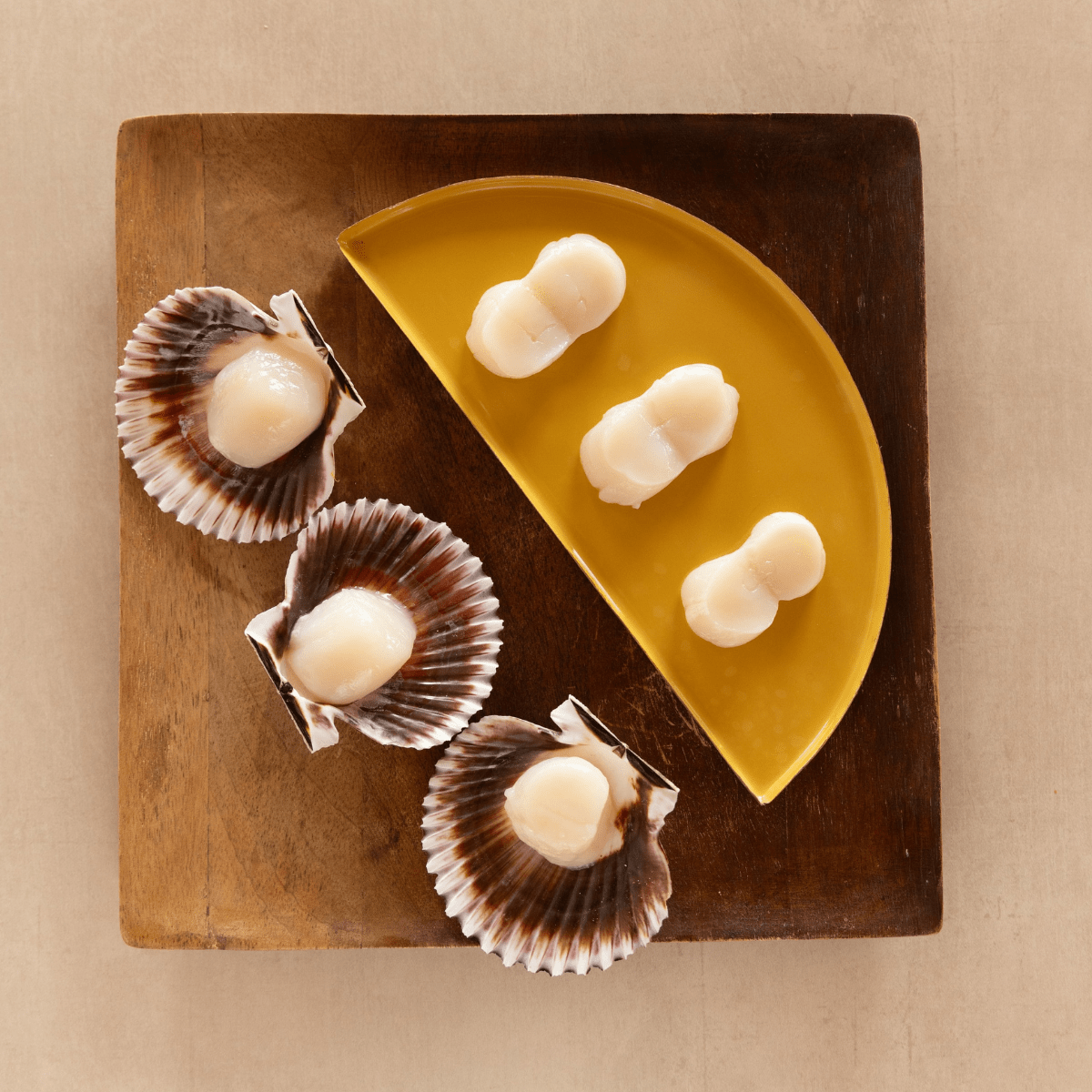
A celebration of clean flavor and coastal elegance. Contains salmon, whitefish, and peruvian scallops.
Sear, rest, finish
Skin crisps fast and flesh cooks slowly. Leave a thick fillet skin down until the middle is done and the skin burns; flip it early and the skin goes soft. Splitting the cook in two, with a rest in the middle, lets each part get what it needs.
Medium-high to start, pressed flat for 30 to 60 seconds, then down to medium. Three to four minutes at a steady, fine crackle. The skin does almost all of its crisping here.
Lift the fillets onto a rack skin side up for 4 minutes and take the pan off the heat. An empty skillet left on the burner comes back hot enough to burn the skin you just built.
Pan back on medium, fillets back in skin down for 3 more minutes, then flip for 1. Pull at 130°F. It carries over to about 135°F on the plate — wait for 135°F in the pan and it climbs past silky into chalky.

The method holds whatever you change around it — dry skin, a hot pan, a rest off the heat, and a thermometer at the end.
| As written | Easy swap | What changes | |
|---|---|---|---|
| The fish | 2 × 6 oz King Salmon, skin on | Our 8.5 oz King Salmon portions | Thicker, so it takes longer to reach 130°F. Go by the thermometer, and use about ¾ tsp salt per portion |
| The salt | Diamond Crystal kosher salt | Morton kosher salt | Morton is denser by volume — use half as much |
| The brine | Salted 1–3 hours ahead, uncovered in the fridge | Salted as it goes into the pan | Works, but the skin starts wetter and crisps less |
| The press | Pressed flat by hand for 30–60 seconds | A slotted kitchen weight | Holds the skin down while steam escapes. A solid weight traps the steam and costs you the sear |
| The broccoli | Roasted cut side down at 450°F | Broccolini or halved Brussels sprouts | Same rule: one flat face on the hot pan, and leave it alone |
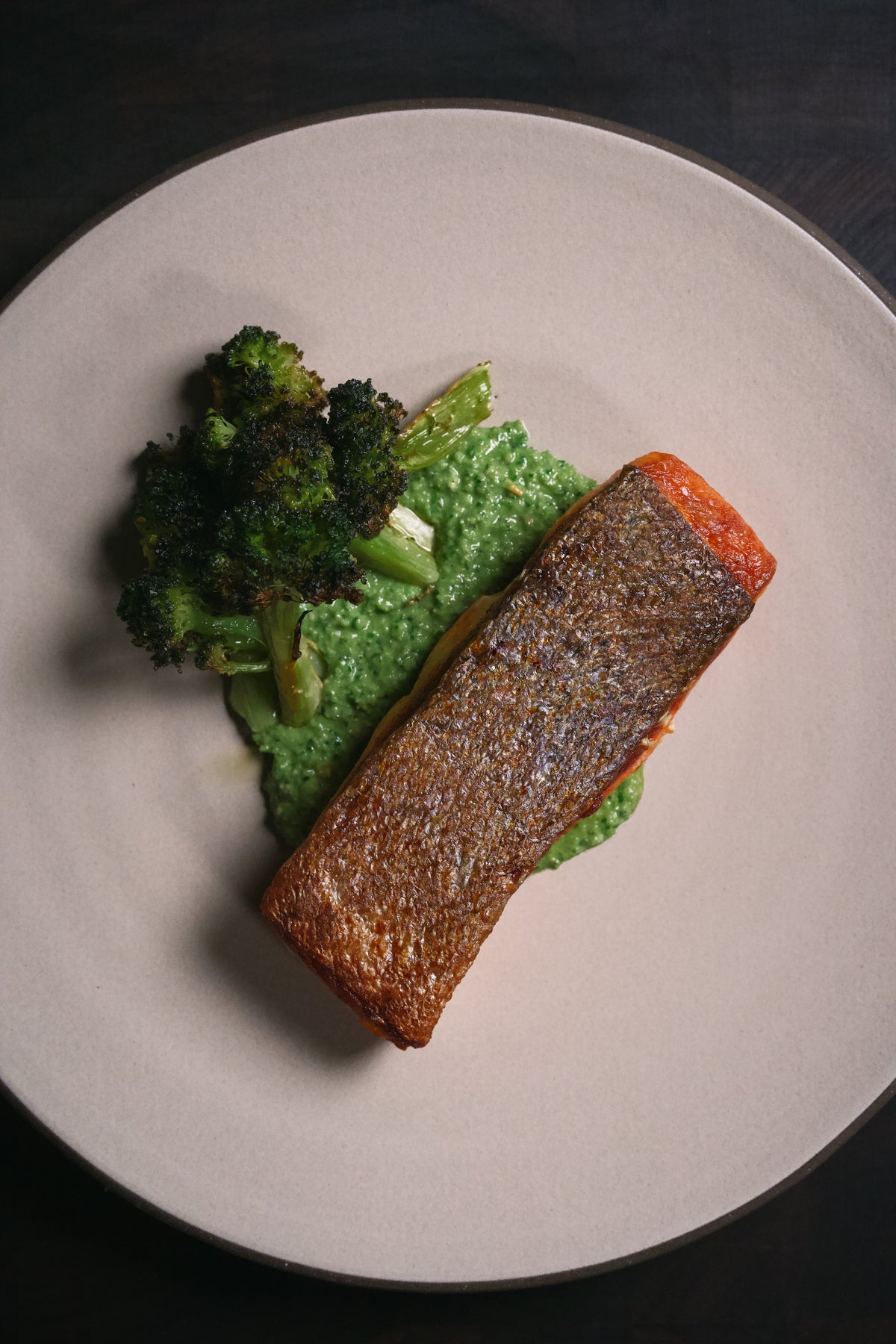
Salt the salmon in the morning or at lunch and leave it uncovered on a rack in the fridge — one to three hours is the window, and that is all the salt the fish gets. Don’t take it overnight: fish is more delicate than steak and the texture goes firm. The snap pea pesto makes far more than two plates need and it keeps, so it is worth making a full batch. The sear is the one part that will not wait, so cook it last.
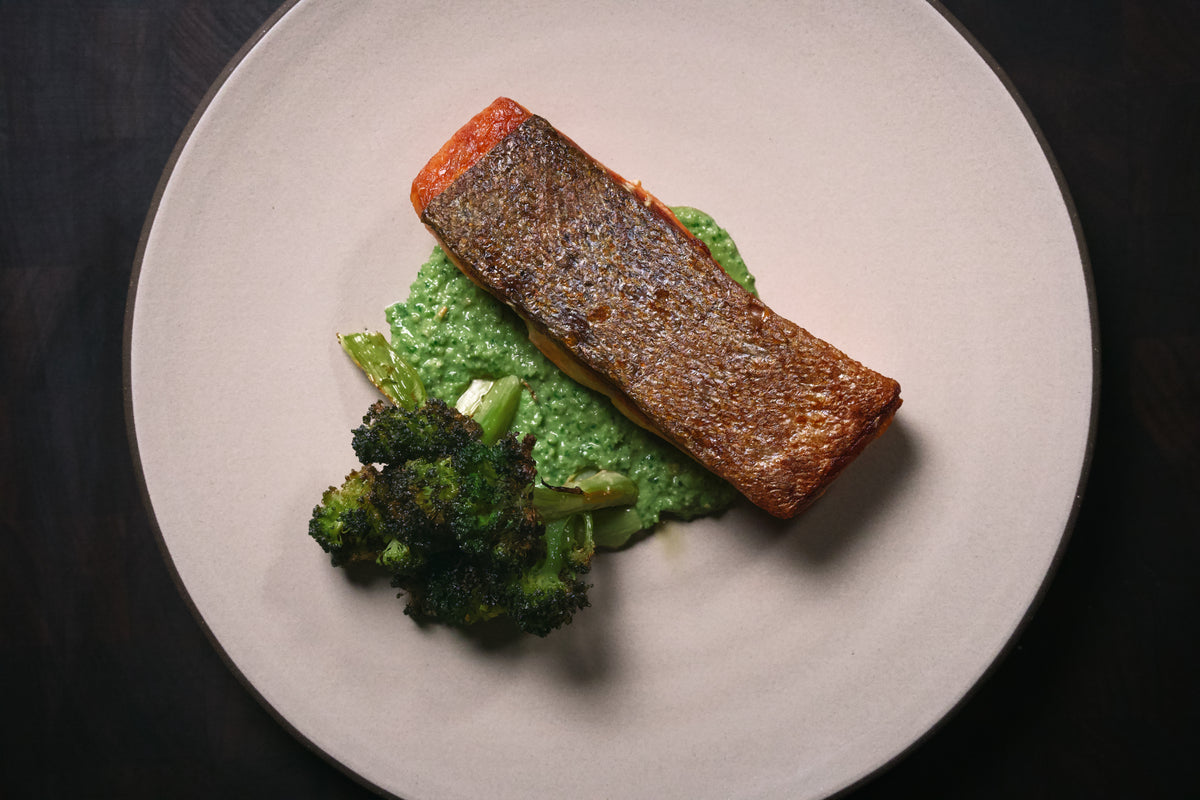
King Salmon carries a lot of fat, and this method puts it to work. The fat under the skin renders out and fries the skin from below, which is why the pan needs little or no oil, and what stays in the flesh keeps it moist through a high-heat sear. The skin-on portion is the right cut, because the skin is half the point.
Our King Salmon is sourced from best-in-class aquaculture. Blast-frozen to -10°F at harvest, vacuum sealed. Every supplier is third-party tested for nutrition, mercury and microplastics, then randomly audited to ensure consistent compliance with the Seatopia Standard. Farms named, panels published.
Yes. The recipe is written for 6 oz portions, and a larger portion is thicker, so it takes longer to come up to temperature. Keep the sear, the rest and the finish in the same order, and use the thermometer rather than the clock: pull at 130°F in the thickest part. Scale the salt with the weight — about ¾ tsp Diamond Crystal per 8.5 oz portion.
Because the skin and the flesh want different things. The skin crisps in a few minutes; the middle of a thick fillet takes longer. Four minutes on a rack, skin up, lets the middle catch up without the skin sitting on heat. Take the pan off the burner too — an empty skillet left on the heat comes back hot enough to burn the skin you just built.
It keeps cooking after it leaves the pan and finishes around 135°F on the plate. Wait for 135°F in the pan and it climbs past where you want it, which is the difference between silky and chalky. The 130°F reading is taken at the very end, not during the rest.
No, but it is worth it if you can. Salting one to three hours ahead, uncovered on a rack in the fridge, seasons the flesh and dries the skin so it crisps. If you are cooking right now, salt the fillets as they go into the pan instead. Don’t go overnight — fish is more delicate than steak and the texture firms up.
Use half as much. Morton’s crystals are denser, so a teaspoon of it is saltier than a teaspoon of Diamond Crystal, which is what the quantities here are written for.
Overnight in the refrigerator in the sealed pack, about 12 hours, then pat the skin completely dry before it goes in the pan. In a hurry, submerge the sealed pack in cold water and change the water every 20 minutes. Never thaw fish on the counter or out of its pack — it takes on water, and wet skin will not crisp.
Recipes from our kitchen and from the people who cook with us.

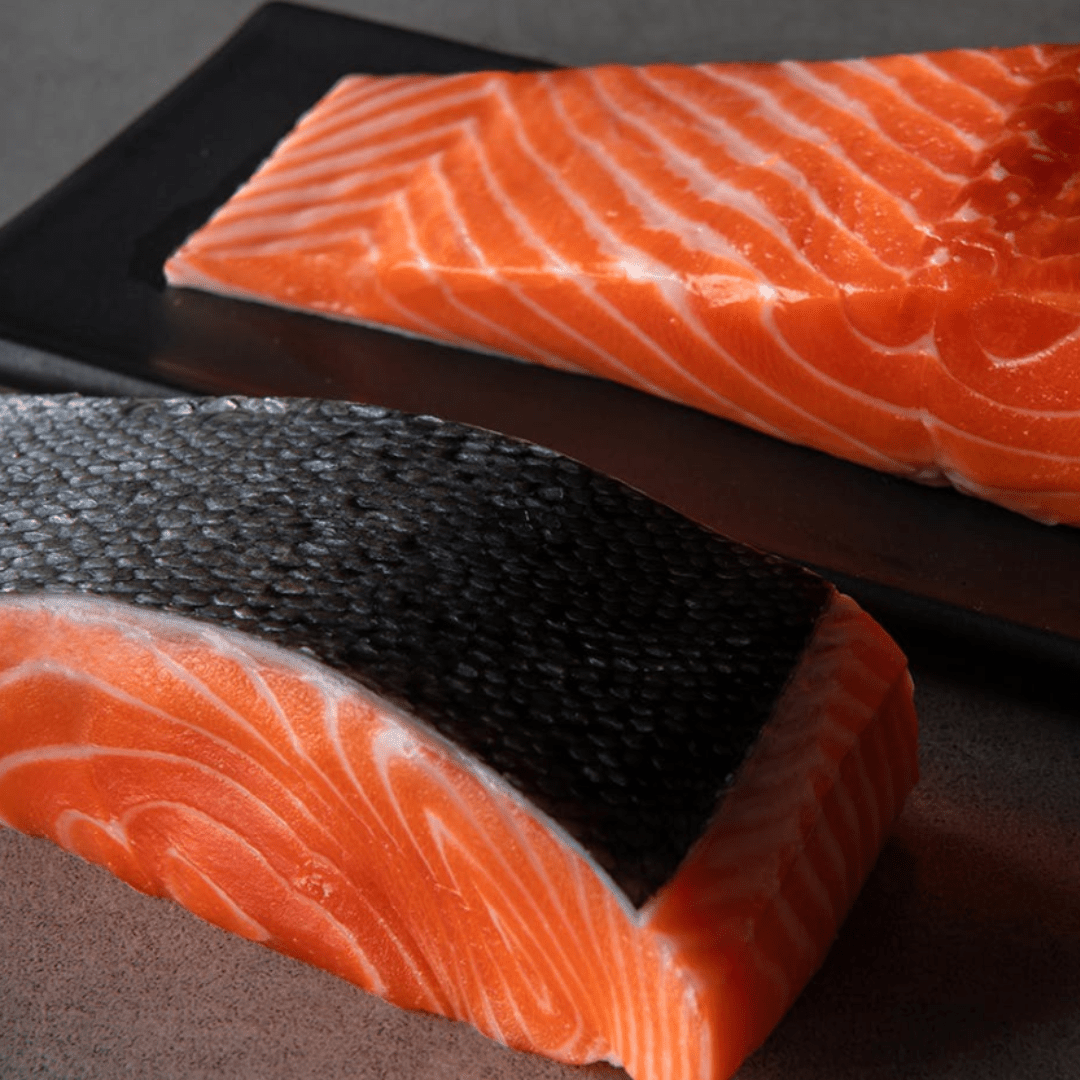
Rich flavor carrying oceanic depth and gentle sweetness across the palate. Contains a selection of King, Atlantic, and Steelhead.

A celebration of clean flavor and coastal elegance. Contains salmon, whitefish, and peruvian scallops.
Expressive flavors from the clean, flavorful fish. Contains a selection of bream, branzino, and barramundi.