- por Seatopia
Grilled Peri-Peri Salmon Recipe | Seatopia
- por Seatopia

Getaway Plate × Seatopia
Recipe by Getaway Plate
Travel-inspired home cooking — the dishes worth bringing back from somewhere, cooked on an ordinary weeknight
Serves 2 to 4 · 25 minutes of prep, 10 of it marinating · grilled on a sheet pan
Peri-peri is the African bird’s eye chili, and the Portuguese-Mozambican marinade built around it — chili, garlic, lemon, vinegar and paprika. On chicken it is an overnight job. On salmon it is ten minutes, because a fatty fillet takes the spice immediately, and any longer and the acid starts firming the surface before the grill ever gets to it.
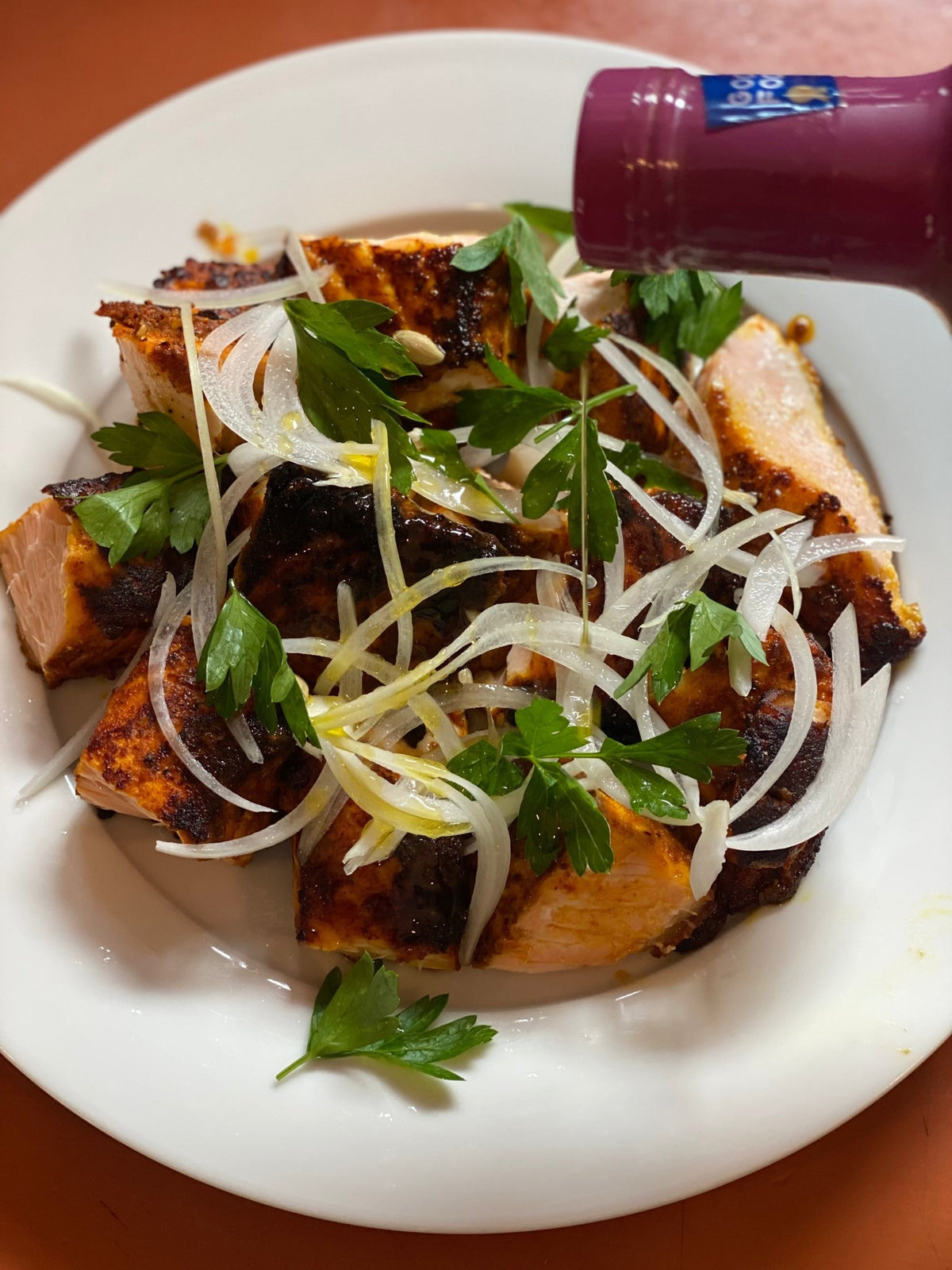
Getaway Plate’s version is about as short as a recipe gets: thaw, toss, wait ten minutes, grill. The one piece of technique worth reading twice is the pan — the fish goes onto a sheet that has been preheating on the grate, not onto the bars, which is what keeps the spice crust on the fish instead of in the fire.
About 35 minutes
Twenty-five of prep — and ten of those are the salmon sitting in the marinade doing nothing. Seven to ten minutes on the grill and it is done.
Serves 2 to 4
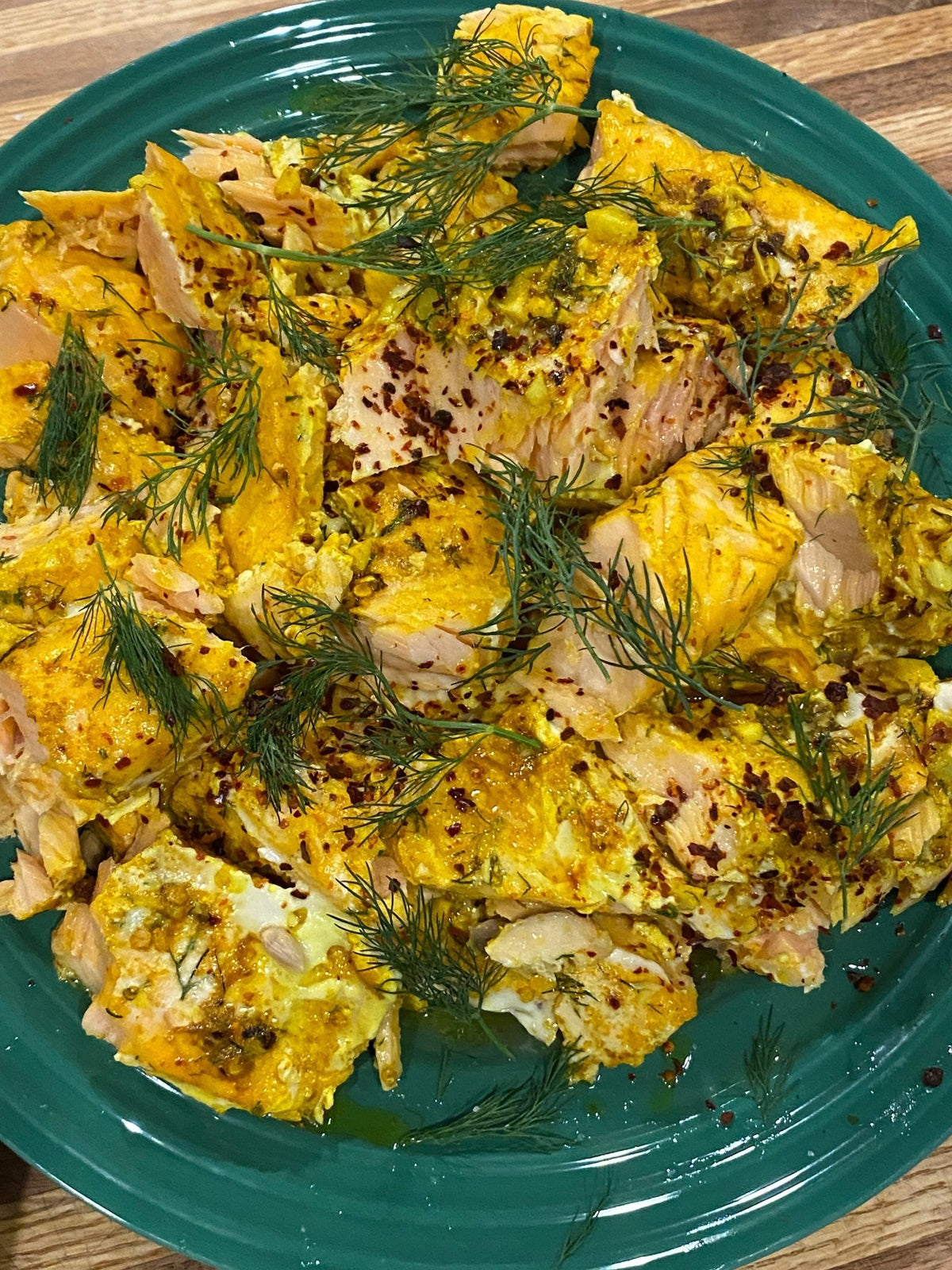
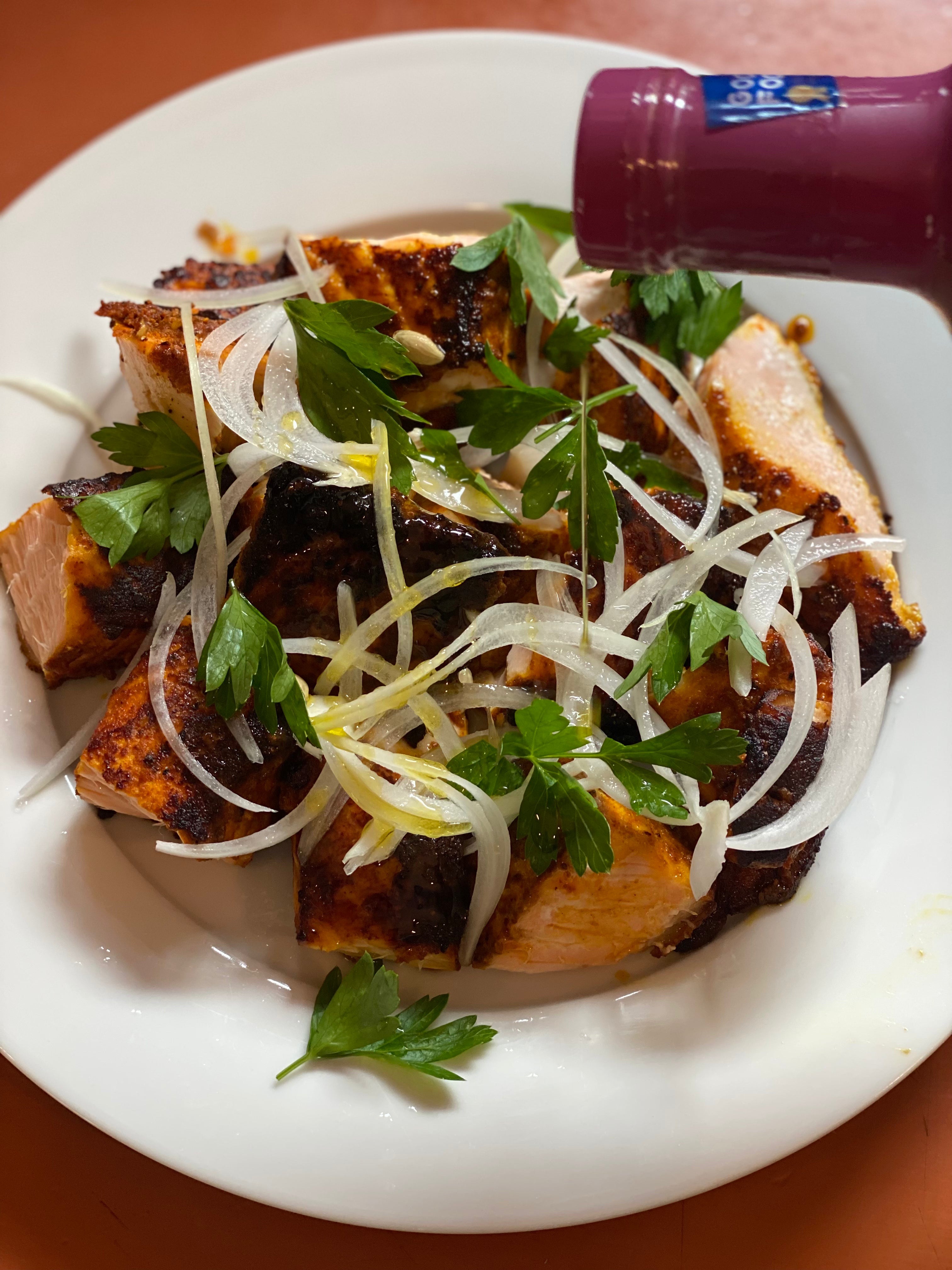
Two portions is dinner for two with a side. Four makes it a platter, which is how it is photographed here and how it is best eaten — sliced, shared, buried under onion and parsley.
Three things in the bowl
Olive oil, peri-peri blend, salt. Everything else — sliced onion, parsley, lemon, a last drizzle of oil — happens after the fish is off the heat.
Ten minutes, not thirty
The marinade is short on purpose. Peri-peri carries vinegar and lemon, and a long soak starts to cure the outside of the fillet, which costs you the texture the grill is supposed to give it.
Know what you are reaching for
Peri-peri (piri-piri, pil-pil) is the African bird’s eye chili, and the Portuguese-Mozambican marinade built around it: chili, garlic, lemon, vinegar, paprika, a little oil. The jar on the shelf and the shaker next to it behave completely differently on fish. The blend seasons and chars. The sauce is already acidic and wet, so it wants less time and a hotter, drier pan. This recipe is written for the blend.
Peri-peri seasoning blend As written
Dry, so it clings to an oiled fillet and chars rather than steams. Ten minutes is all the time it needs.
Peri-peri sauce, from the bottle
Wetter and sharper. Use about half as much, pat the fillet before it goes on the heat, and keep the rest for the table.
Harissa
Rose harissa is the closest easy swap — same smoke and garlic, more caraway, less citrus. Add a squeeze of lemon to the oil.
Cayenne, smoked paprika, garlic powder
The pantry build. Two parts smoked paprika to one part cayenne, a big pinch of garlic powder, lemon zest, salt.
Gochugaru or Aleppo
If you are cooking for someone heat-averse. Far milder, still red, still smoky — you lose the vinegar edge, so finish with extra lemon.
Heat is shown relative to each other, not on any official scale. Bird’s eye chilies vary enormously by batch, so taste your blend on a fingertip before you commit a fillet to it.

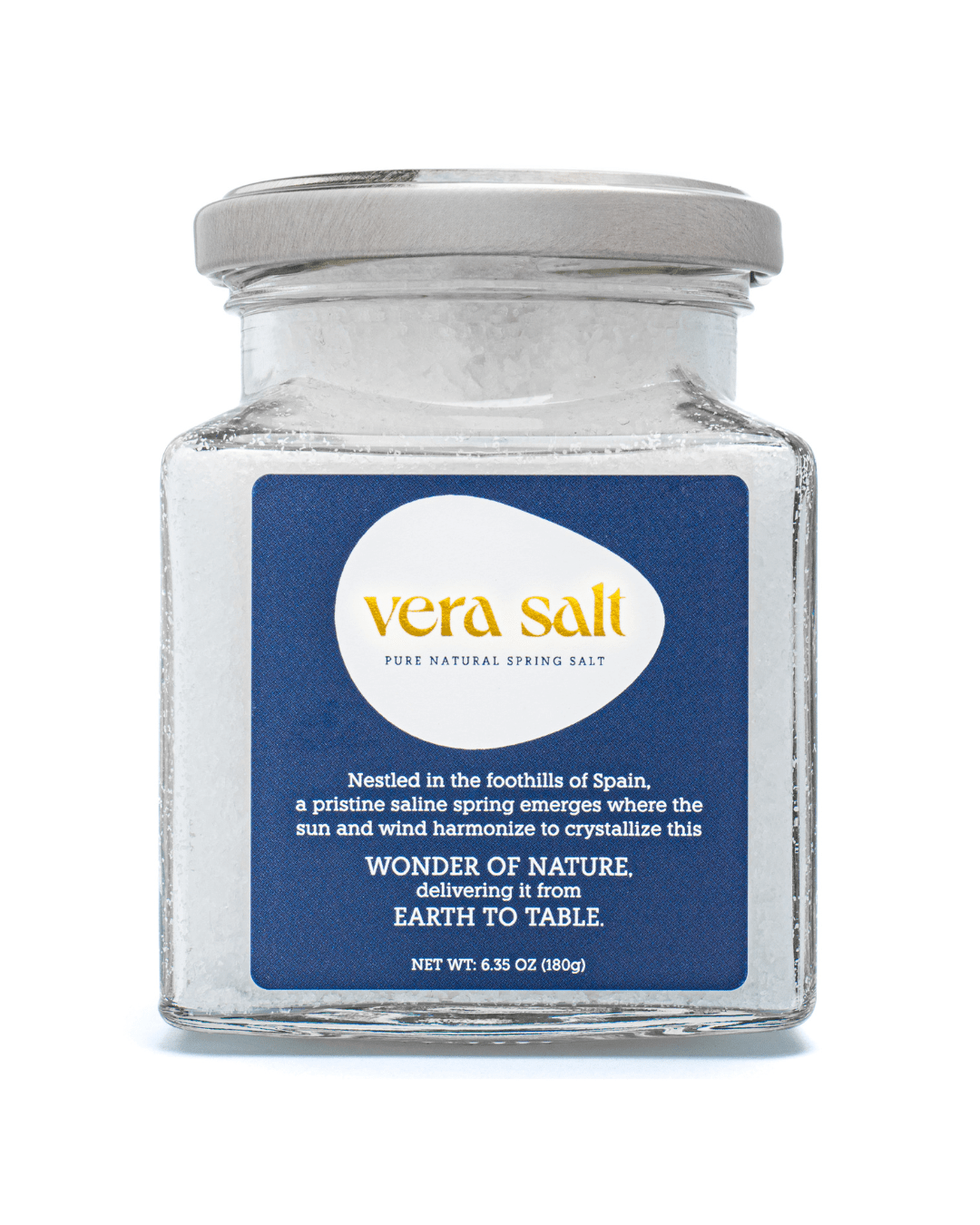
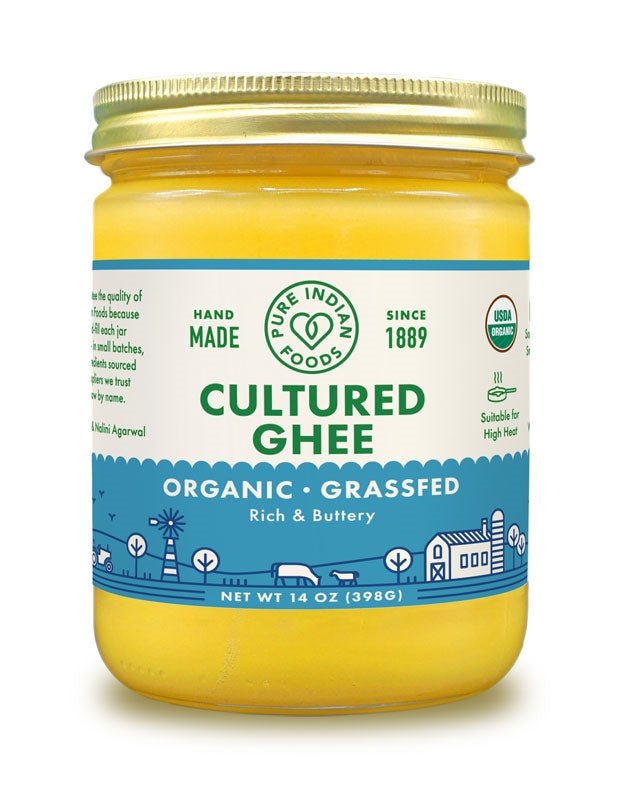
One round is two to four skin-on salmon portions, and the rest comes off your spice shelf. Flake salt for the finish, ghee if you would rather not grill on olive oil — it takes the higher heat without turning bitter.
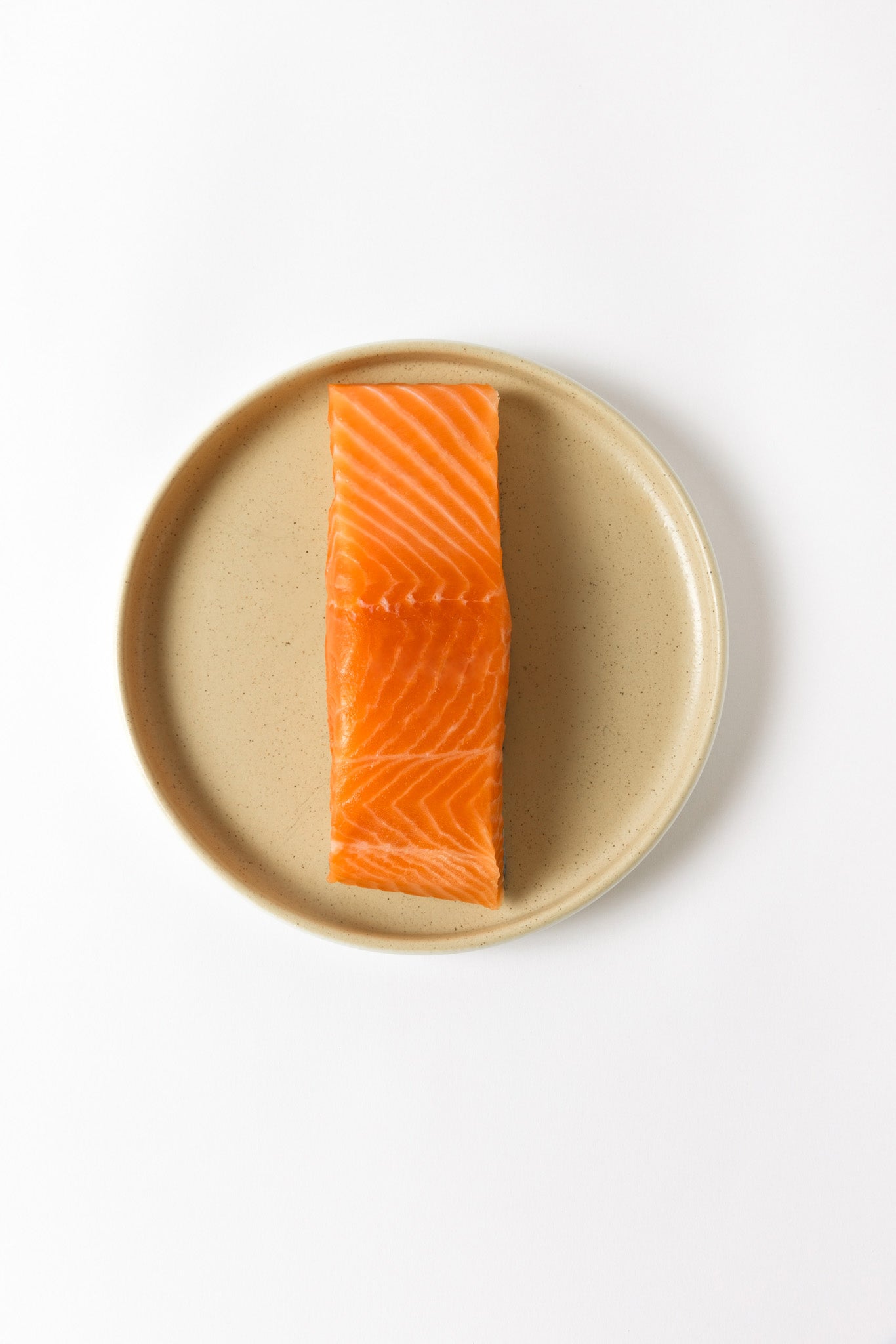
Unapologetically rich and velvety—Ōra King salmon, the gold standard for celebratory seafood
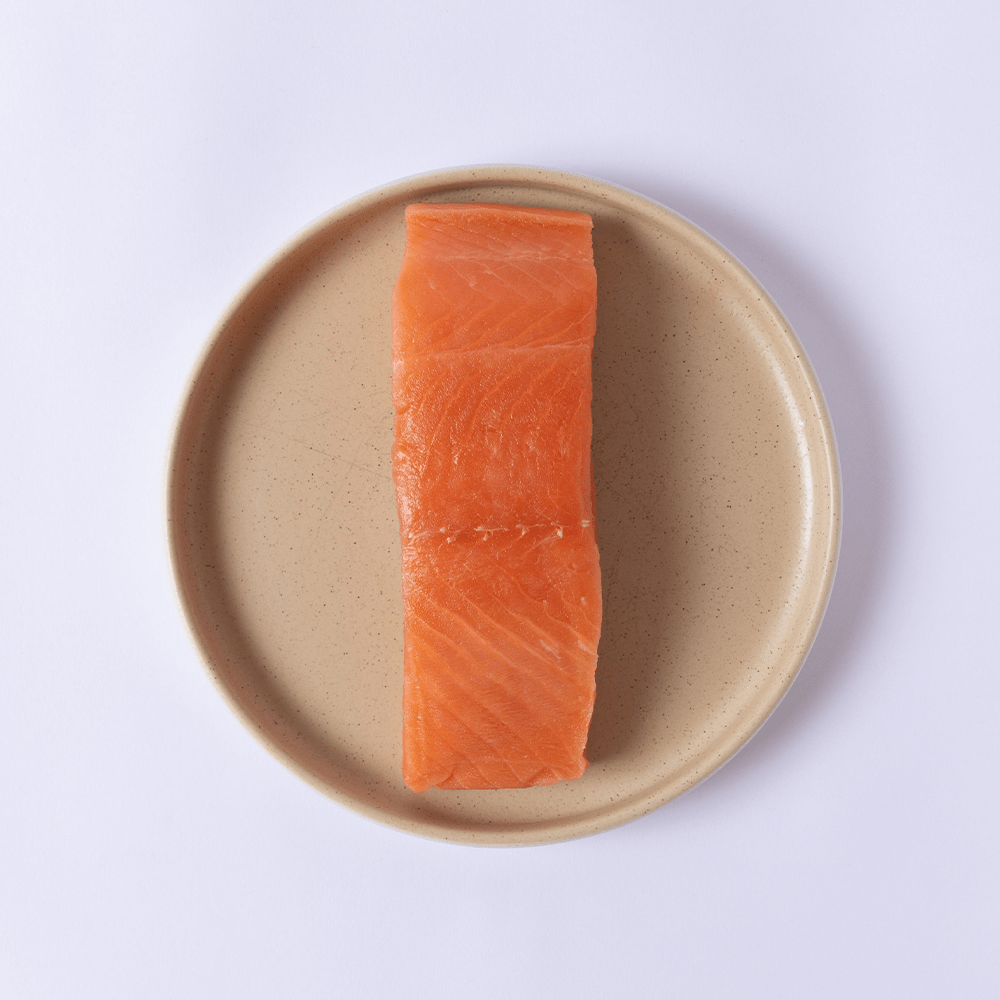
Luscious, buttery, and rich. Big Glory Bay king salmon elevates every dish
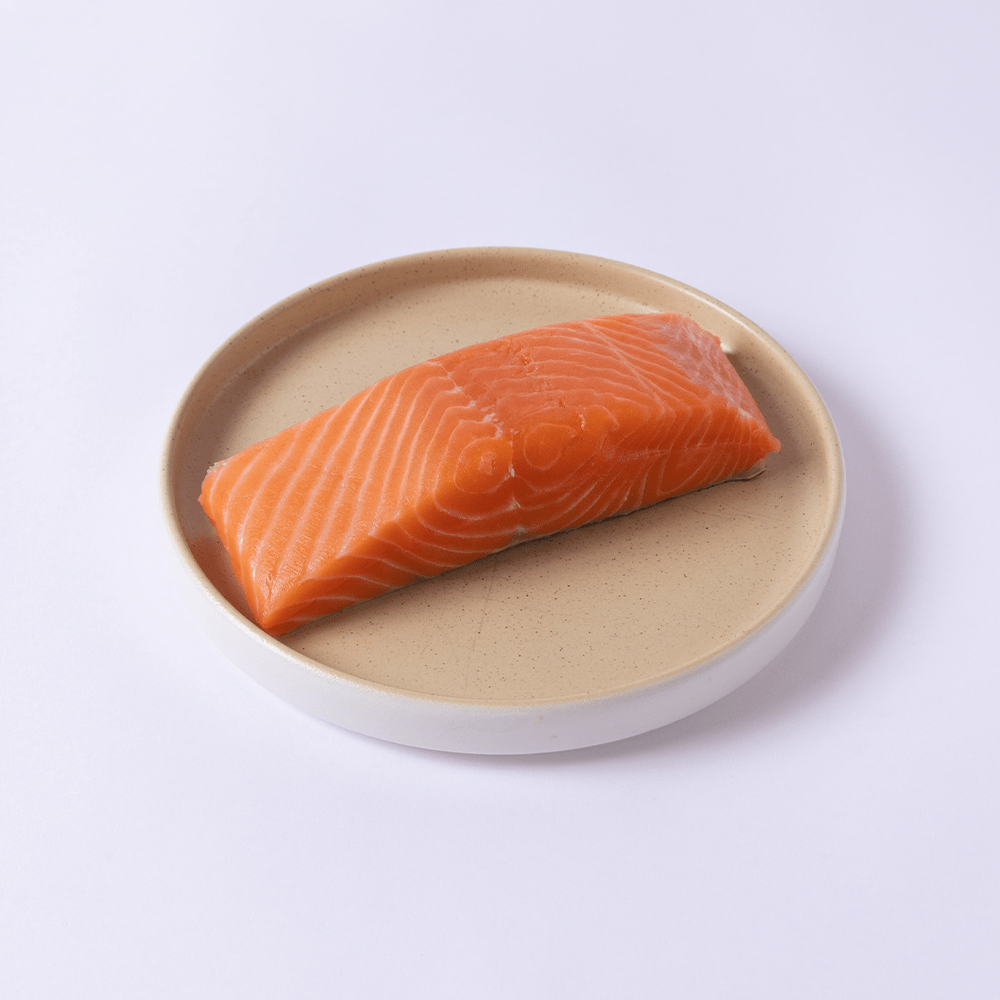
Rich flavor carrying oceanic depth and gentle sweetness across the palate. Contains a selection of King, Atlantic, and Steelhead.
Seven steps, and four of them are waiting. The recipe card above has the short version to cook from — this is the same thing with the reasoning attached.
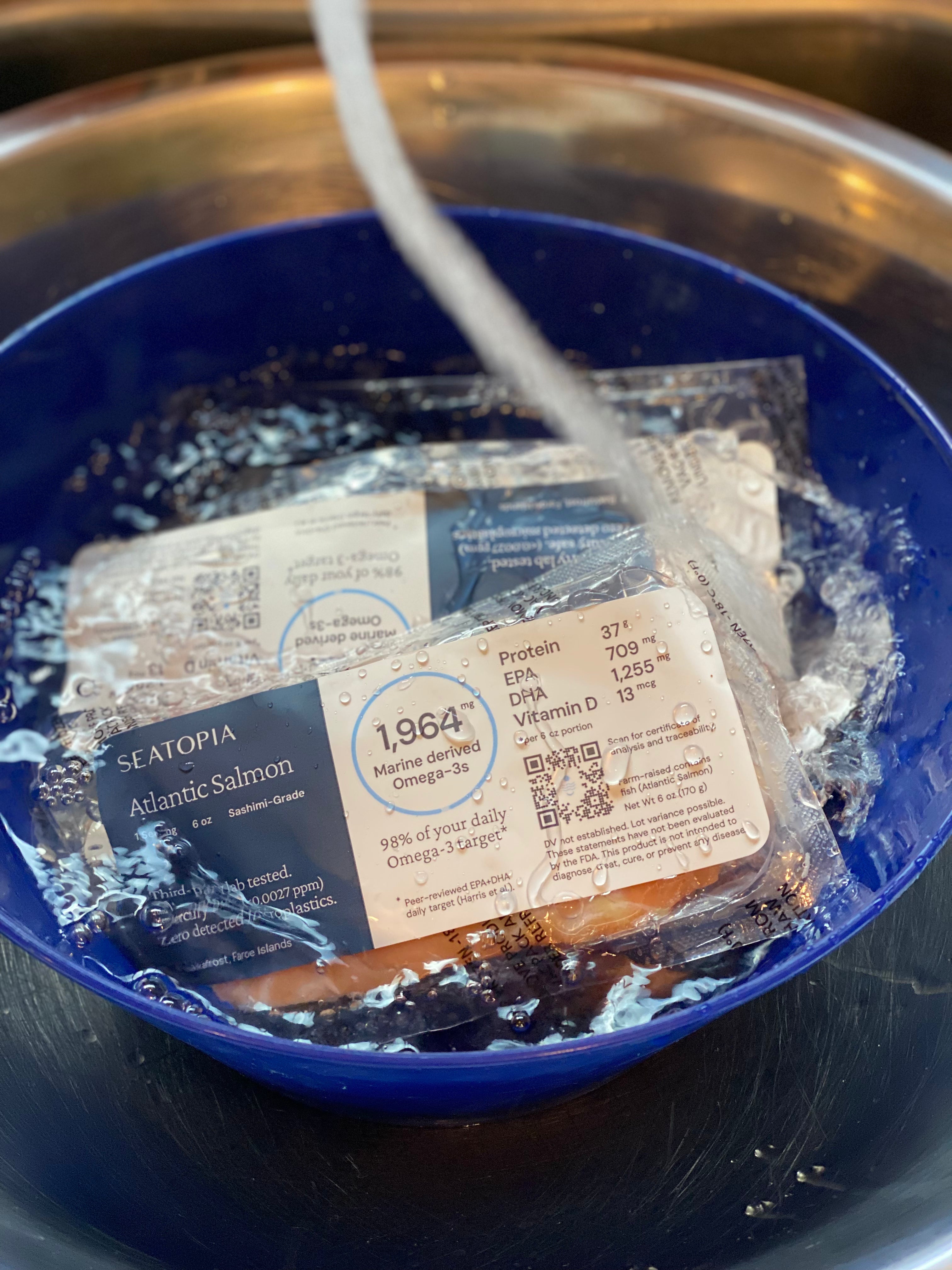
Step 1
Leave the portions in their vacuum seal and submerge them in a bowl of chilled water until completely thawed — 20 to 30 minutes for a 6 to 8 oz portion, and worth changing the water once. Overnight in the refrigerator works too if you have thought ahead. Never on the counter.
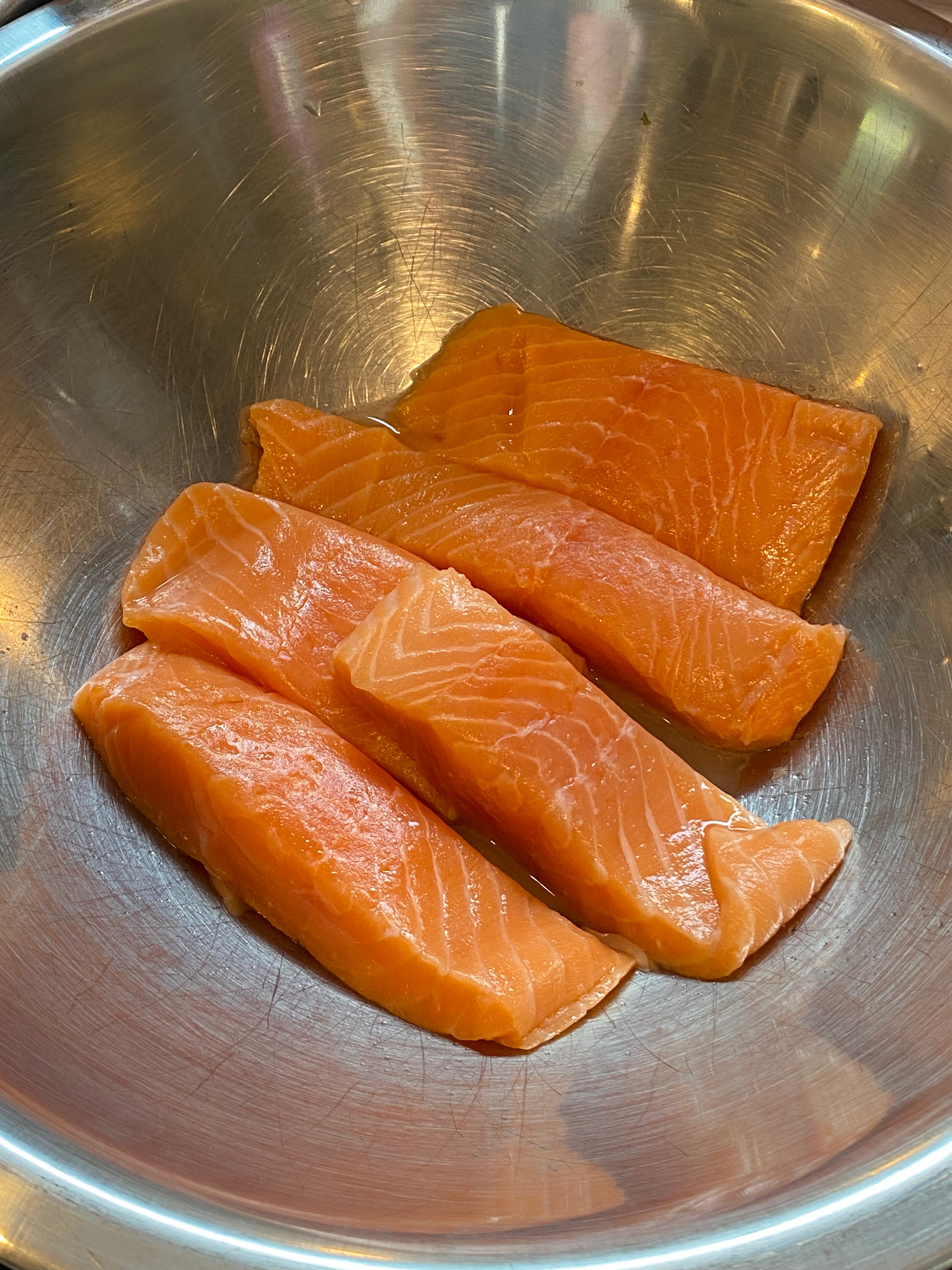
Step 2
Cut the vacuum packaging open, lift the portions out and put them straight into a mixing bowl. Pat them dry first — not in the original method, but a dry fillet takes the oil and the blend far better than a wet one, and it is five seconds of work.
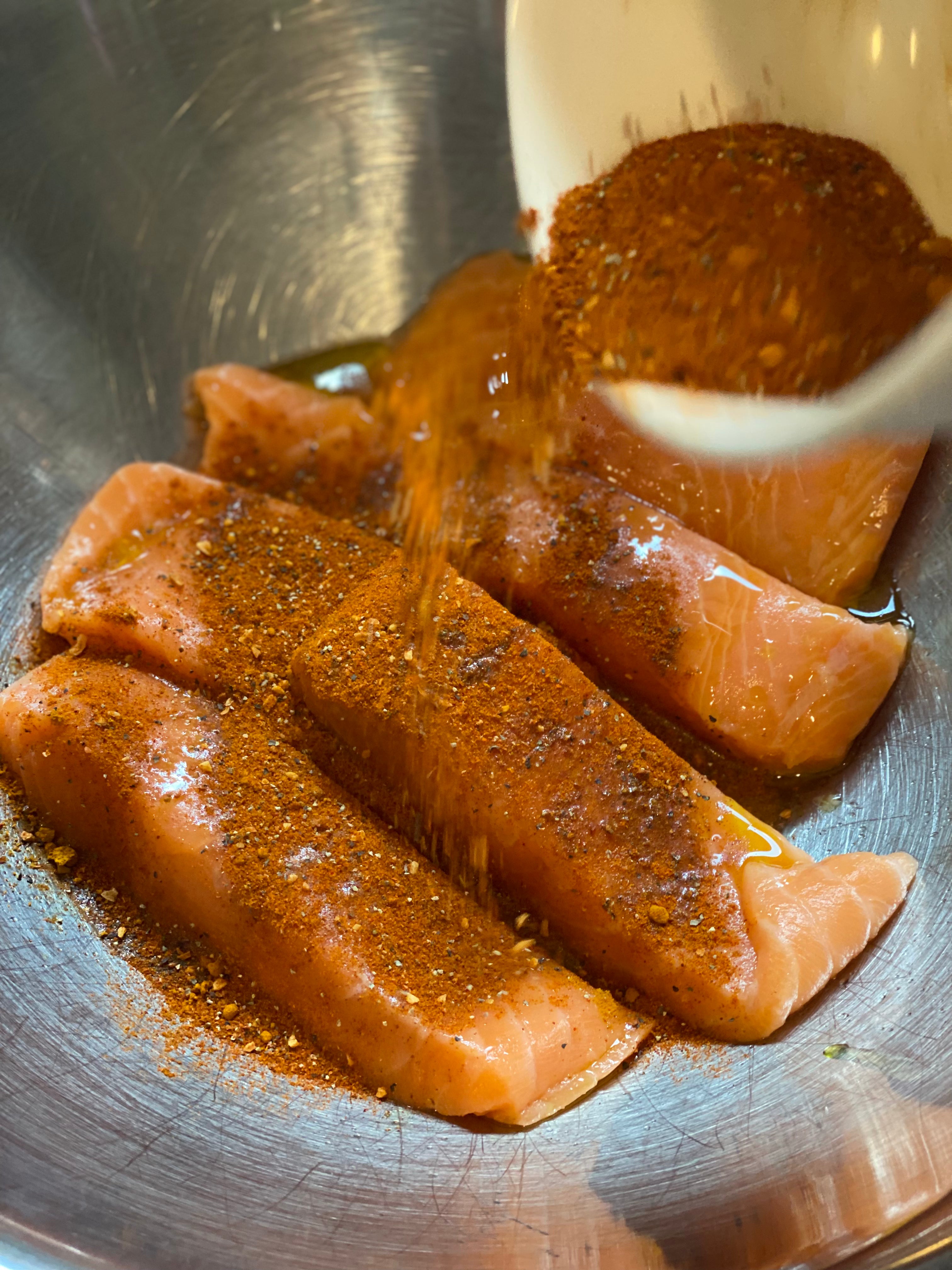
Step 3
Olive oil over the fish, then the peri-peri blend. Oil first is the whole trick: it gives the spice something to hold onto instead of drifting to the bottom of the bowl. Toss gently until every face is evenly coated.
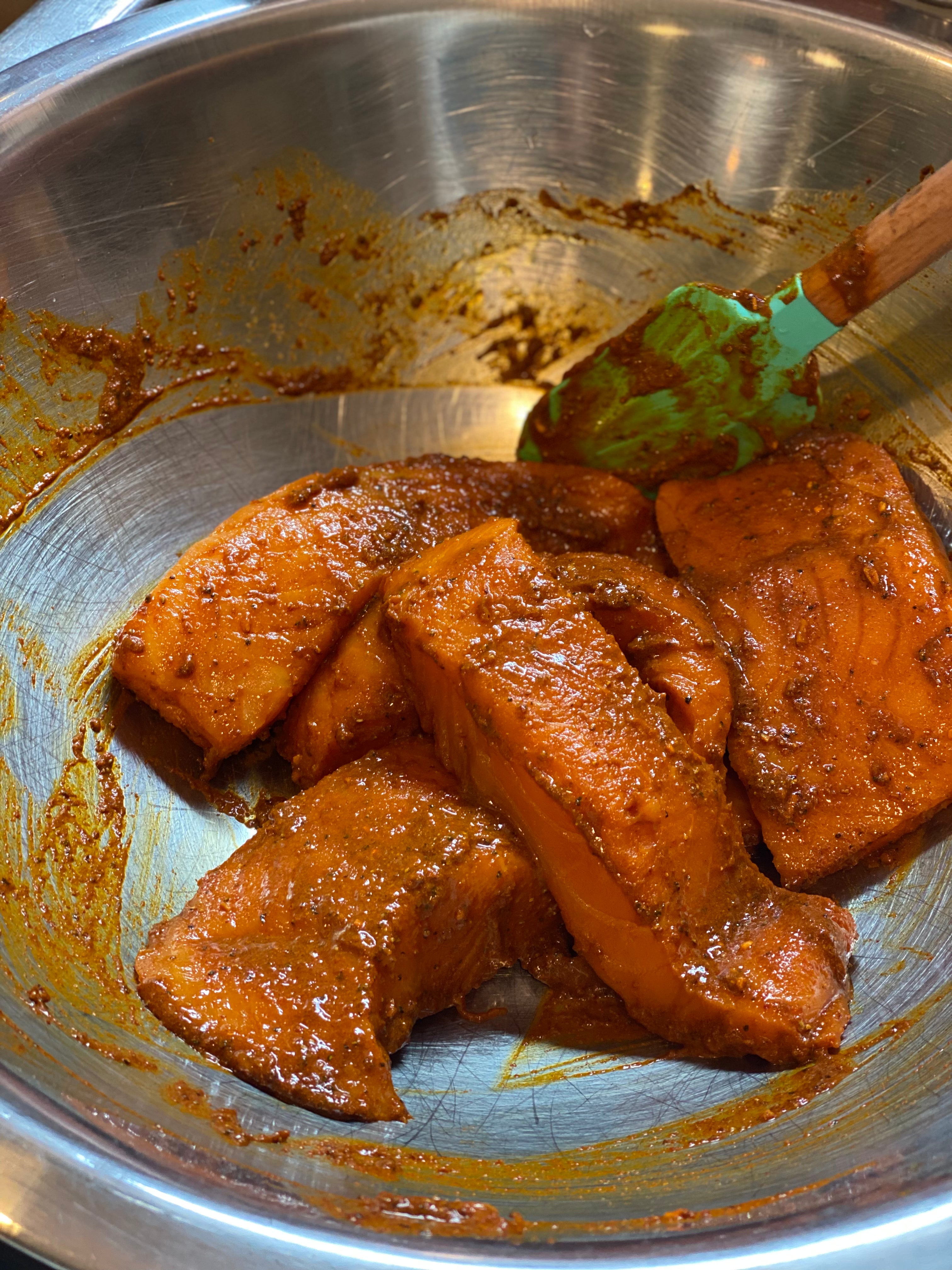
Step 4
Leave it to marinate for ten minutes while the grill comes up to temperature. This is long enough for the spice to bloom in the oil and start pulling at the surface of the fish, and short enough that the vinegar and lemon in the blend have not begun to cure it.
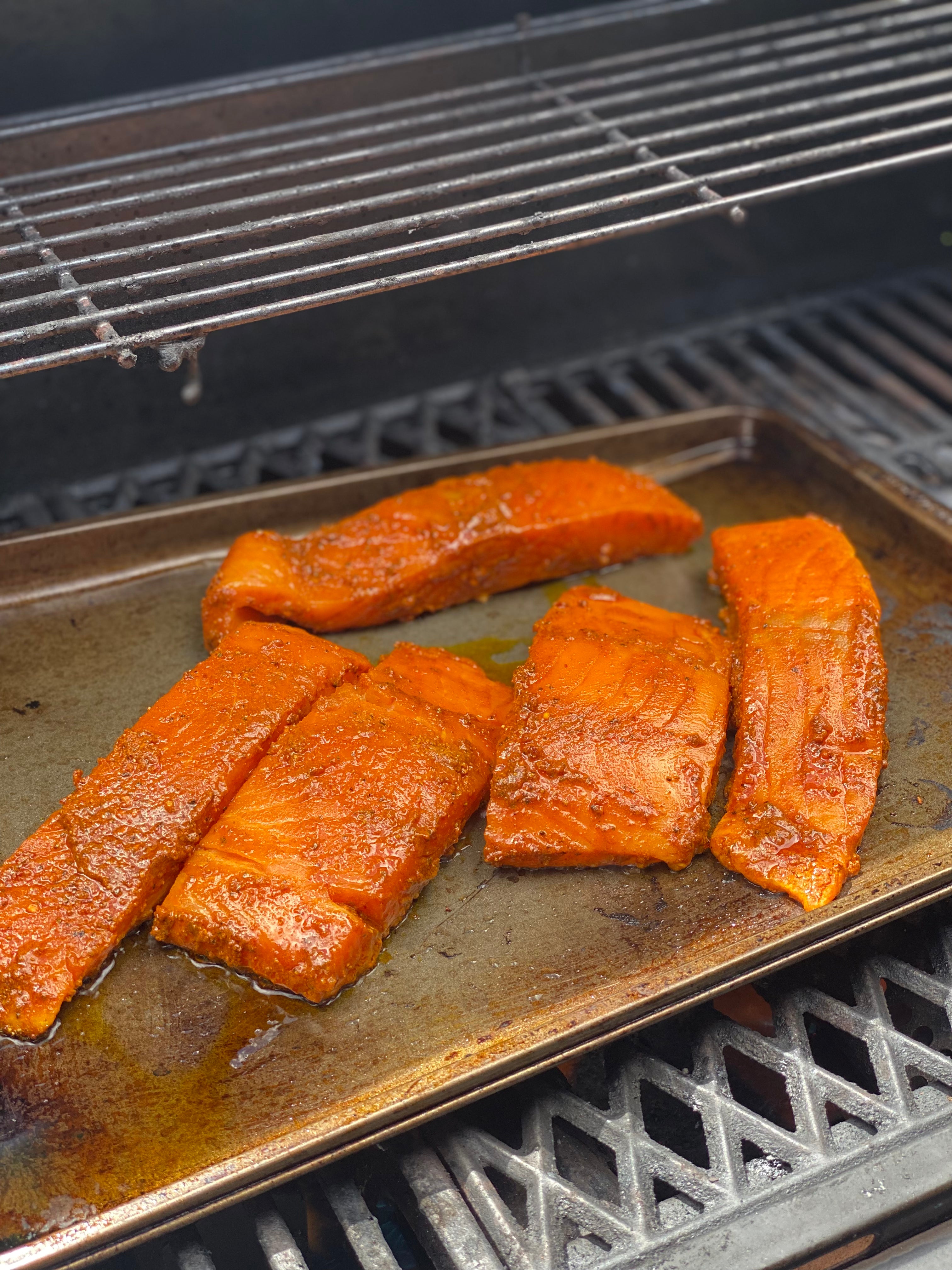
Step 5
Grill to medium-high, baking sheet on the grate while it heats. Season the portions with salt, then lay them on the hot sheet — that is what stops them sticking, and it keeps the oil and spice out of the flame.
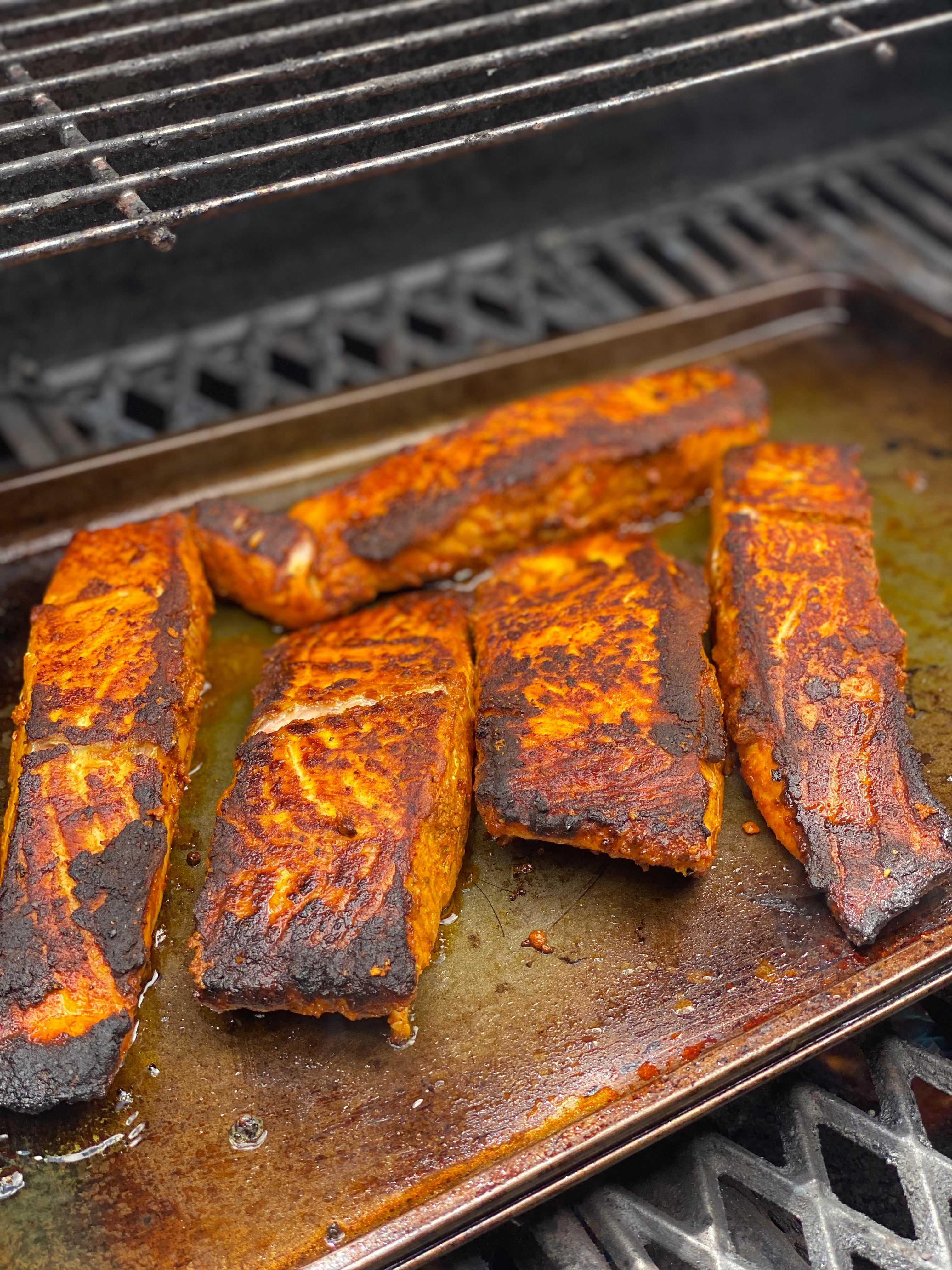
Step 6
Lid down, three to four minutes, and leave it alone. It releases when the crust has set. Flip once, another three to four minutes, then pull it while the centre is still slightly translucent — it keeps cooking on the way to the table.
Step 7
Onto a serving platter. Sliced onion over the top, a good squeeze of fresh lemon, an extra drizzle of olive oil and a handful of parsley. Serve immediately — the onion is meant to be sharp and raw against the char, and it softens if it sits.
The step people skip
Getaway Plate grills these on a baking sheet set on the grate rather than on the bars themselves, and it is the difference between a crust and a mess. Peri-peri is oil plus ground spice: dripped straight onto coals it flares, and the sugars in the paprika scorch black before the centre of the fillet is warm. A preheated sheet gives you the grill’s heat and smoke with a surface the spice can actually brown against.
Put it on the grate while the grill comes up to medium-high and leave it there for a good five minutes. A cold pan is why fish sticks — the protein grabs the metal before a crust can form.
Three to four minutes, lid down, and do not move it. It releases when the crust is set; if it resists the spatula it is not ready, and forcing it takes the crust off with the pan.
Another three to four minutes on the second side. Pull it while the centre is still slightly translucent — it carries on cooking on the platter, and the grill has more residual heat than a stovetop pan.
No grill? A cast-iron pan over medium-high does the same job indoors, and a sheet pan under a broiler set high, about six inches from the element, gets you close on the char. Open a window either way — chili and smoke is the point of the dish and it will find you.
The method is fixed — oil, spice, ten minutes, hot dry surface. Almost everything else is negotiable, and the dish survives all of it.
| As written | Closest swap | If you are improvising | |
|---|---|---|---|
| The fish | 2–4 skin-on salmon portions | Steelhead or Atlantic salmon, same timing | Any firm, fatty fillet — lean whitefish dries out before the spice chars |
| The peri-peri | Dry peri-peri seasoning blend | Bottled peri-peri sauce, about half as much | Smoked paprika and cayenne, two to one, with garlic powder and lemon zest |
| The oil | Olive oil, in the bowl and at the table | Ghee or avocado oil for the marinade | Marinate in a high smoke point fat, finish with the good olive oil raw |
| The heat source | Grill, medium-high, sheet pan on the grate | Cast-iron pan on the stove, medium-high | Sheet pan under a high broiler, about six inches down |
| The onion | Thinly sliced raw onion over the top | Red onion soaked in cold water for ten minutes | Quick-pickle it in lemon juice and salt while the fish marinates |
| The herb | Fresh parsley, generous | Cilantro, which is closer to the original | Parsley and mint together, which suits the lemon |
| The finish | Fresh lemon juice | Lime, which leans the dish Mozambican | A splash of the vinegar from the peri-peri jar, then lemon on top |
The spice is the part that keeps. Mix a jar of it — smoked paprika, cayenne, garlic, oregano, lemon zest, salt — and it sits happily in the cupboard for months, which turns this into a fifteen-minute dinner on any night you have salmon thawed.
What does not keep is the fish in the marinade. Ten minutes is the window; an hour later the acid has firmed the surface and you will grill something closer to gravlax than to a steak. Cooked, it is good cold the next day, flaked into a salad with the leftover onion and lemon.
A peri-peri crust is assertive, and it flattens a lean fillet. It works here because king salmon is fatty enough to stand up to it — the fat carries the chili and the smoke rather than being buried by them, and it is also why the fish stays moist through a hard sear on both sides.
Our King Salmon tested at 2,414 mg EPA+DHA per 6 oz serving. Values vary by sample and season. Every supplier is tested before we approve them, then randomly audited to ensure consistent compliance with the Seatopia Standard — third-party lab tested for nutrition, mercury and microplastics.
Hotter than a chili flake and milder than most hot sauces, but it depends entirely on the blend you buy — bird’s eye chilies vary wildly and commercial blends are cut with paprika at very different ratios. Taste a pinch on a fingertip before you commit the fish. If it is too much, cut the blend with smoked paprika one to one; the colour and the smoke stay, the heat halves.
Yes, with two adjustments. Use about half as much, because the sauce is already carrying oil and acid, and pat the fillets before they go on the heat — a wet surface steams instead of charring. Keep the rest of the bottle for the table, which is where it does its best work anyway.
Almost certainly a cold surface. The sheet pan needs to preheat on the grate with the grill, not go on at the last second — fish laid on cool metal grabs it before a crust can form. The other cause is moving it too early: leave it for the full three to four minutes and it releases on its own.
Not usefully. Peri-peri carries vinegar and lemon, and past about twenty minutes the acid starts to firm and opaque the outside of the fillet the way a ceviche would. You lose the contrast between charred crust and soft centre, which is the point of the dish. Ten minutes is not a shortcut; it is the recipe.
A cast-iron pan over medium-high does this well indoors — same timing, same instruction to leave it alone. A sheet pan under a high broiler about six inches from the element gets closest to the char, and needs no flipping if you are cooking skin-side down. Run the extractor either way.
Overnight in the refrigerator in the sealed pack is best, about 12 hours. In a hurry, submerge the sealed pack in a bowl of chilled water for 20 to 30 minutes, changing the water once. Never thaw at room temperature, and never in warm water.
Recipes from our kitchen and from the people who cook with us. Every Seatopia box includes a FREE virtual cooking class where we work through a dish like this one together.
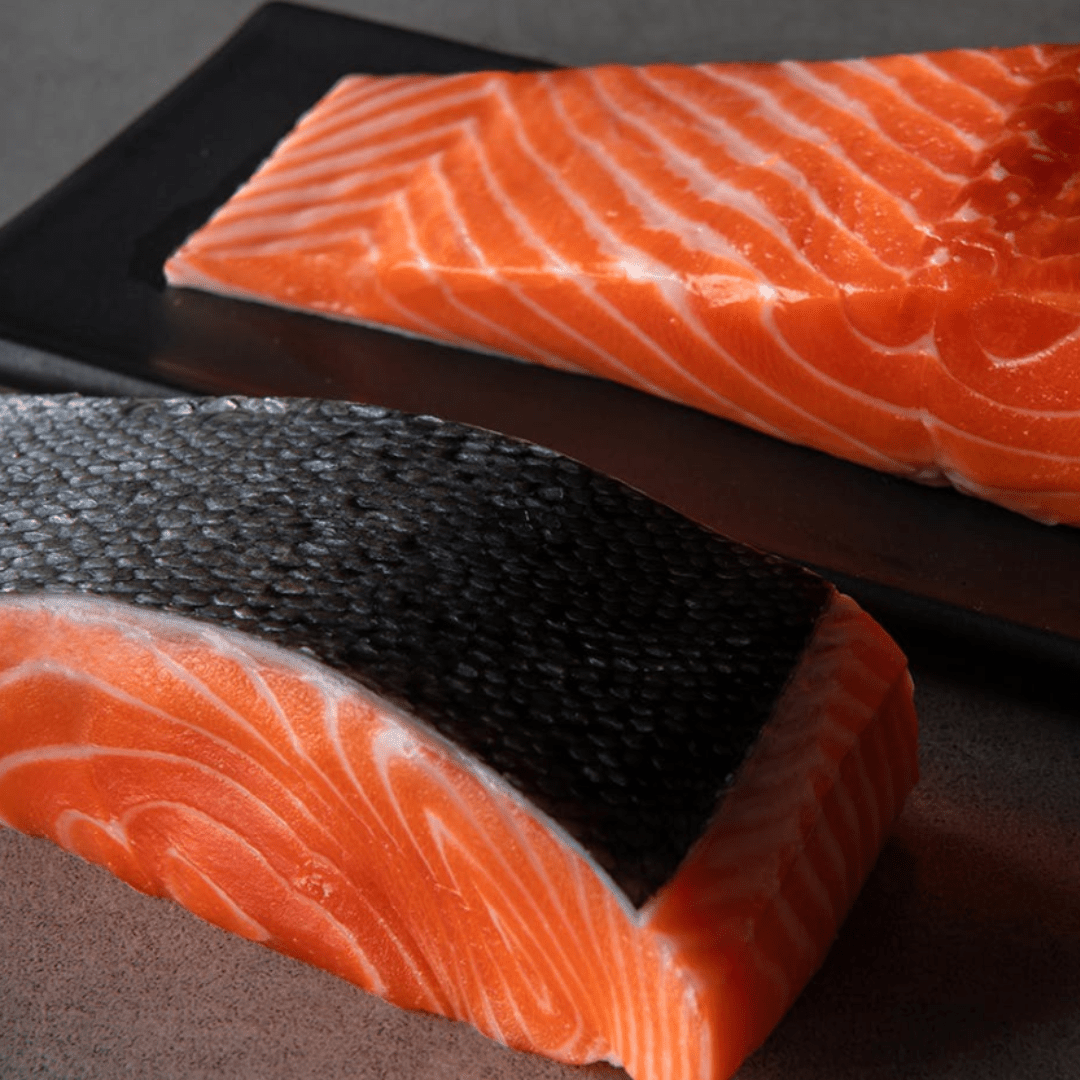
Rich flavor carrying oceanic depth and gentle sweetness across the palate. Contains a selection of King, Atlantic, and Steelhead.

A celebration of clean flavor and coastal elegance. Contains salmon, whitefish, and peruvian scallops.
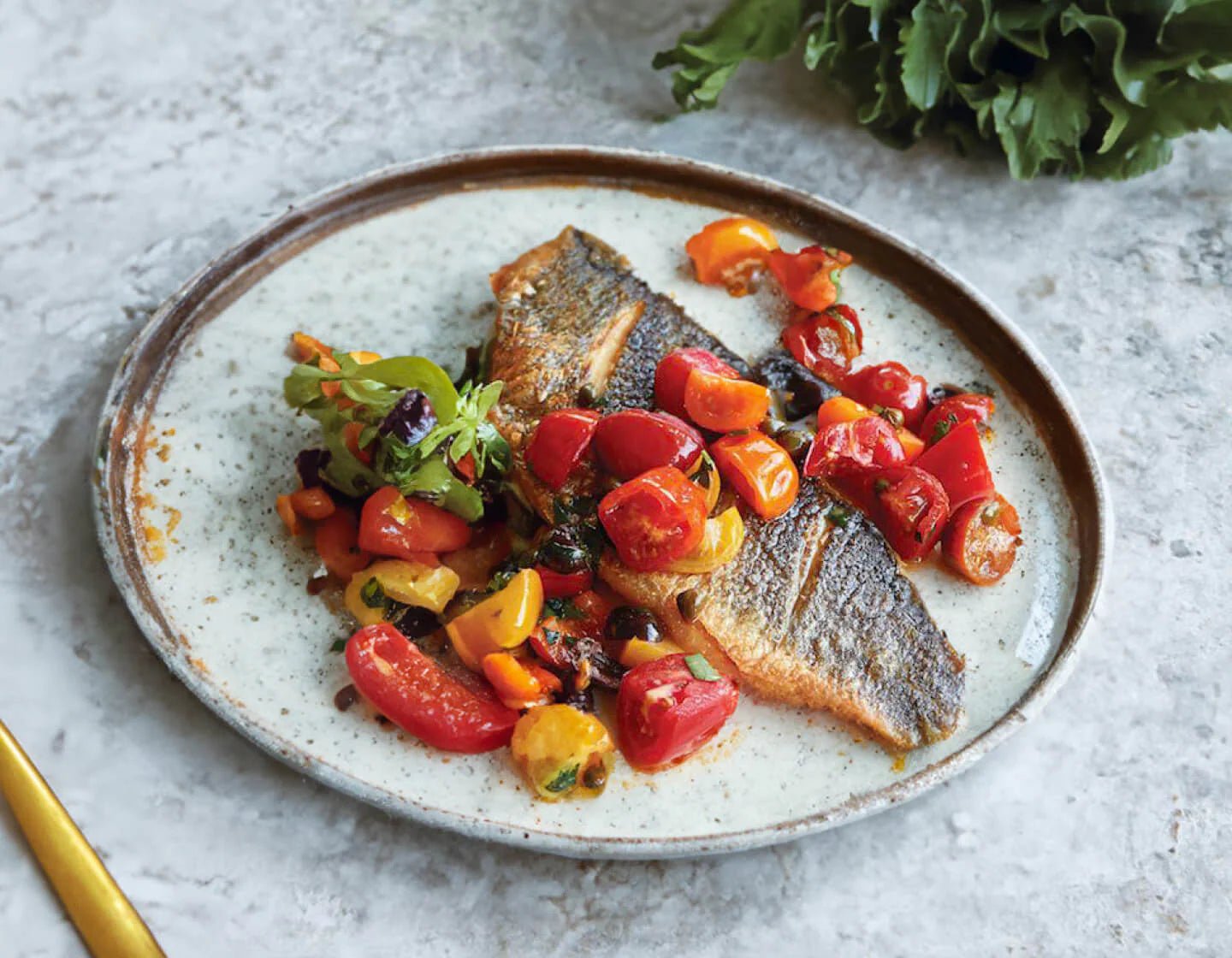
Expressive flavors from the clean, flavorful fish. Contains a selection of bream, branzino, yellowtail, and barramundi.