Recommended by Dr. Casey Means, MD
“Regenerative aquaculture is seafood production that enhances, rather than depletes, the oceans.”
Clean Seafood, delivered to your door, with up to 3,434 mg bioavailable EPA + DHA per serving.

Dr. Casey Means, MD is a friend of Seatopia and receives no payment, commission, equity, or affiliate revenue from Seatopia.

The seafood Dr. Means trusts. Verified, not assumed
70-90% of Americans are Omega-3 deficient.¹
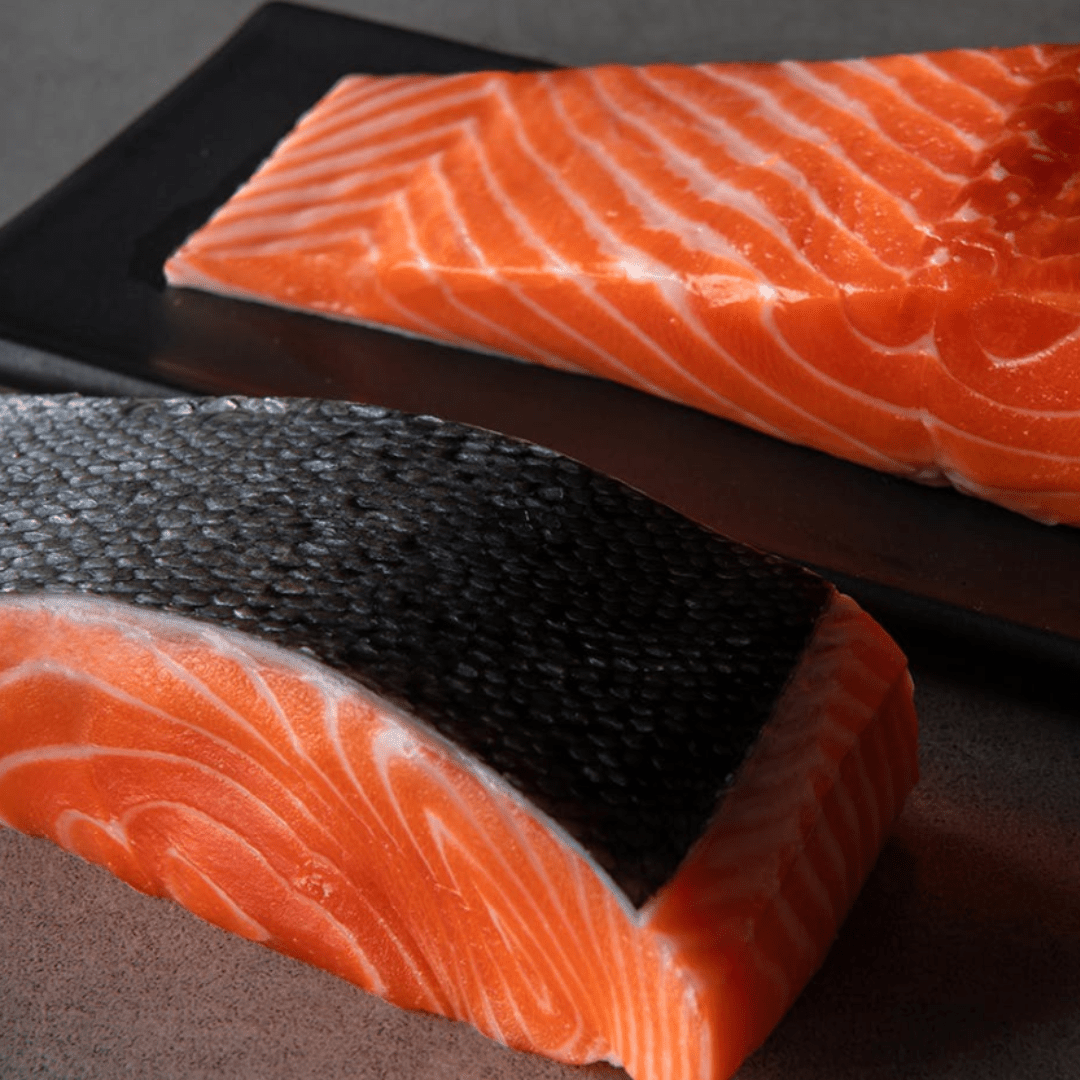
A serving of Seatopia King Salmon: 3,434 mg bioavailable EPA + DHA
Most seafood is a black box. It can’t tell you its DHA level, its mercury content, or whether it came from clean water.
There’s a better way. Clean and nutritious seafood from Seatopia.
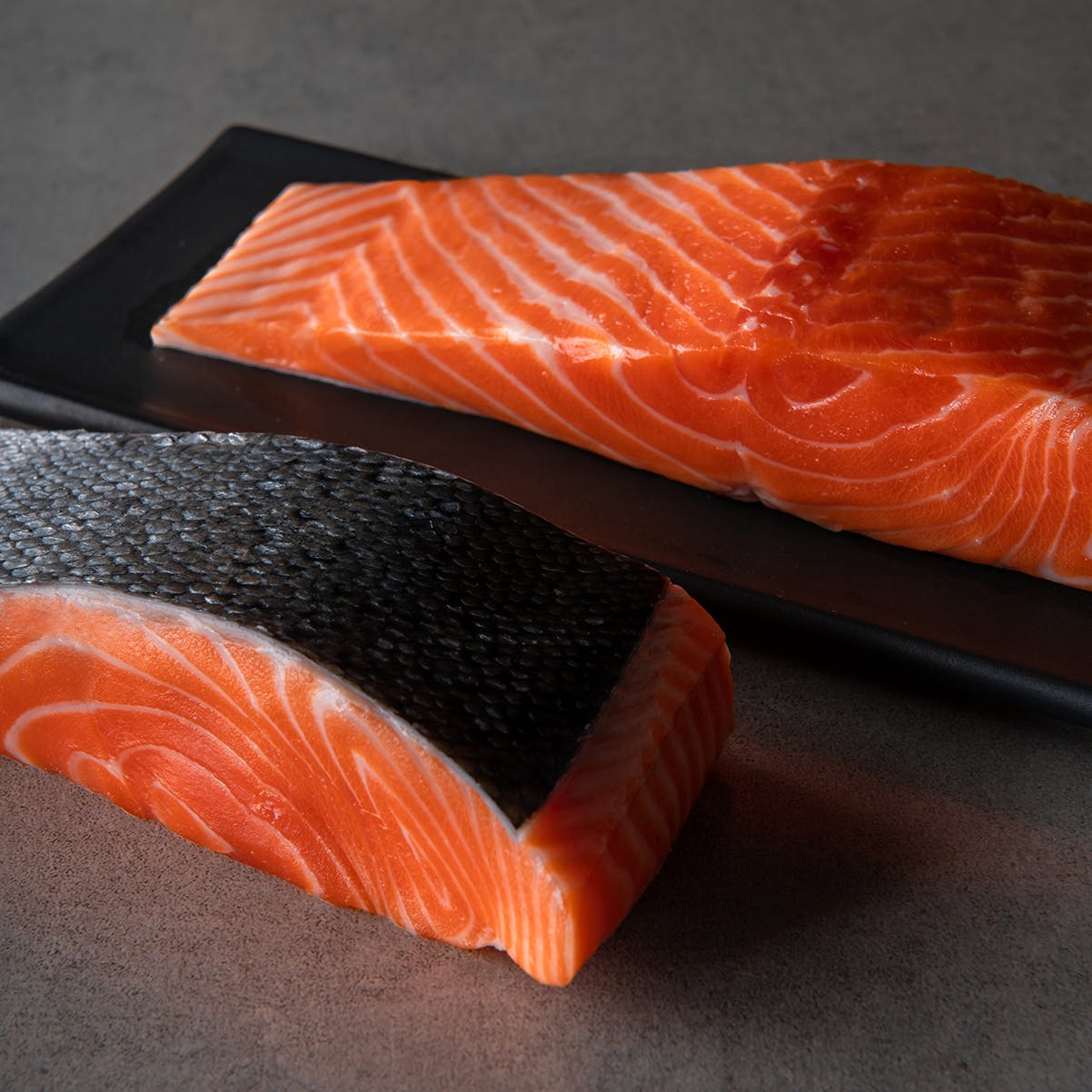

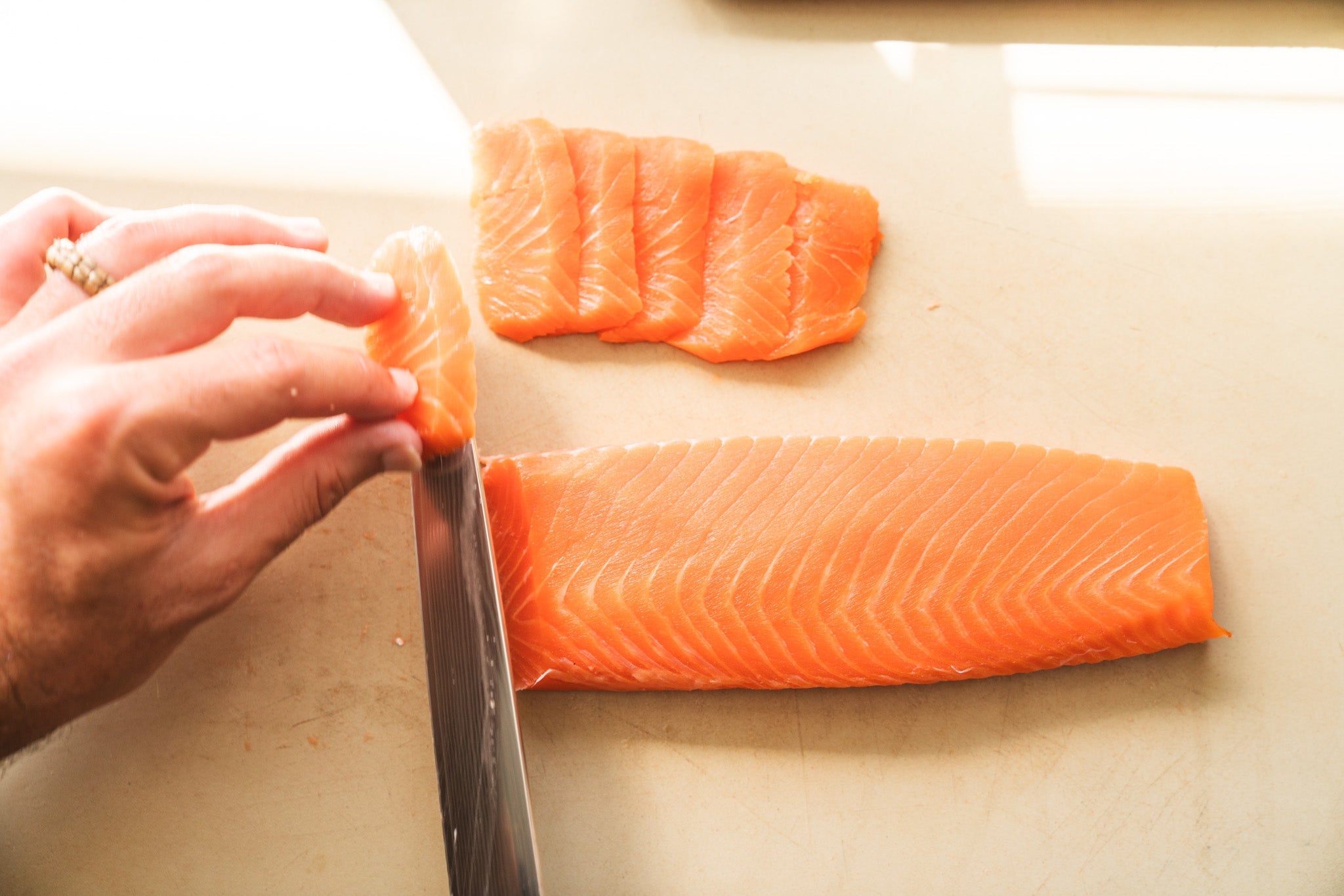
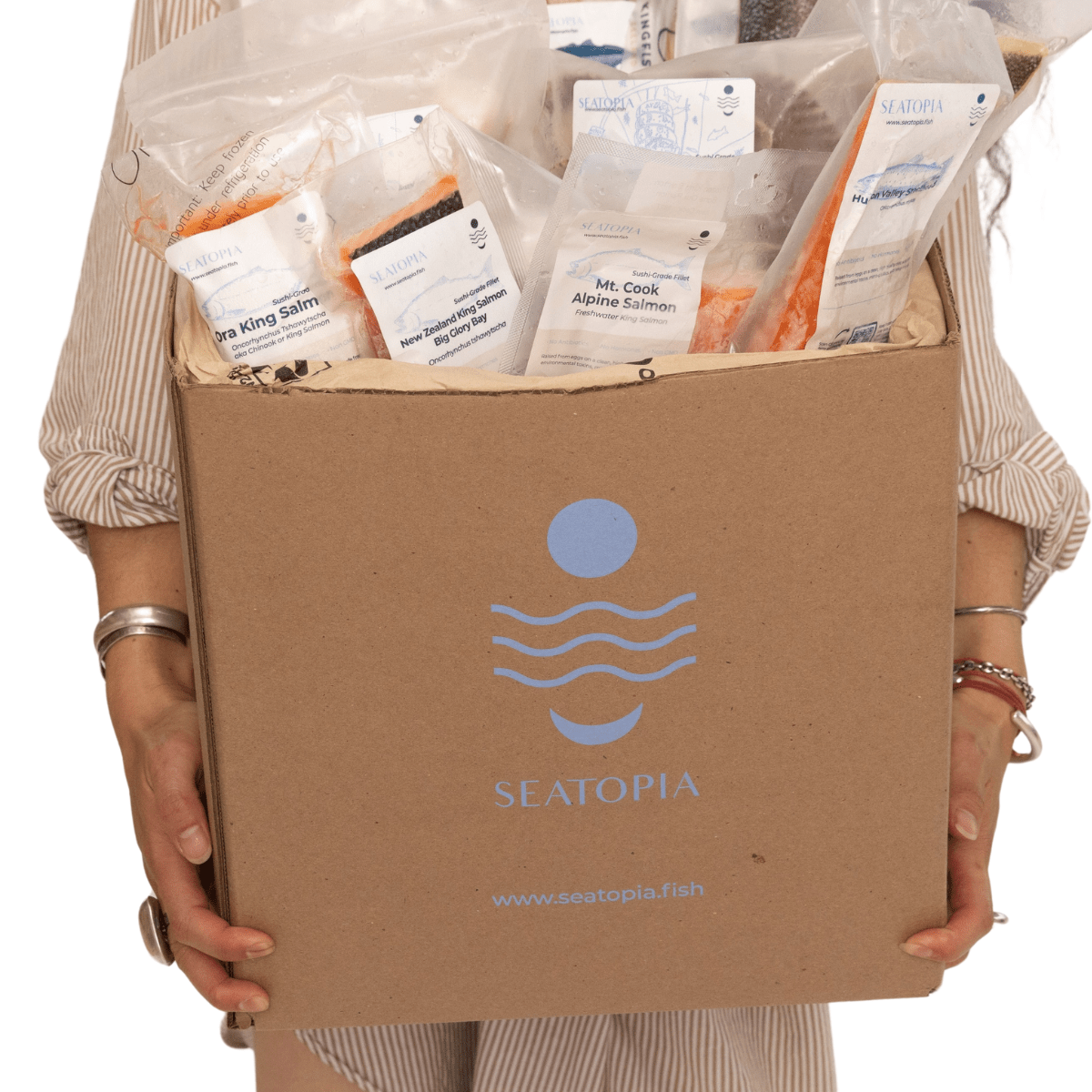


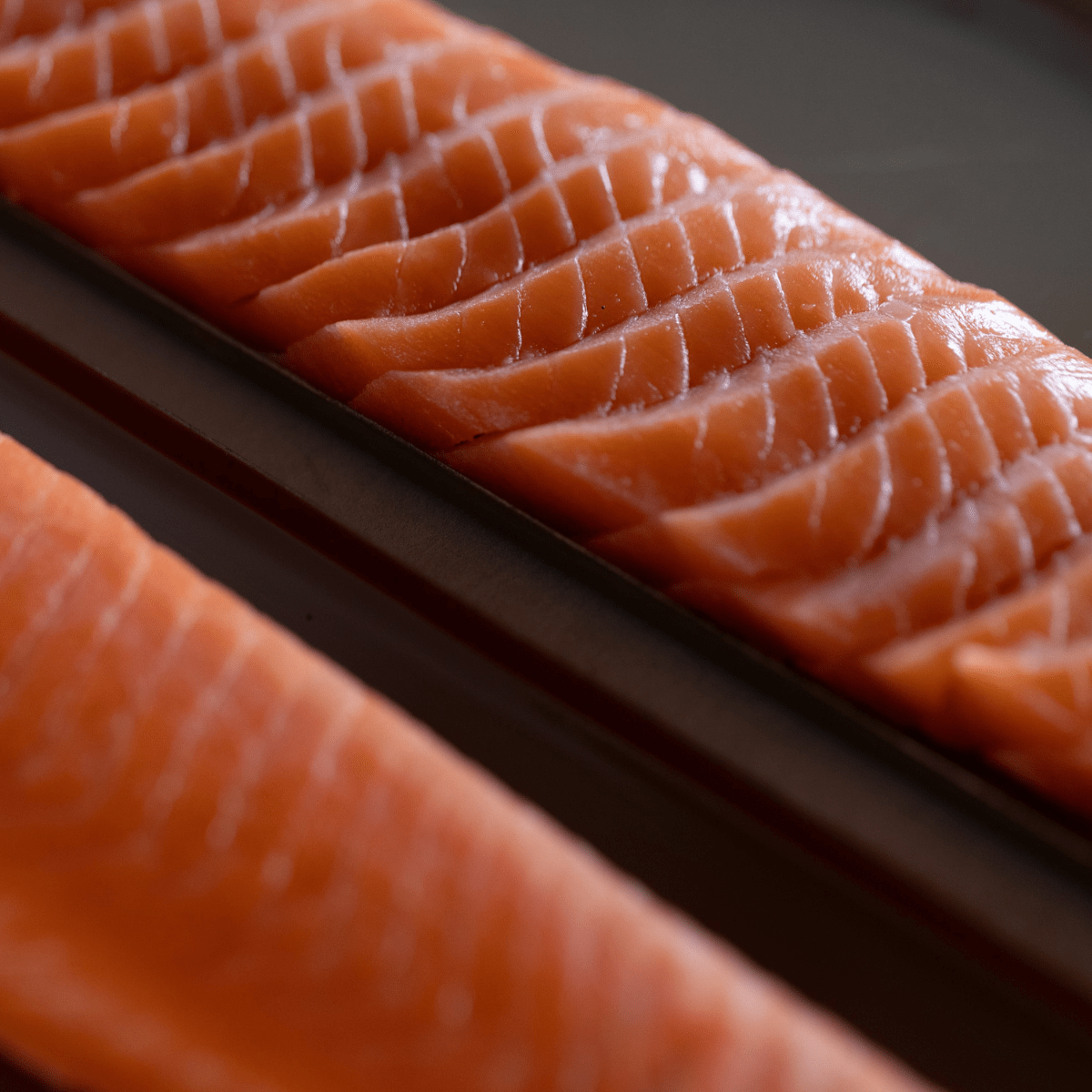
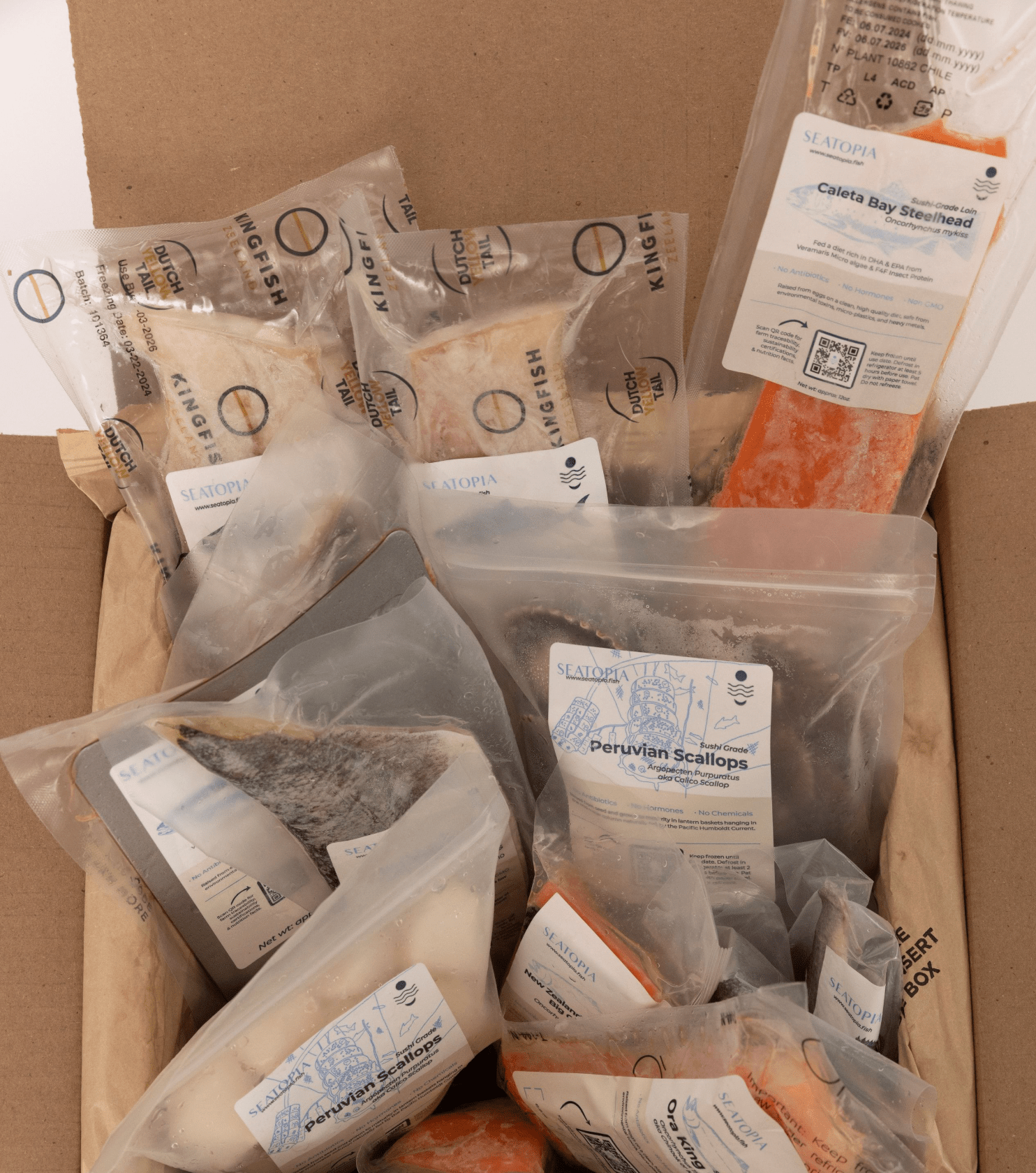
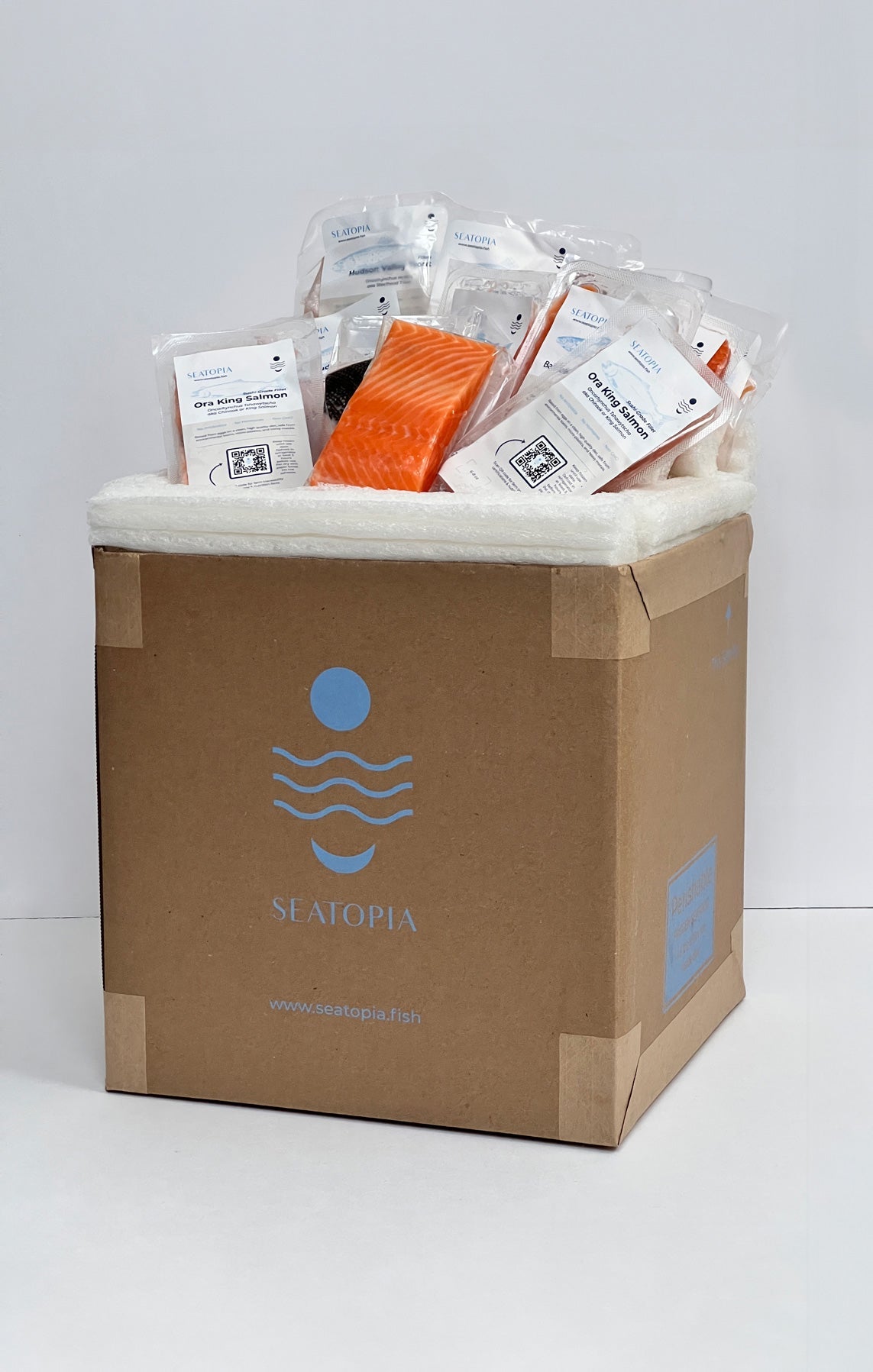
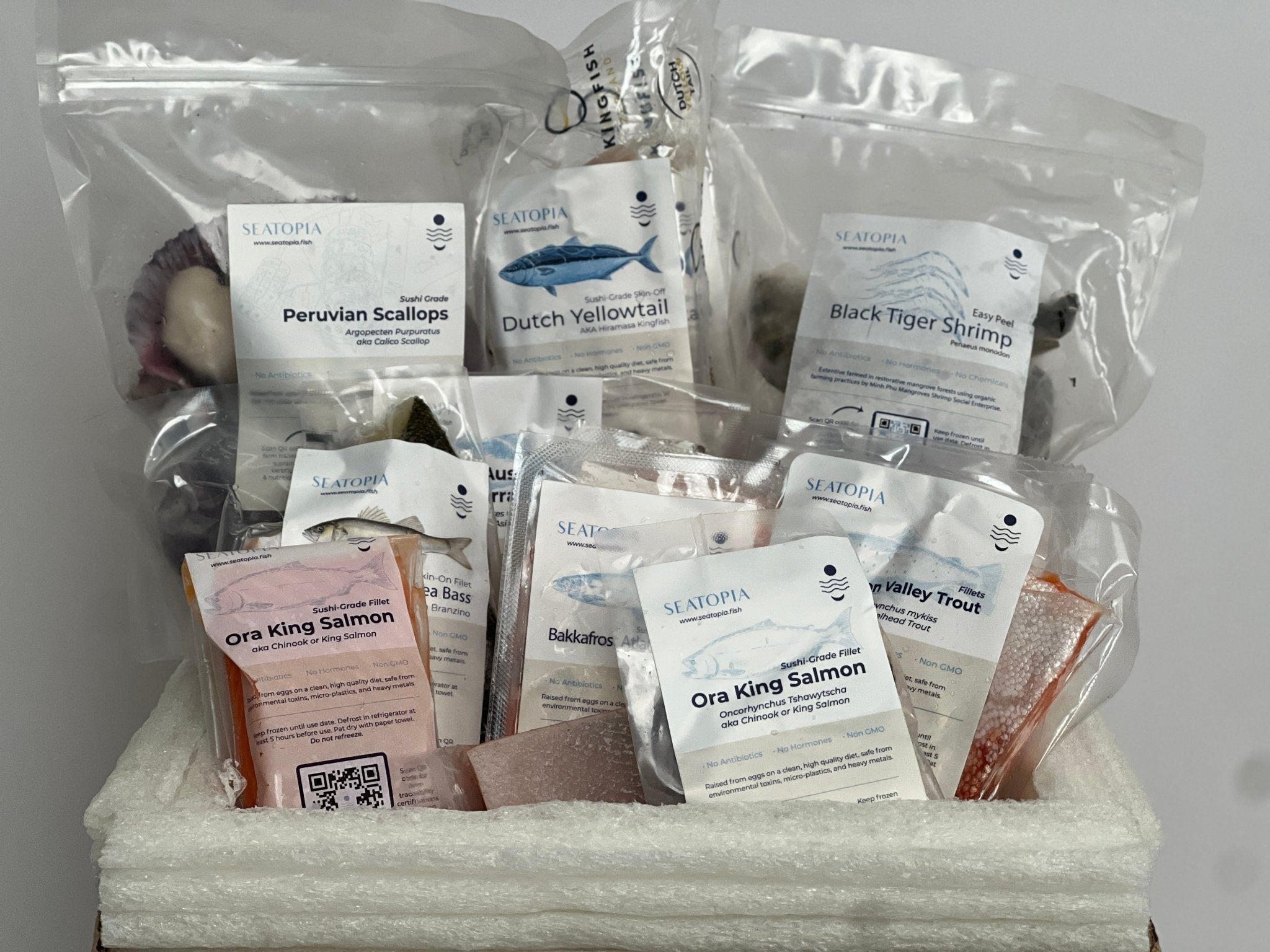
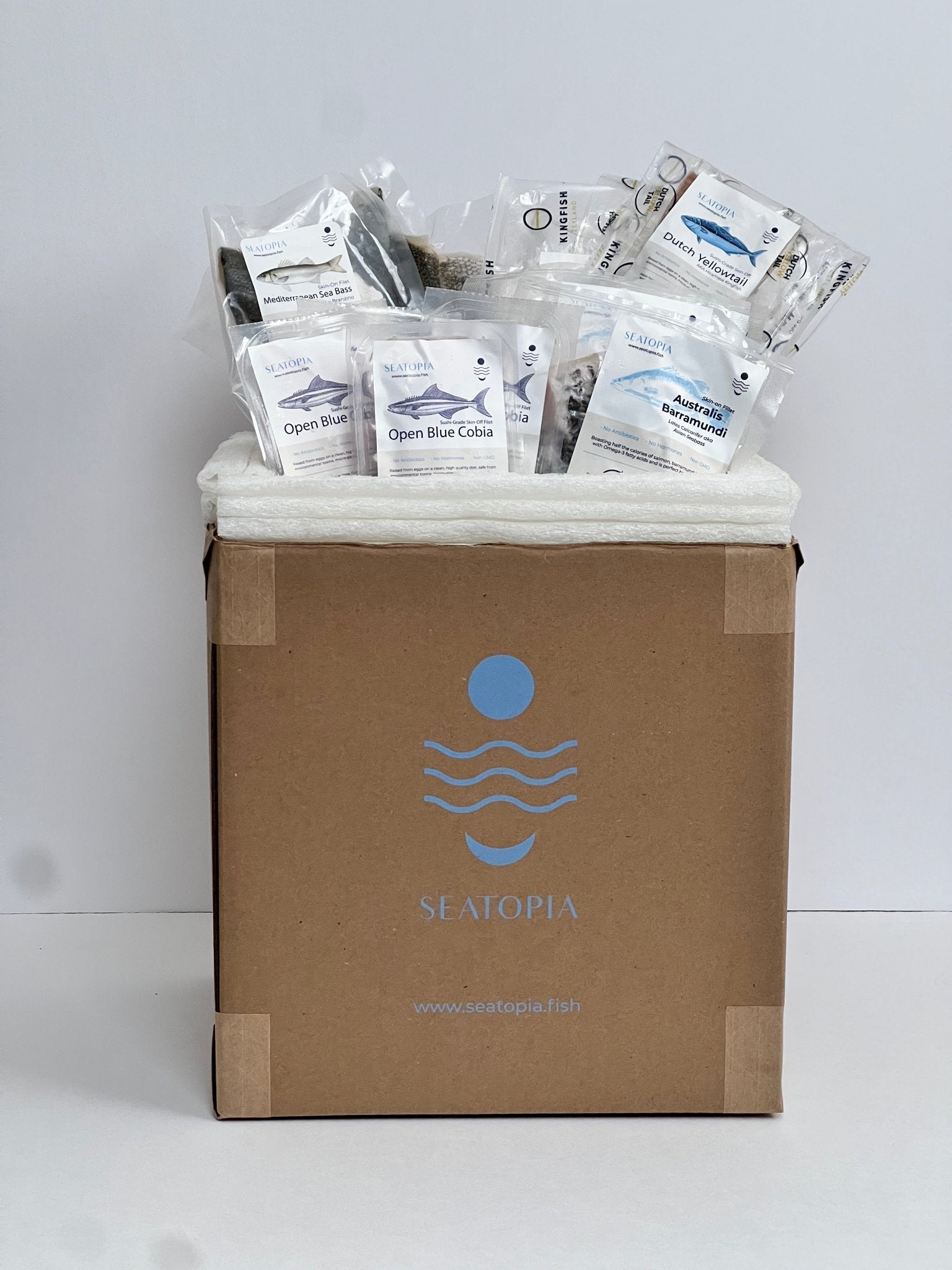
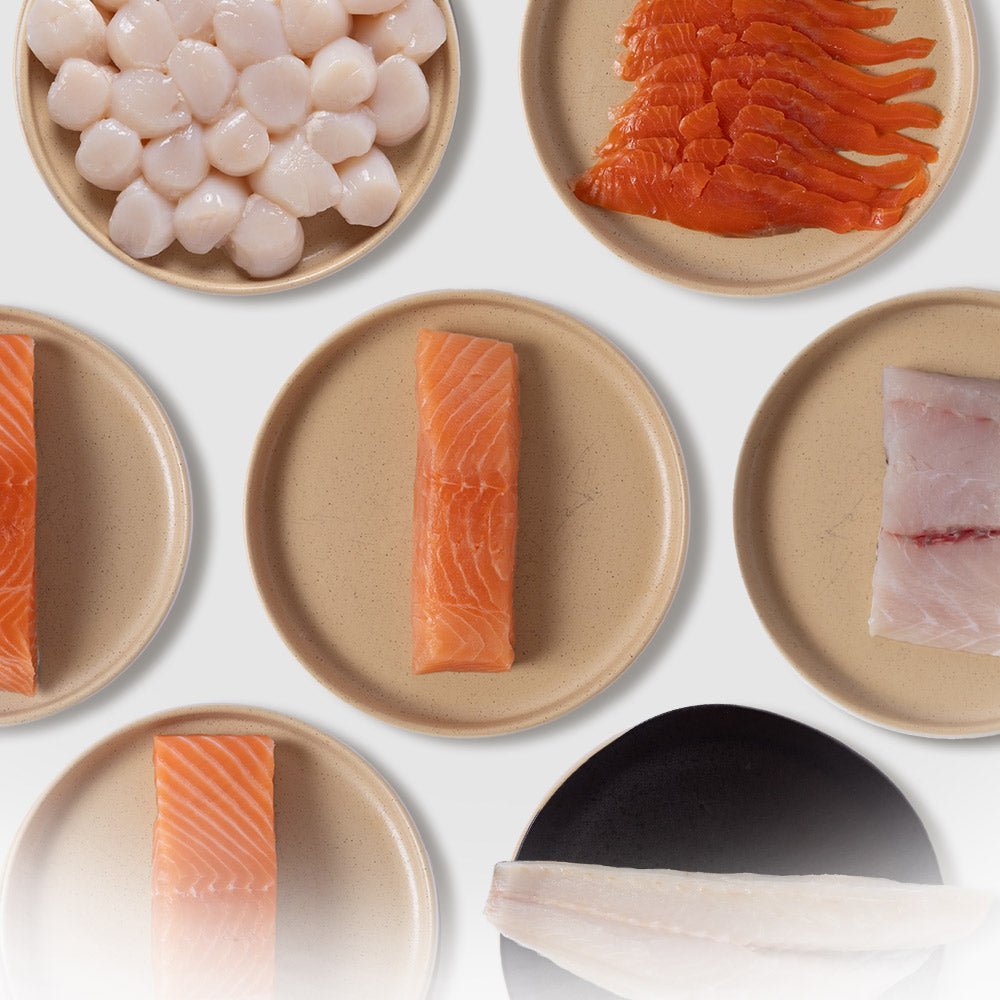
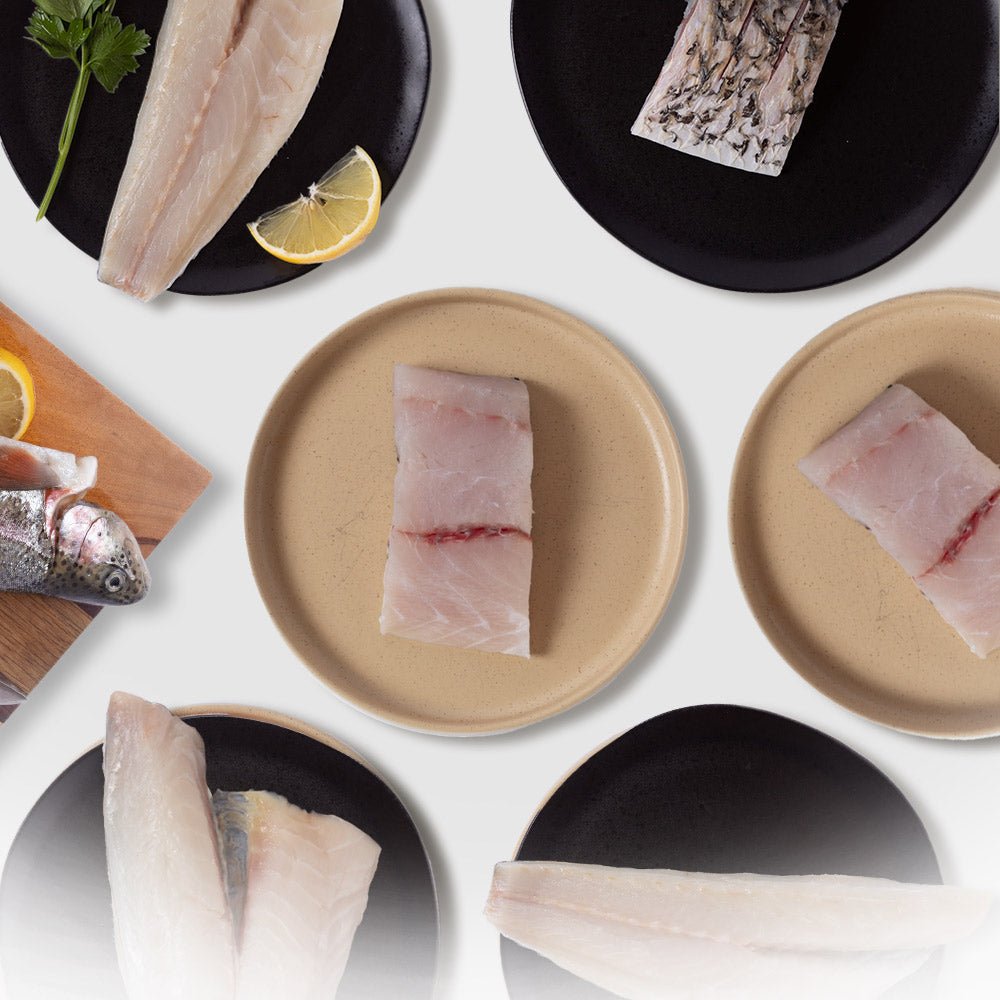

Curated Boxes
Hand-picked selections of third-party lab tested seafood, sourced from a new wave of aquaculture farms around the world and delivered snap-frozen to your door.
Orders Ship on Tuesday & Wednesday
Arrives snap frozen guaranteed
Tested to ≤ 0.1 ppm mercury – a tenth of the FDA action level, with no microplastics detected in third-party testing

FREE virtual cooking class

A Seatopia Favourite: One-Pan Seafood Skillet with Cannellini & Jammy Tomatoes
This One-Pan Seafood Skillet is one of the simplest ways to put a Seatopia box to work.
King Salmon and Branzino seared skin-side down until crisp, then nestled into a skillet of jammy tomatoes, cannellini beans, wilted kale and black tiger shrimp folded in. Finished with parsley and a spoonful of salmon roe, it's a complete, nutrient-dense meal ready in 30 - all in one pan.
This all-in-one dish makes clean eating effortless: one skillet that's built around the omega-3s and high-quality protein that the longevity research keeps coming back to.
50,000+ customers. 4.9★ over 1000+ reviews.
Real results. Measured.

“Regenerative aquaculture is seafood production that enhances, rather than depletes, the oceans.”
— Dr. Casey Means, MD
-
≤ 0.1 ppm Mercury
Tested to ≤ 0.1 ppm mercury — a tenth of the FDA action level.
-
No Microplastics Detected
No microplastics detected in third-party testing.
-
Omega-3s Quantified
We test and publish omega-3, protein, selenium, vitamin D and B12.
-
Certificate of Analysis Published
Every result published — named labs, named analytes, pass/fail thresholds.

The farm behind the fish.
Esteros Lubimar sits in the marshlands of southern Spain — a regenerative farm long held up as a model for what aquaculture could be. Its ponds are flushed by tidal water, its fish feed on what the estuary grows, and the wetland it restored now supports flamingos that feed on the same system.
It is one of the farms behind Seatopia, and the reason the word regenerative is meant literally here rather than as a label.
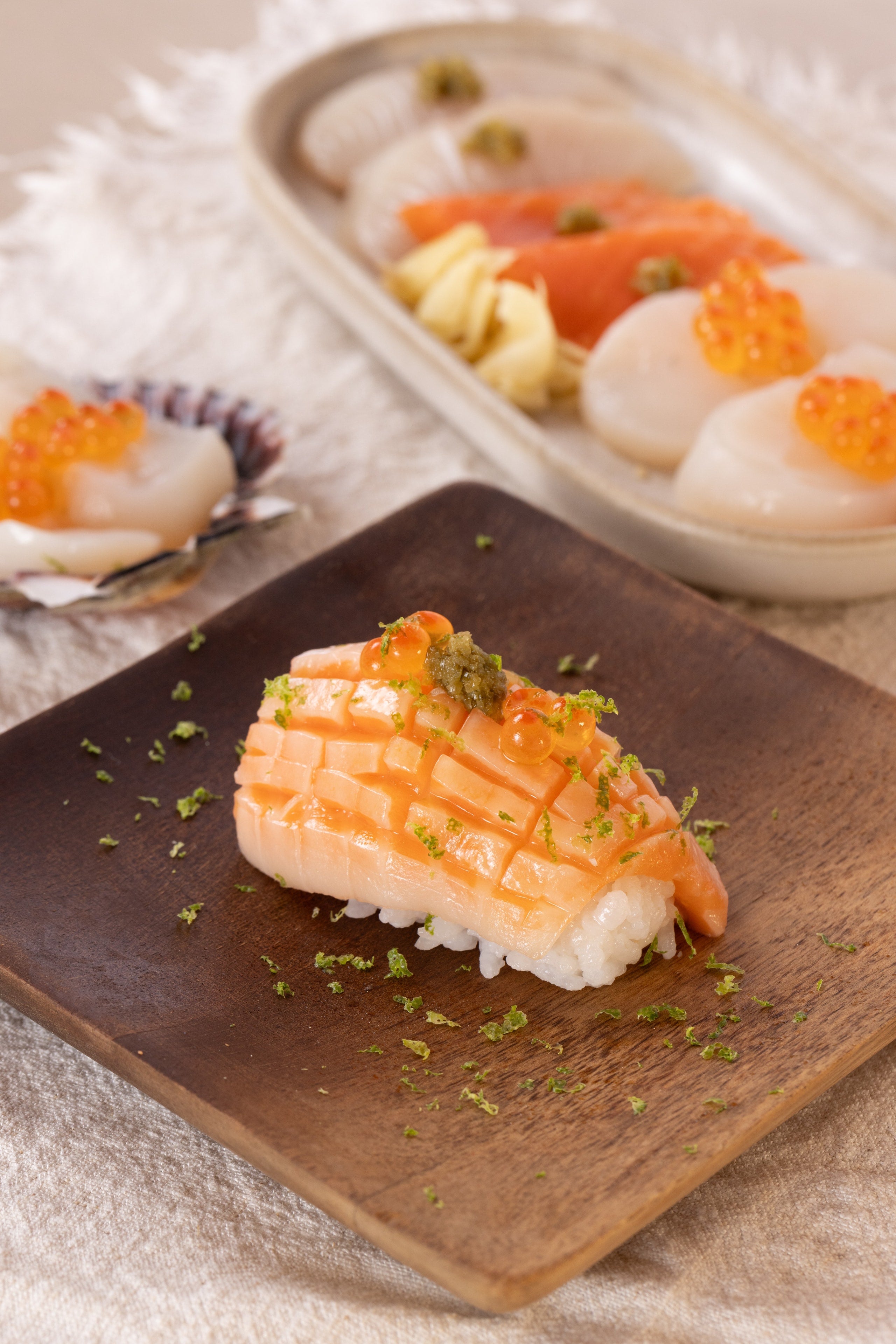
Not ready to order? Start here.
Download the free Mercury & Seafood Guide.
- How mercury enters your body through seafood - and how to reduce exposure
- Which fish to eat, which to avoid, and why labelling tells you almost nothing
- How omega-3 levels are measured and what your Omega-3 Index number means
Frequently asked questions
Why not just take fish oil?
Fish oil is processed and isolated - it gives you omega-3s but strips away the matrix of nutrients (protein, minerals, other fatty acids) that whole seafood delivers. Oil extraction also concentrates whatever contaminants were in the source fish, and most fish oil on the market is not independently tested for mercury or microplastics the way Seatopia's suppliers are. Eating whole, clean fish gives you bioavailable omega-3s alongside complete protein, with the same toxin transparency you'd want from a supplement - without the capsule.
Why farmed seafood?
Wild-caught fish stocks are collapsing faster than they can regenerate, and wild fish accumulate mercury and microplastics from the open ocean with no way to control it. Regeneratively farmed seafood flips that: when fish are raised on clean feeds in well-managed farms, you can control what they're exposed to — meaning lower mercury, no microplastics detected, and no antibiotics. Done right, farming isn't a compromise on quality; it's the only way to make "clean" a guarantee instead of a gamble.
Is this worth the premium?
You're not just paying for fish — you're paying for verified safety (third-party lab testing at the supplier level), quality frozen at peak freshness, and sourcing from farms that are independently certified for sustainability. Compared to the long-term cost of mercury and microplastic exposure, or the price of equivalent quality at a restaurant, the premium reflects testing and farming standards most seafood — wild or farmed — simply doesn't meet.
What does ≤0.1ppm mercury mean?
ppm stands for parts per million — a measure of how much mercury is present relative to the total weight of the fish. The FDA's action level for fish is 1.0 ppm, and species like tuna or swordfish often test well above 0.1 ppm. Testing at or below 0.1 ppm means the mercury level is roughly 10x below the high-risk threshold — low enough that it's considered safe even for sensitive groups like pregnant or breastfeeding women.
What if I don’t like it?
100% satisfaction guarantee. If your order doesn’t arrive snap-frozen and in perfect condition, we’ll make it right. Covers delivery quality, not subjective taste.
Is this farmed or wild?
Seatopia seafood comes from best-in-class, third-party certified farm partners. Unlike most wild-caught fish, every supplier is independently tested — so you know exactly what’s in it before it reaches your door.
How do I know this is actually clean?
Every product ship has a published Certificate of Analysis from an ISO 17025 accredited third-party lab. The results are publicly available. You can read them yourself on our individual product pages.
How does this compare to fish oil supplements?
Just as an example, one serving of Seatopia Steelhead Loin delivers 3,434 mg bioavailable EPA + DHA - more than most people get in a full week of supplements, with far higher bioavailability from whole food. You can find all product data here on our omega map.