



Myth: Shrimp farms are endangering mangrove environments. Let's dive in.
What is a mangrove & why do mangroves matter?
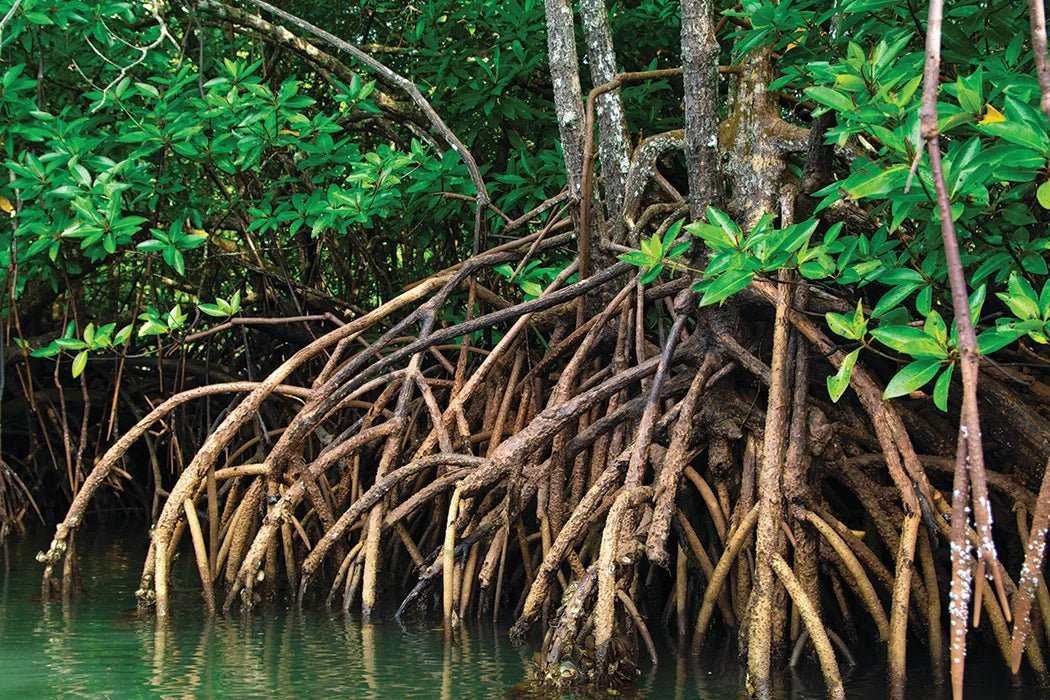
Mangroves are salt-tolerant shrubs or trees also called halophytes that grow in tropical and subtropical coastal wetlands. They usually have complex stilt or prop roots that allow them to anchor into the substrate beneath the water, while most of the plant is on top of the water surface. Their roots are adapted to low oxygen levels in muddy waters, and high wave action on the top half of the plant.
Mangrove forests provide valuable ecosystem services including preventing erosion, providing habitat for myriad fisheries species, protecting coastal communities from extreme weather events, and storing large reserves of blue carbon, thus mitigating global climate change.
Unfortunately, mangrove deforestation and forest fragmentation has been occurring at an alarming rate in many places around the world. Purposeful deforestation and fragmentation are caused by the conversion of these wetland areas for agriculture, aquaculture. Incidental deforestation is also happening as a byproduct of global climate change with rising sea levels and toxic pollution. Mangrove forests worldwide are in danger, but the largest decline has been documented across coasts in Southeast Asia.
Industrial methods of unsustainable commodity shrimp farming and other aquaculture like basa, tilapia and barramundi have displaced and destroyed natural mangrove environments in the quest to intensively farm shrimp in the cheapest way. Up to 70% of Indonesia’s mangrove forests have been damaged or degraded by shrimp farming.
In the face of mangrove deforestation, many countries, NGOs and private companies have dedicated extensive research, money, and time into finding better ways to farm shrimp that also increase mangrove conservation and replanting efforts. Governments and nonprofits are working with producers, NGO partners, industry, and governments to create new frameworks and tools for environmentally sustainable production of shrimp and other aquaculture ventures. These projects aim to plant new mangroves while scaling integrated shrimp farming systems that allow the ecosystem to flourish and provide unparalleled ecological benefits.
Large-scale conservation efforts and monitoring efforts of these environments have made a significant impact in mangrove numbers worldwide. For example, rehabilitating and conserving mangroves in Indonesia could benefit 74 million coastal people and can potentially contribute to the national land-sector emissions reduction of up to 16%. Supporting these projects and initiatives is imperative for creating long-term financially sustainable solutions to mangrove reforestation and conservation.
Here are a few examples of projects in Vietnam and Indonesia where we will be sourcing from that combine mangrove restoration and shrimp farming, along with some available data on their environmental success:
- Mui Ca Mau Biosphere Reserve:
Located in the southernmost province of Ca Mau in Vietnam, this project focuses on sustainable shrimp farming integrated with mangrove restoration. According to a study published in the journal "Ecological Engineering," the project has shown positive environmental outcomes, including increased biodiversity, improved water quality, and carbon sequestration. It reported a 70% reduction in chemical inputs and a decrease in disease outbreaks compared to conventional shrimp farms.
- U Minh Ha National Park:
http://www.aseanpeat.net/site_nomination_view.cfm?sid=12
https://storymaps.arcgis.com/stories/f8aa3ea9c1544e3888b251db7c3ae08c
In the Mekong Delta region of Vietnam, the U Minh Ha National Park has implemented a sustainable shrimp farming model that incorporates mangrove restoration. According to the World Wildlife Fund (WWF), the project has successfully restored over 1,000 hectares of mangroves and has demonstrated improved water quality and increased biodiversity. Specific data on the environmental success of the project may be available through scientific publications or project reports.
- Kien Giang province:
4. Mahakam Delta in Borneo, Indonesia
Eager to learn more!?
Here’s a few more websites and research materials for those interested in learning more about organic sustainable shrimp farming and mangrove conservation:
Global trends in mangrove forest fragmentation: https://www.nature.com/articles/s41598-020-63880-1#citeas
A global biophysical typology of mangroves and its relevance for ecosystem structure and deforestation: https://www.nature.com/articles/s41598-020-71194-5
Challenges and opportunities for achieving Sustainable Development Goals through restoration of Indonesia’s mangroves: https://www.nature.com/articles/s41559-022-01926-5
Global Nature Fund - Mangrove Protection and Shrimp Farming?: https://www.globalnature.org/en/donations/shrimps-mangroves
Sustainable Fisheries Partnership - Promoting Sustainable Aquaculture: https://sustainablefish.org/impact-initiatives/promoting-sustainable-aquaculture/
Global Center on Adaptation - Here’s how shrimp farming is restoring mangrove forests: https://gca.org/heres-how-shrimp-farming-is-restoring-mangrove-forests/
Global Mangrove Alliance - The State of the World’s Mangroves: https://www.mangrovealliance.org/mangrove-forests/
Global Seafood Alliance & BAP: https://www.globalseafood.org/blog/extensive-black-tiger-shrimp-farm-in-indonesia-earns-bap-certification/
Why does this matter to us?
Seatopia is a market-driven solution to support innovative aquaculture. Done right, we can feed our community with clean, responsibly-farmed seafood, mitigate pressure on wild stock populations of sea life, and help create a growing network of Marine Protected Areas.
Join Seatopia: Vote with your forks to support regenerative seafood projects
When you subscribe to Seatopia you are supporting artisan aquaculture and helping restore our oceans. Did you know? For every order throughout April 2026 we are planting a mangrove.











Share:
What is Kelp?
Why I Stopped Eating Wild-Caught Scallops (And What You Can Choose Instead)