



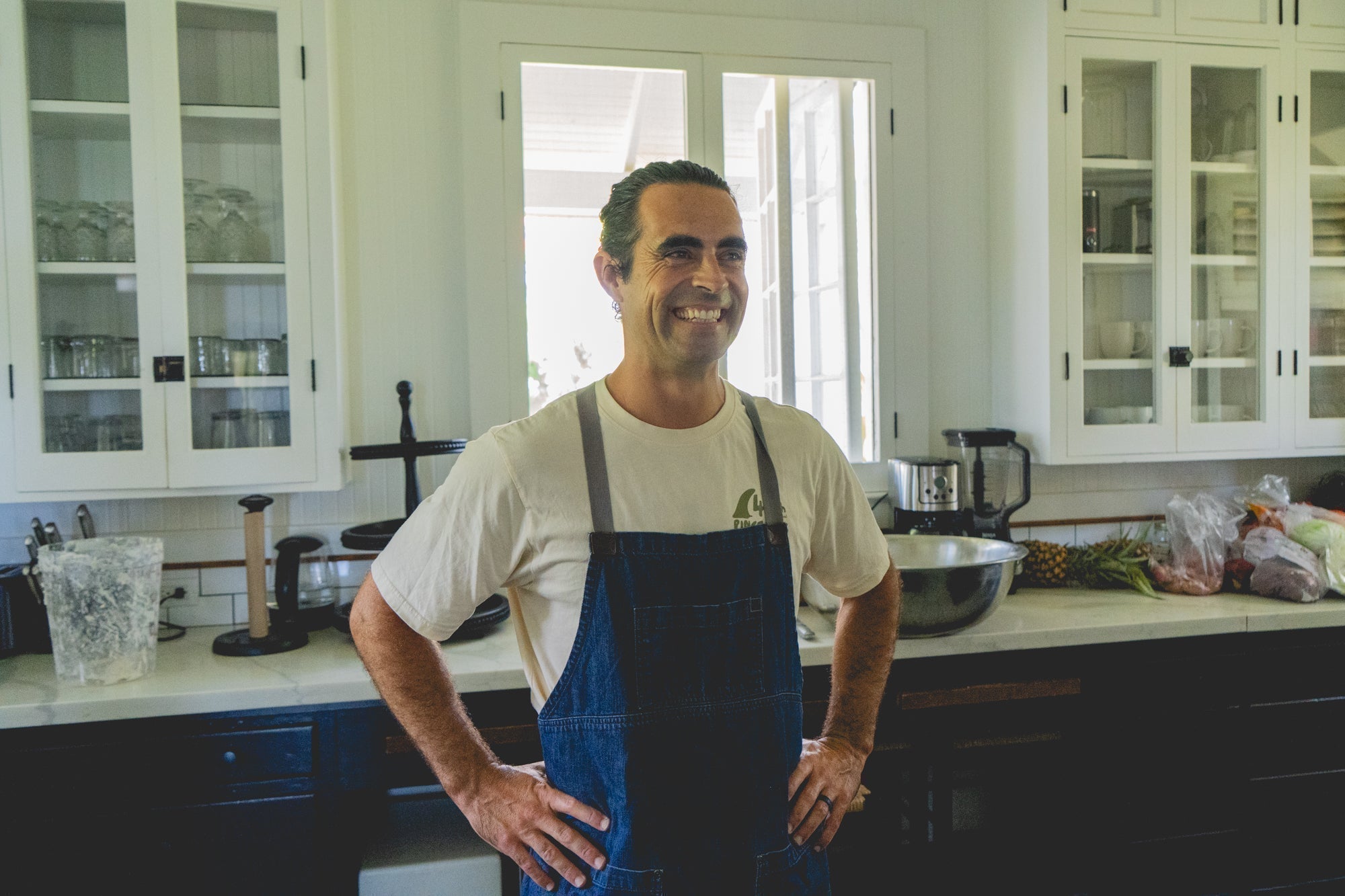
Most people's omega intake is an afterthought. Mine isn't — not because I'm disciplined, but because I got lazy in the right direction.
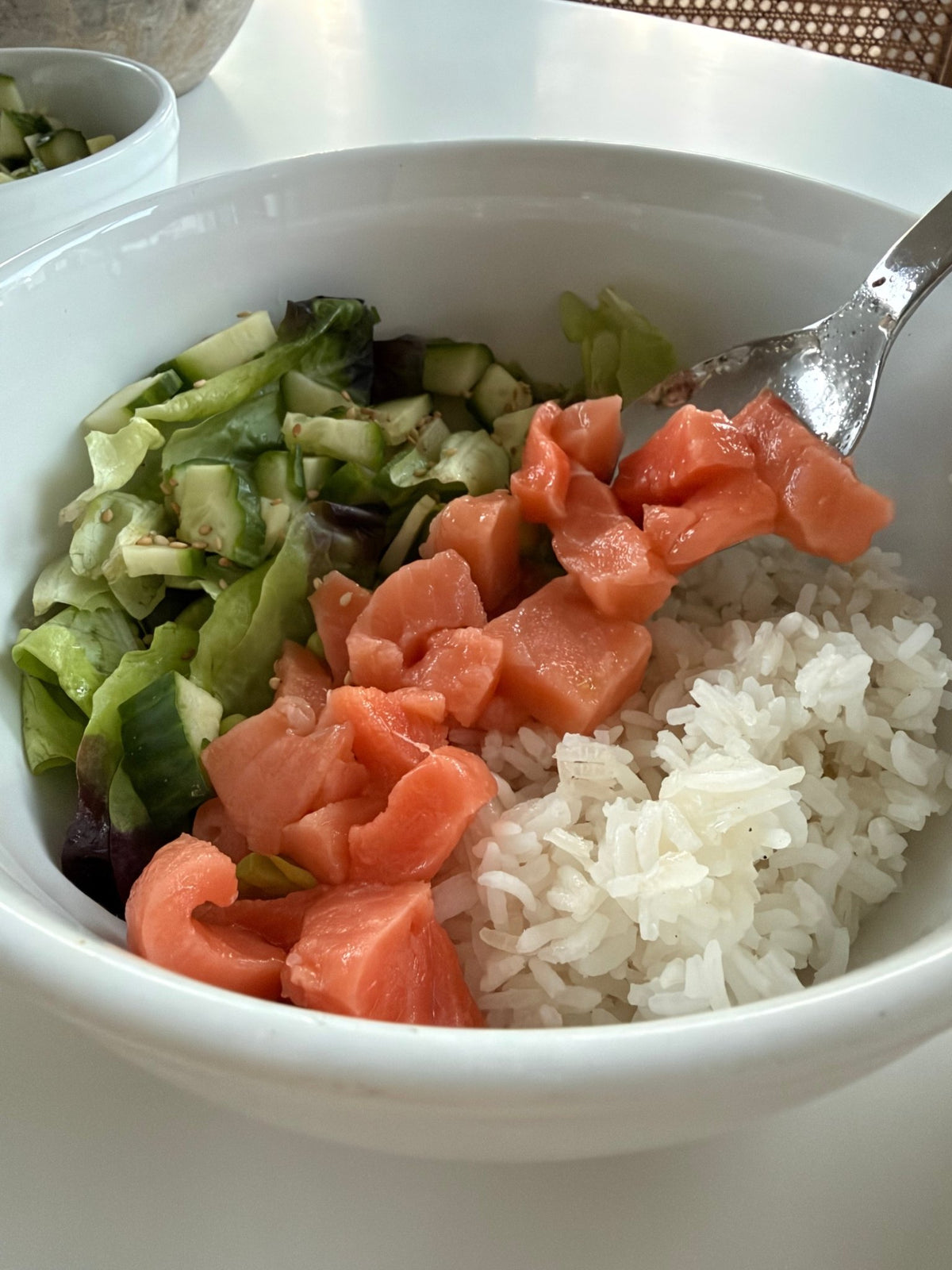
Here's my whole system in one paragraph. On Sunday I meal prep, and the anchor of that prep is miso-broiled king salmon — about twelve pieces, each packed into its own stainless steel bento box. Most mornings, breakfast is one of those: miso salmon with eggs and rice, plus a spoonful of kimchi or sauerkraut.
On the other mornings I swap in cold-smoked steelhead, or whatever else I've prepped that week — cured salmon, a premade crudo or sashimi. Whatever I don't eat for breakfast becomes lunch. The goal is simple: eat Seatopia twice a day, and have as many of those meals as possible already made.
That's it. Everything below is just the detail.
Sunday: twelve boxes of miso salmon
The miso-broiled Ora King is the foundation of the week. It was one of the first recipes I learned that turned a hot piece of fish into a genuinely delicious cold one — and that translation is the entire trick to eating this way.
I broil about twelve pieces skin-on, then pack each one individually into its own stainless bento box. That individual packing matters more than it sounds: it means there is always — always — something delicious and nutritious in the fridge that I can grab one-handed, eat cold, or warm up in a minute. No deciding, no assembling. Open a box.
The prep actually starts Saturday with defrosting: fillets on a quarter-sheet tray fitted with a wire rack, each wrapped in paper towels, thawing dry and clean in the fridge overnight instead of sitting in a puddle.

The rotation: what fills the other boxes
A couple of times a week I prep the supporting cast, so breakfast never gets boring:
-
Spicy salmon tartare — Caleta Bay Steelhead loin or Bakkafrost Atlantic Salmon, folded with crunchy garlic and a little mayo. The oil coating helps it hold for days.
-
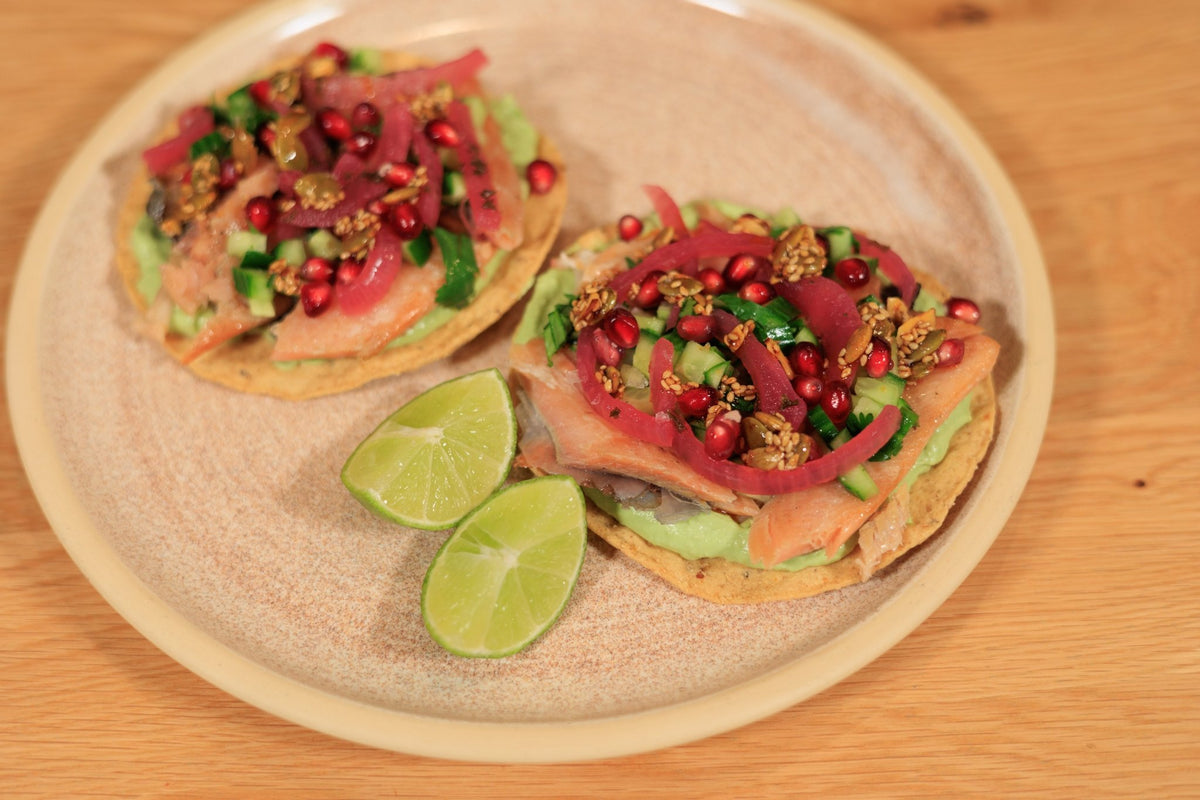
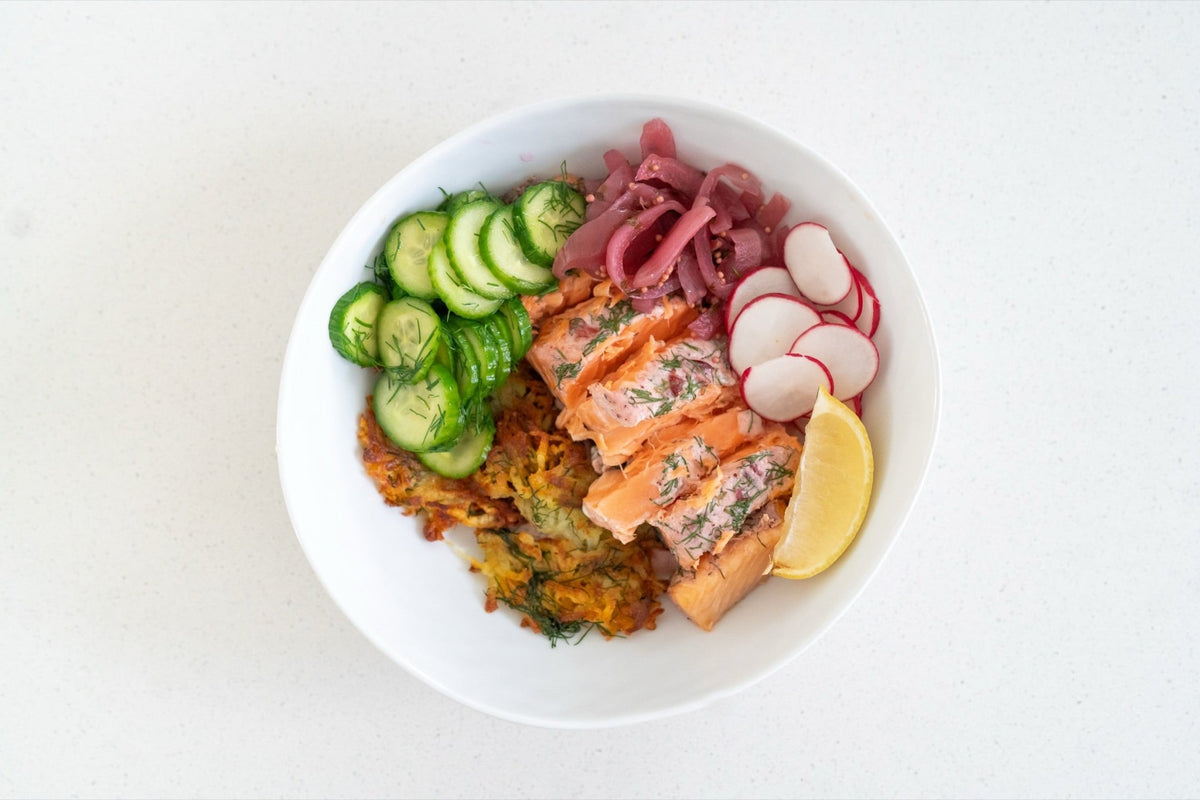
Cured steelhead loins — citrus zest, coconut sugar, good salt, cured 2–4 days, then sliced thin with olive oil and fresh zest.
-
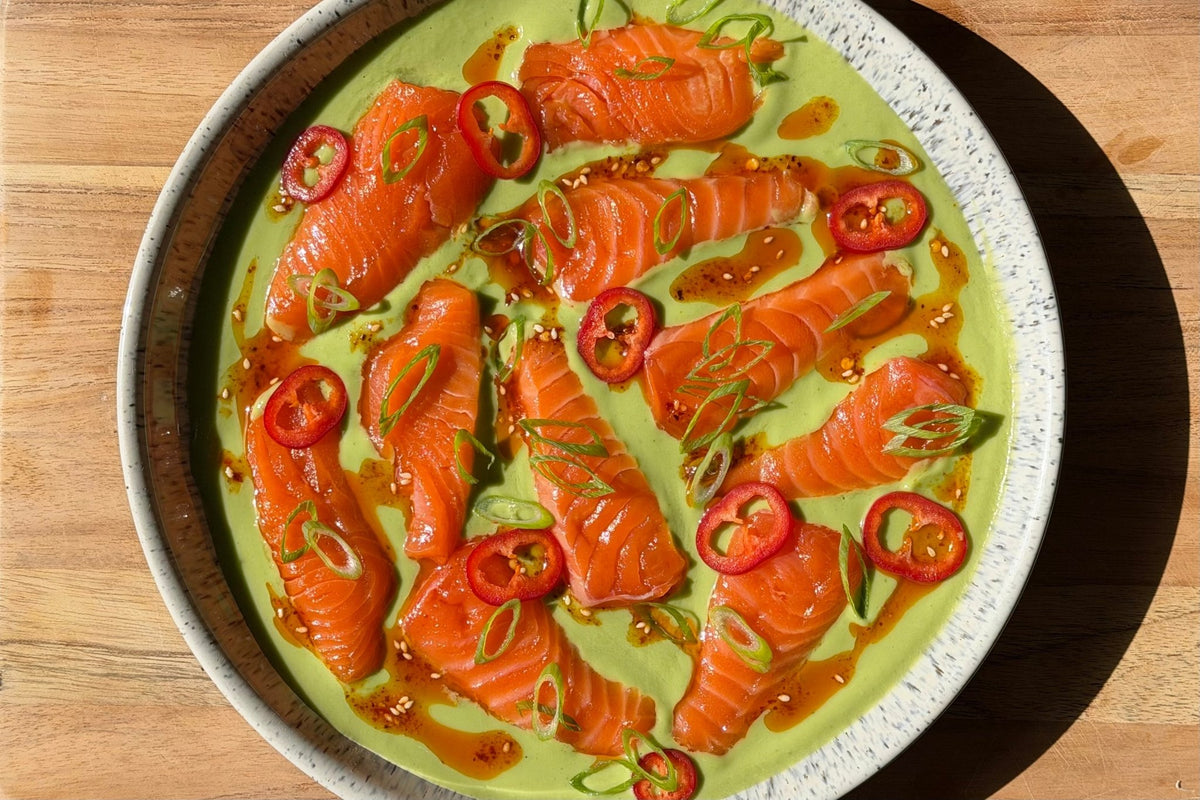
Premade crudo or sashimi — sliced thin steelhead loins, add a dab of yuzu kosho on each slice, a spritz of tamari ponzu, a light coat of extra virgin olive oil. The oil mitigates oxidation and lets the slices layer in the box without clumping together.
And then there's the one nightly habit: I move a couple of packs of Caleta Bay cold-smoked steelhead from freezer to fridge. Thirty seconds. Here's the thing about lox — it's not just for bagels. I'm not even eating much bread lately. I just eat it, straight out of the package: a clean, high-protein snack that needs zero preparation. My kids do the same.
Breakfast, most mornings
Miso salmon, eggs, rice, kimchi or sauerkraut. Ferment, protein, something bright. Four minutes and I'm out the door with a real meal in me instead of a coffee and a vague intention.
On the alternate mornings it's the lox, or the cured salmon, or a few slices from a crudo box — same plate, different fish. The eggs have become their own hobby; my reliable fallback is a 7-minute soft-boiled egg, sometimes pickled in tamari and mirin. A jar of those upgrades any plate.
Whatever prepped fish doesn't get eaten at breakfast becomes lunch — usually spicy salmon or steelhead over sushi rice.
Dinner: the 15-minute default
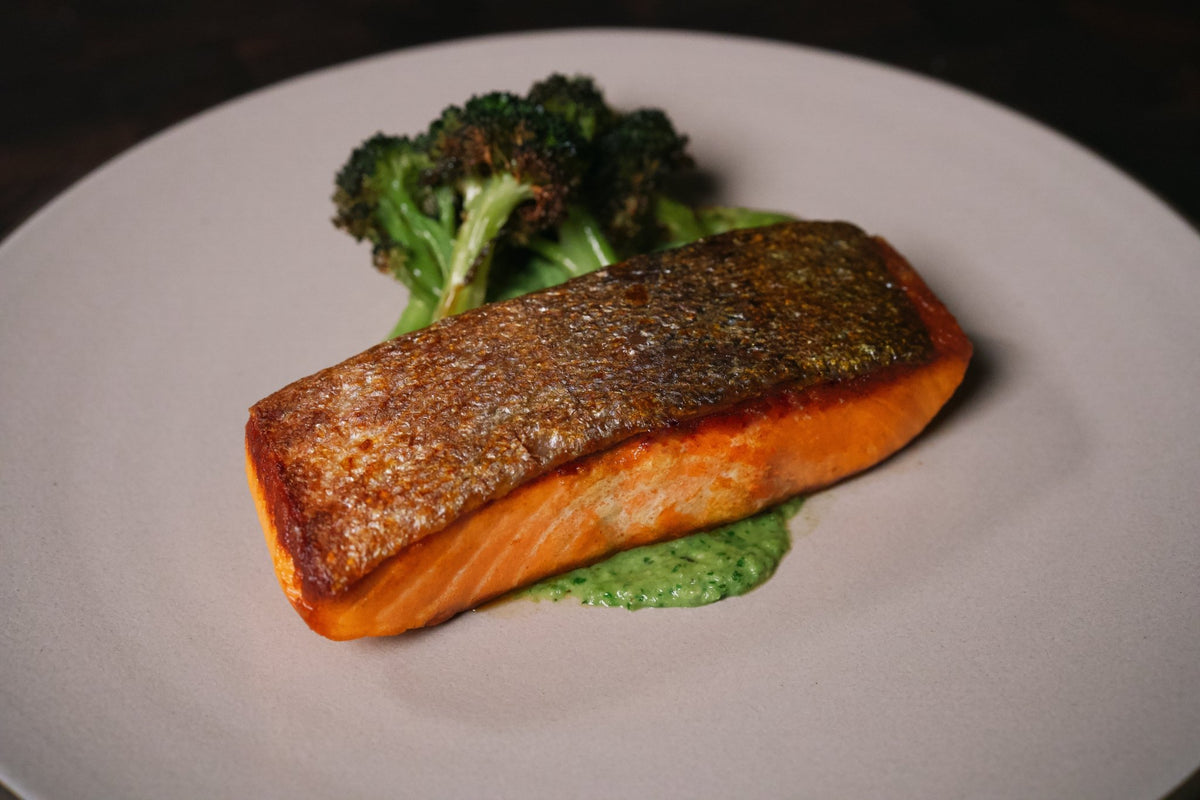
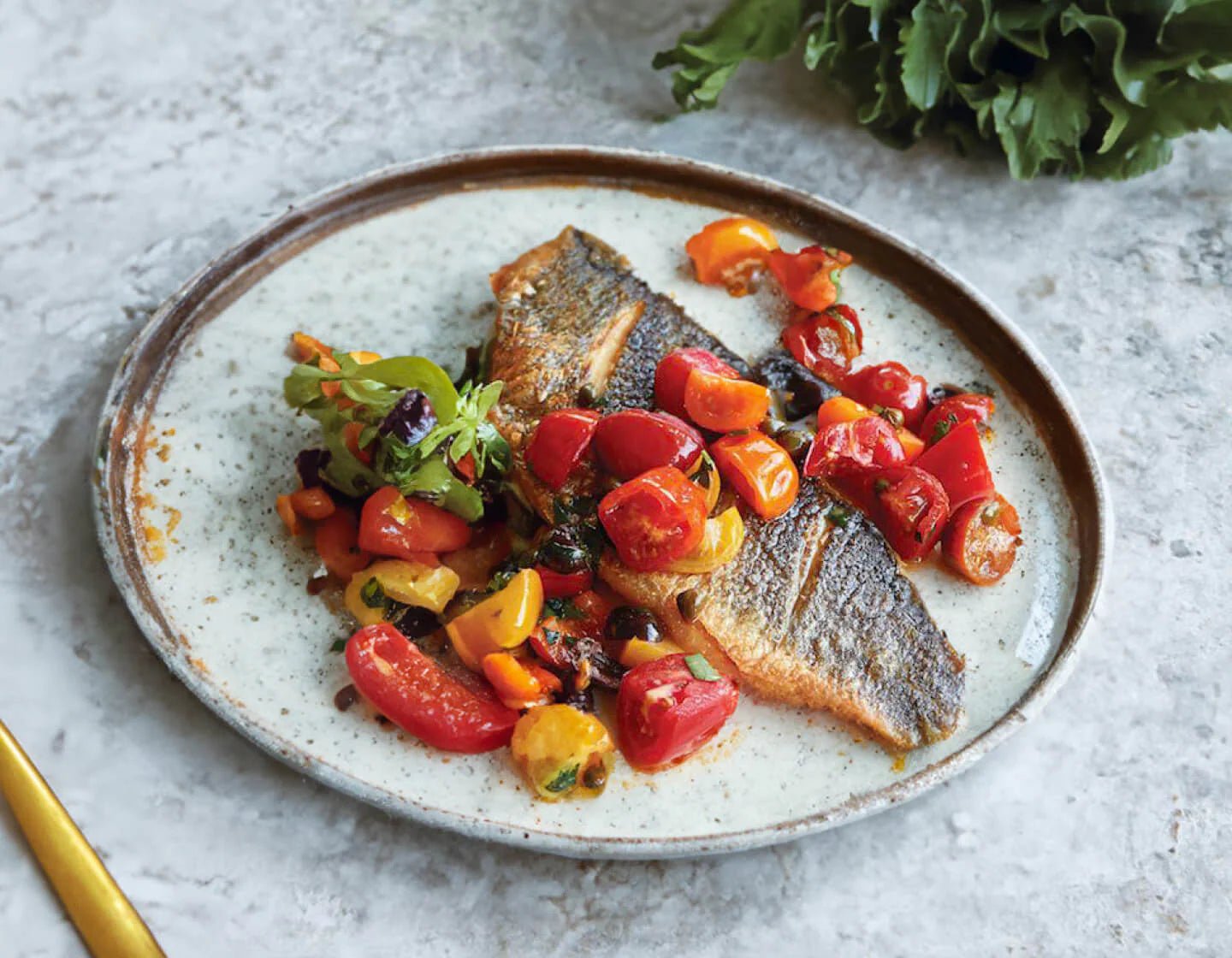
For simple dinners I do parchment pan-fried branzino or sea bream — both defrost fast and cook faster. A light coat of olive oil, capers crisped in the same pan, a squeeze of citrus on the plate. Done in 12 minutes.
The kids eat everything
Two toddlers, no special treatment, no kid menu. They eat every single thing above — the steelhead sashimi especially, also what we call "salmon caviar": little spoons of Yarra Valley salmon roe caviar. If I'm eating it, they're eating it.
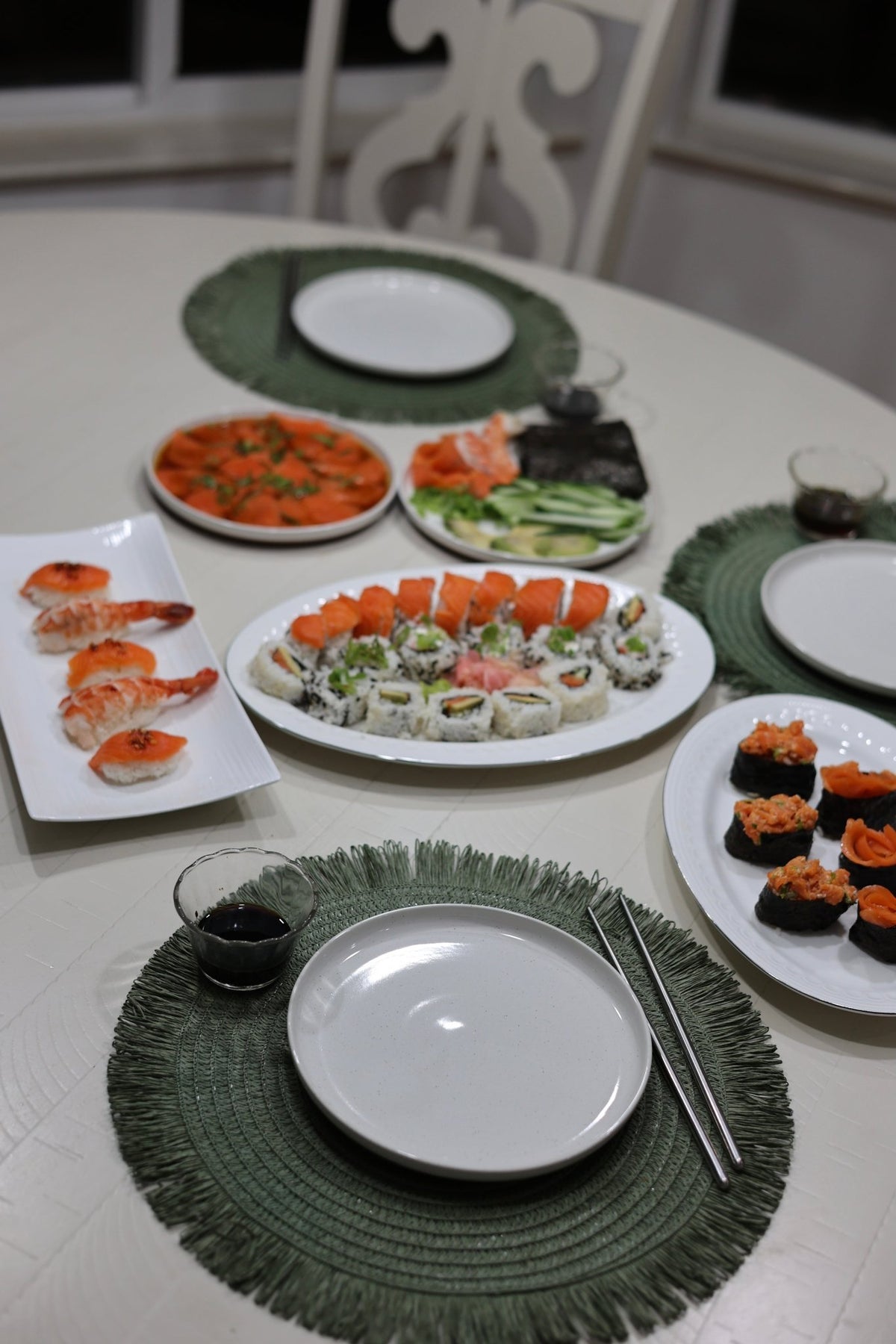
When friends come over I'll show off a little — ala minute scallop crudo, grilled shrimp, nigiri if I'm feeling brave, salmon roe on nearly everything. But those meals are the celebration, not the foundation. The foundation is breakfast and lunch, repeatable, and already made in the fridge.
Where the habit came from
I lived on a sailboat for over 10 years and sailed more than ten thousand miles — over one two-year stretch, from San Francisco down through the Sea of Cortez and eventually to the Galápagos. Offshore, the real skill isn't multi-tasking; it's minimizing the cooking you do underway, when staying upright is a full-time job, let alone balancing over a gimballed stove. You do the work on calm days: pre meals that keep, that can be eaten cold or one-handed. That was my first education in cooking ahead of hunger.
Then two kids arrived, eighteen months apart — the same posture as provisioning a boat. If dinner isn't already halfway made on a weekday evening, dinner doesn't happen, or it happens badly.
And now we live in a remote town with few dining options that meet the standard I want to eat to. What's in my fridge is what I get.
The numbers
I aim for roughly 3,000–4,000 mg of EPA + DHA a day, from food, tracked as a real number rather than a good feeling.
Why a number at all? The Omega-3 Index — a validated blood biomarker measuring the percentage of EPA and DHA in your red blood cell membranes (Harris & von Schacky, 2004). It's the rare wellness metric you can actually test: a lab value, not a vibe. Most Americans sit well below the 8% associated with the best outcomes in the research; peer-reviewed work puts the intake needed to move toward that target at roughly 2,000 mg/day of EPA + DHA (Walker et al., 2019). My daily aim is twice that.... My last reading came back at 11.4% — I'm not chasing 8% anymore; I'm curious how high a genuinely marine-forward diet can push it. AKA Mermaid Research.
Two honest caveats. This is a biomarker and a self-experiment, not a health claim — the research is about associations, not proof that any single food changes an outcome. And individual response varies: baseline, body weight, and absorption all move the result. What I can say is that it's measurable, it's mine, and it's falsifiable.
Here's what the twice-a-day rule actually delivers, from lab-verified figures at my portion sizes:
|
From the fridge |
Portion |
EPA + DHA |
|---|---|---|
|
Ora King salmon, miso-broiled |
8.5 oz |
~3,434 mg (+ ~47 g protein) |
|
Bakkafrost Atlantic salmon |
6 oz |
~1,963 mg |
|
Caleta Bay steelhead loin |
5 oz |
~1,067 mg |
|
Caleta Bay cold-smoked steelhead |
4 oz |
~854 mg |
|
Esteros Lubimar branzino |
6 oz |
~1,357 mg |
|
Esteros Lubimar sea bream |
6 oz |
~1,187 mg |
A miso salmon breakfast alone is nearly a full day's target. Add lox as a snack or a branzino at dinner and it'shandled — two touchpoints, not six. The number is downstream of the habit, not the other way around.
Why I bother
When I eat this way — clean, marine-forward, prepped ahead — I feel like myself. On the occasions I eat out, my body tends to let me know it disagreed with the decision.
So the prep isn't discipline. It's self-interest with a head start. Plan one Sunday, coast one week, and never once stand in front of an open fridge wondering what to eat.
Mostly, breakfast is handled.
-----
Every Seatopia omega figure above is drawn from our third-party lab data at the listed portion size. Portions and preparation are James's own routine — not a health claim, just what's in his fridge.









Share:
Blast-Frozen Seafood: Why 'Frozen' Beats 'Fresh'