

Preformed, Not Promised: How Omega-3s Reach Your Cells
A label can promise milligrams. Your bloodstream answers in molecules. Here's what the research says about getting EPA and DHA from whole-food seafood versus plants and capsules — and why the form matters as much as the number.
Your body can't read a label. It reads molecules.
A bottle that promises 2,000 mg of omega-3 and a dinner that delivers the same number are not the same proposition once they cross the gut wall. How much reaches your blood — and eventually your cells — depends on the form those omega-3s arrive in, and on whether your body has to do any work to make them usable at all.
Three lines of peer-reviewed research tell one consistent story: the omega-3s in whole-food seafood arrive in the form your body recognizes, already made, ready to absorb. Here's the science, and the one honest caveat that comes with it.
The precursor problem: plants hand you a starting material, not the finished one
The long-chain omega-3s your body actually uses are EPA and DHA. Plant omega-3 foods — flax, chia, walnuts — don't contain those. They supply ALA (alpha-linolenic acid), a shorter-chain precursor your body has to convert into EPA, and then into DHA.
That conversion is inefficient in humans. Using carbon-labeled ALA to trace it directly, researchers found that only a fraction becomes EPA — on the order of single digits up to about 20%, highest in young women — while conversion all the way to DHA is limited, modest at best in young women and very low in men. A large share of ingested ALA is simply burned for energy instead (Burdge & Wootton, 2002; Burdge, Jones & Wootton, 2002).
Flax and chia are real foods with real benefits. But they are an unreliable way to raise your EPA+DHA status — or your Omega-3 Index, the validated biomarker that measures EPA+DHA in your red blood cells (Harris & von Schacky, 2004). They hand your body a starting material and ask it to finish a job it isn't built to do well.
Form matters: the natural triglyceride your body handles best
Even among preformed EPA+DHA sources, chemical form changes how much reaches your blood.
In whole fish, EPA and DHA travel mostly as natural triglycerides, with some in phospholipid form — the structures your gut is built to digest. Many concentrated fish-oil capsules use the ethyl ester form, created during processing to concentrate the oil.
In a controlled two-week study comparing matched doses (~3 g/day), with natural fish-oil triglyceride as the 100% reference, the ethyl ester form delivered about 73% of the blood-level rise, free fatty acid about 91%, and a re-esterified triglyceride about 124% (Dyerberg et al., 2010). A larger, six-month trial in 150 people found the triglyceride form raised the Omega-3 Index more than the ethyl ester form — roughly 15% more over time (Neubronner et al., 2011).
The edge is real, if modest. And whole fish is in that better-absorbed natural form by default — no processing step required to get it there.
Food versus capsules, head-to-head: whole fish keeps pace, and gets there faster
The cleanest test pits the food against the supplement at the same dose.
Harris and colleagues randomly assigned healthy women to take in about 485 mg/day of EPA+DHA from either two weekly servings of oily fish (salmon and albacore tuna) or daily capsules. After 16 weeks, the Omega-3 Index had risen to the same level in both groups — and EPA climbed faster in the fish group, measurable by week four (Harris et al., 2007).
An earlier pilot pointed the same direction, with salmon producing a larger DHA rise than ethyl-ester capsules even when the capsule dose was higher — though that study was small, so we hold it lightly (Visioli et al., 2003).
Read together: at a matched intake, whole-food seafood is at least as effective as capsules at moving the biomarker that matters, it can get there sooner, and it arrives in the natural form.
The honest caveat: this isn't fish versus plant-based — it's preformed versus precursor
It would be easy to read all of that as "fish beats vegan." The science is more precise than that.
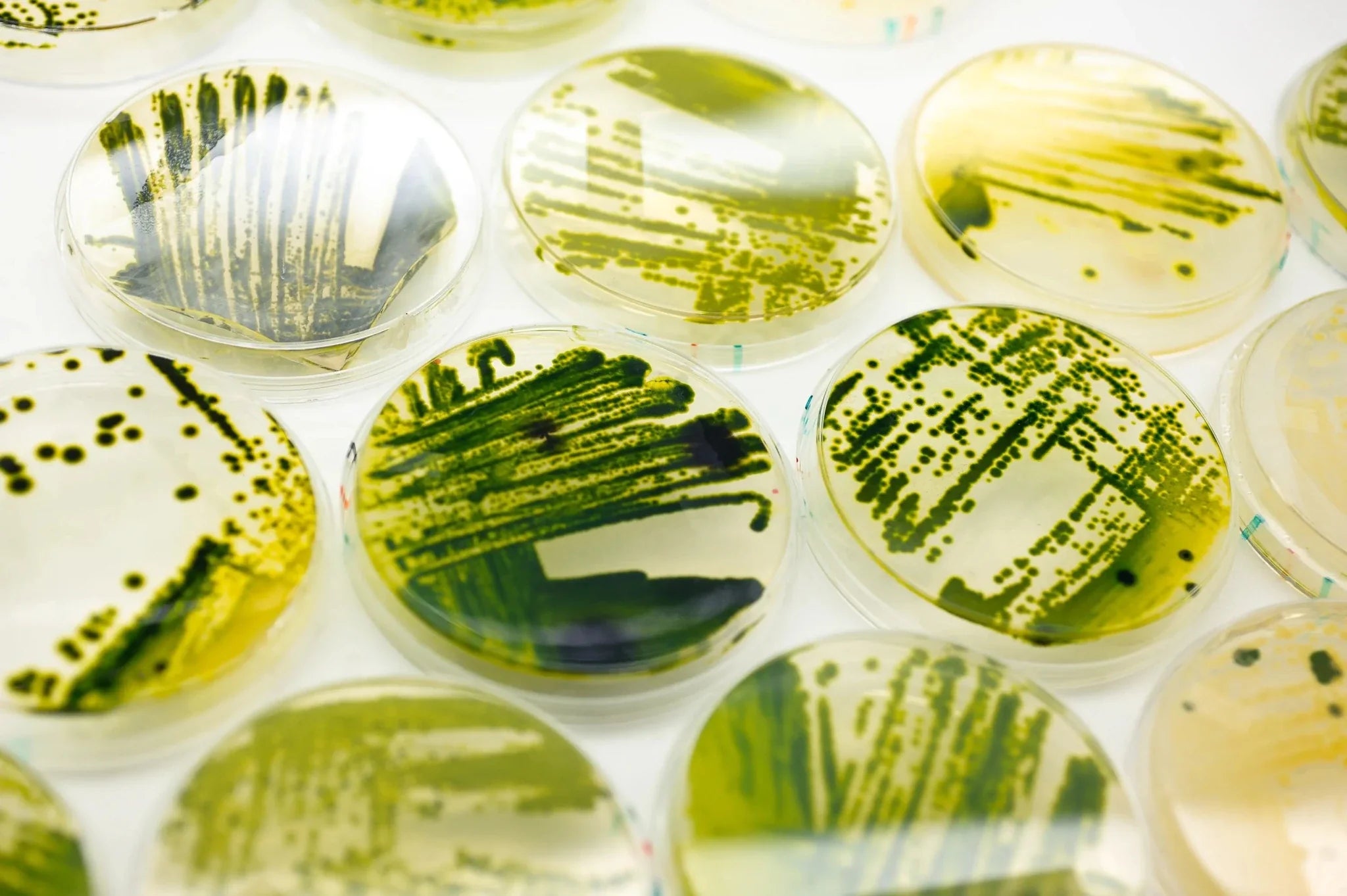
Algae — where fish get their omega-3s in the first place — produces preformed DHA directly. In a randomized study, DHA from algal-oil capsules and DHA from cooked salmon raised blood DHA by equivalent amounts; the two were nutritionally equivalent sources (Arterburn et al., 2008). A quality algae oil is a legitimate, preformed source of DHA for people who don't eat fish.
So the real divide isn't "plants." It's the ALA-based plant foods — flax, chia, walnuts — that depend on inefficient conversion, versus the preformed sources (fish and algae) that don't. Whole-food seafood is simply the most complete food-first way across that line.
The part a molecule chart misses
A serving of salmon isn't only EPA and DHA. It's complete protein, selenium, B12, vitamin D, iodine — a package no capsule reproduces.
And there's a quieter variable in every "omega-3 routine": you have to keep doing it. A pill you forget on the counter delivers nothing. A meal you look forward to delivers every time. It's okay for your supplement stack to be your favorite dinner.
Proof closes
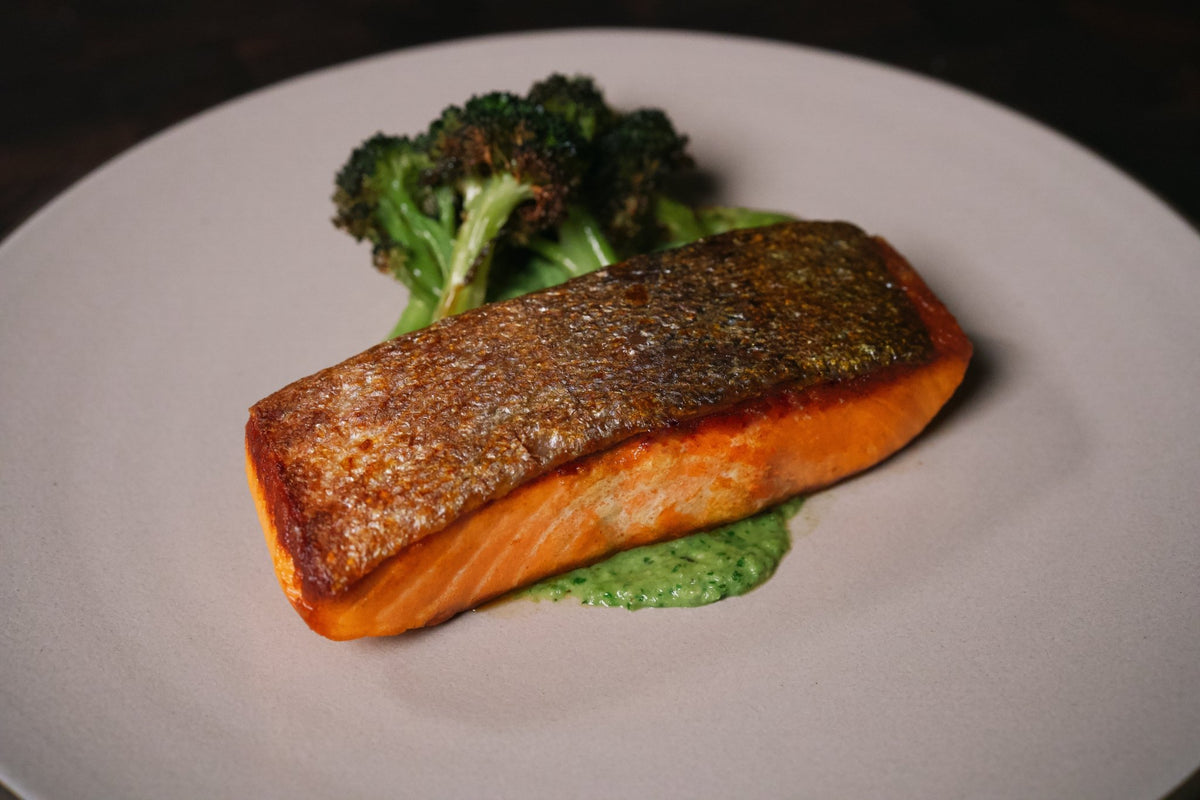
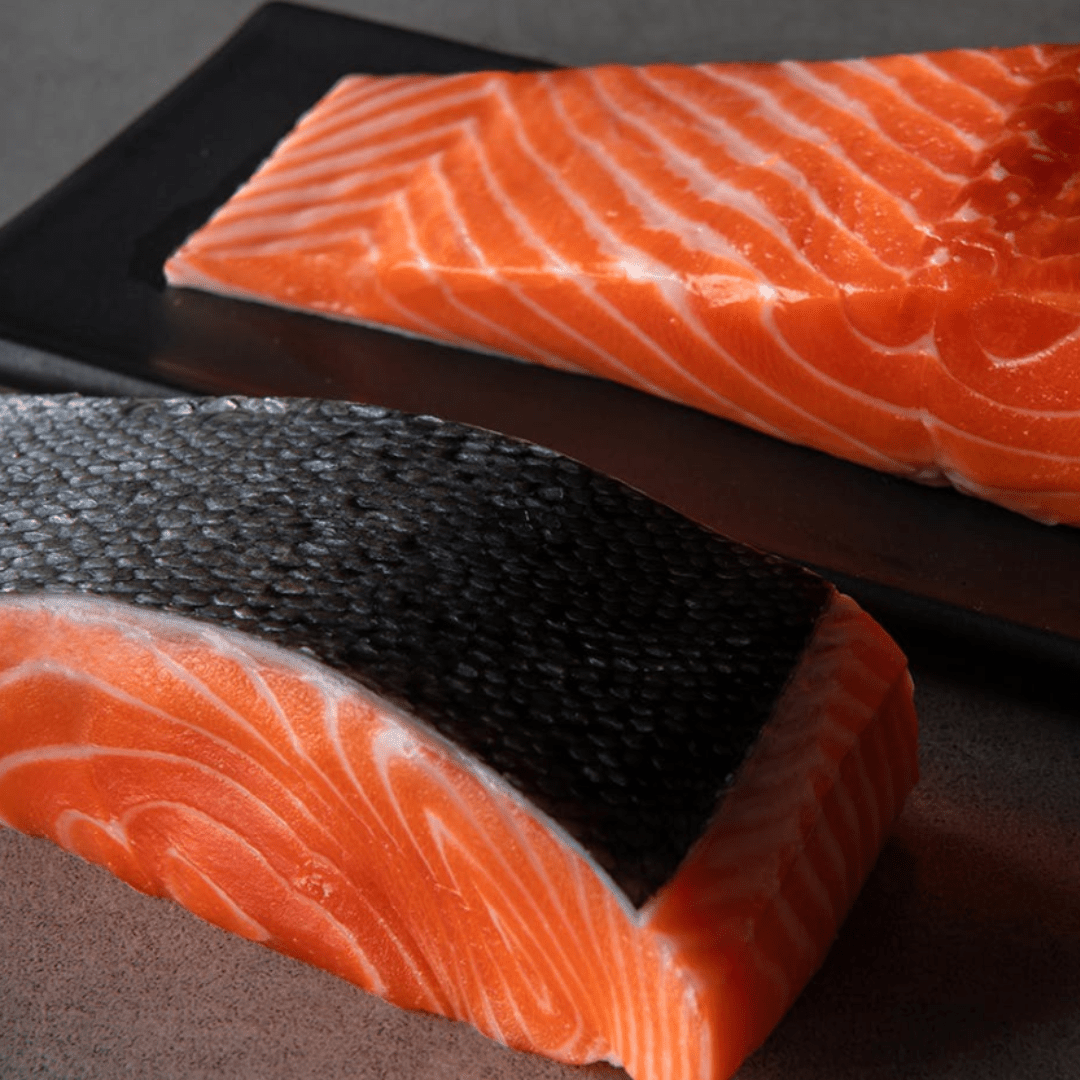
Here's what this looks like on a Seatopia plate.
One 6 oz portion of our Bakkafrost Atlantic Salmon delivers 1,964 mg of EPA + DHA — verified by third-party wet-chemistry lab testing across six production samples. That's about 98% of the ~2,000 mg/day intake that peer-reviewed research associates with reaching an Omega-3 Index of 8% or higher (Walker et al., 2019; Flock et al., 2013) — in a single dinner, in the natural triglyceride form, already made. (That ~2,000 mg figure is the intake modeled to move a deficient person up to the 8% target; a maintenance level is likely lower, and individual response varies.) Our King Salmon line runs higher still — a portion of Ora King carries roughly 3,400 mg EPA + DHA.
And because we'd rather you measure than take our word for it: the honest way to know any omega-3 routine is working is to test your own Omega-3 Index before and after. That's the whole idea behind verified marine nutrition — not just a meal, a metric.
A note on our numbers
EPA and DHA figures are third-party lab verified. Per-serving values are derived from per-100 g lab means and the labeled serving size. Bakkafrost: mean of 6 lab samples; per-sample EPA+DHA ranged roughly 1,620–2,220 mg per 6 oz portion. Ora King: mean of 2 lab samples.
Sources
These statements have not been evaluated by the Food and Drug Administration. This product is not intended to diagnose, treat, cure, or prevent any disease. This article is education, not medical advice; individual results vary.







Share:
Feed Your Blue Mind — The Ocean Within Us
Did the Sea Make Us Human?