- by Miriam Thom
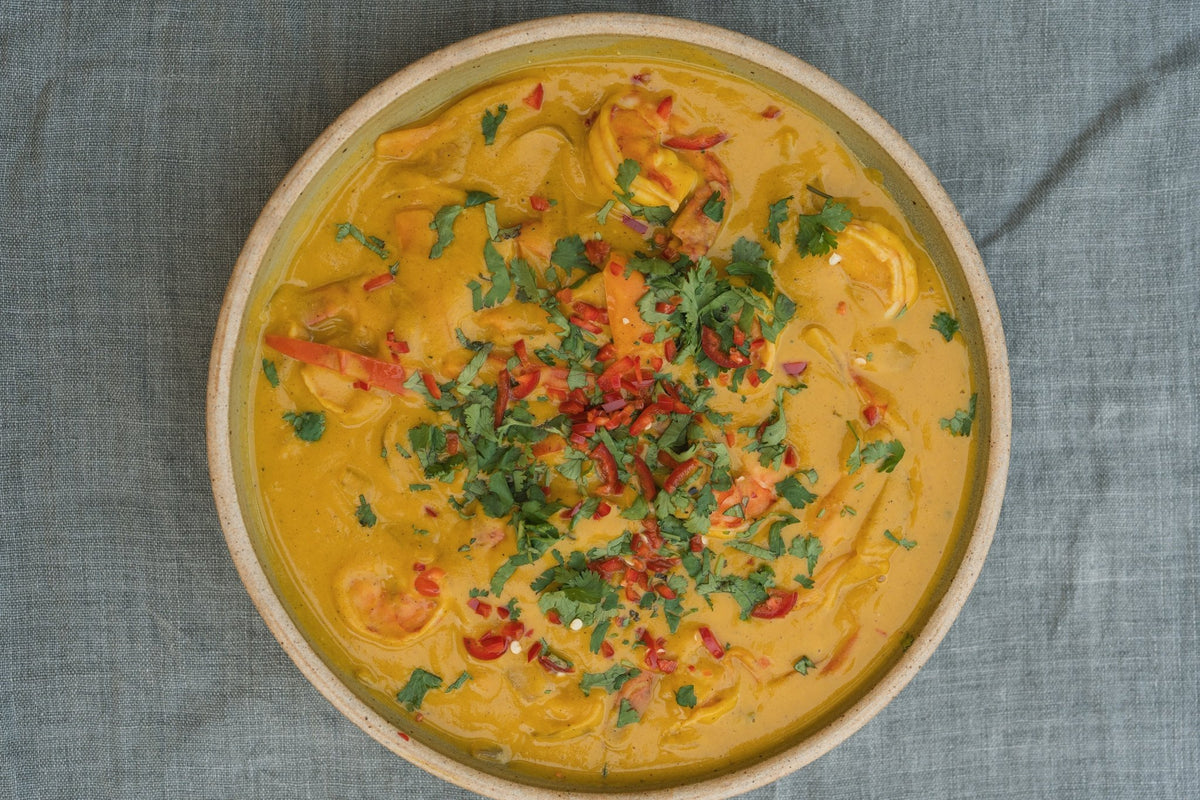
Butter Pumpkin Shrimp with Toasted Coconut, Lime and Fresno
- by Miriam Thom

From the Seatopia kitchen In-house
Recipe by Miriam Thom
Culinary Education at Seatopia — she develops the recipes that ship with the boxes and teaches the member cooking classes
Serves 4 · about 50 minutes · one sheet pan, one blender, one skillet
If you like butter chicken, you will love this butter pumpkin shrimp. It is sweet and creamy with warming spices and a bit of heat from the Fresno. Cilantro lime basmati and toasted coconut keep it feeling bright, fragrant and deeply satisfying.
Two things carry it. The sauce gets its body from roasted squash in a blender rather than an hour of reducing, and the shrimp go in at the very end — three or four minutes, judged by how far they curl rather than by the clock.
About 50 minutes
The pumpkin roasts and the rice cooks while you do everything else, so the hands-on time is closer to twenty minutes. The shrimp are the last four.
Serves 4
One 16 oz bag of shrimp, four 4 oz servings, over cilantro lime basmati. It halves cleanly if you are cooking for two and want leftovers of the sauce.
Blended, not reduced
Roasted kabocha and a can of coconut milk through a blender. That is where the body comes from — no long simmer, no cream.
Watch for the C
Shrimp are done when they curl into a loose C. A closed O means overcooked, and a thick sauce keeps cooking them after the heat is off.
Read the shape, not the clock
Three or four minutes is the guide, but shrimp go from perfect to rubbery in well under a minute, and a pan of hot sauce keeps cooking them after the heat is off. The reliable signal is geometry: as it cooks a shrimp draws itself into a C, and if it keeps going it closes into an O. C is dinner. O is a mistake you cannot undo.
Straight and translucent Not yet
Raw. Grey-blue and floppy, lying flat in the sauce. It will start to firm and turn opaque from the outside in within about a minute.
A loose C — opaque, still plump Pull it here
The shrimp has curled but the head and tail ends are still well apart. Opaque all the way through, pink outside. Take the pan off the heat now; carryover in the sauce finishes the job.
A tight C, edges firming Last chance
The gap has closed to about a fingertip. Still good if you serve immediately, but there is no margin left. If it is heading to the table in a few minutes, you have already gone slightly far.
A closed O Overcooked
Head touching tail. The flesh has squeezed out its moisture and gone springy and dense. Nothing recovers it — this is the texture people mean when they say they do not like shrimp.
Ratings are how far along the shrimp is, not how good. Because this sauce is thick and holds heat, pull the pan a shade earlier than you would from a dry skillet — the shrimp continue to tighten while you are spooning it out.

Chef Miriam Thom
50 minutes
If you like butter chicken, you will love this butter pumpkin shrimp. It's sweet and creamy with warming spices and a bit of heat from the Fresno. Cilantro lime basmati and toasted coconut keep it feeling bright, fragrant and deeply satisfying.
Serves 4 — one 16 oz bag of shrimp, four 4 oz servings. About 50 minutes.

Heat the oven to 425°F. Toss the pumpkin with the olive oil and a pinch of salt and roast for 20–25 minutes, until caramelised and tender.
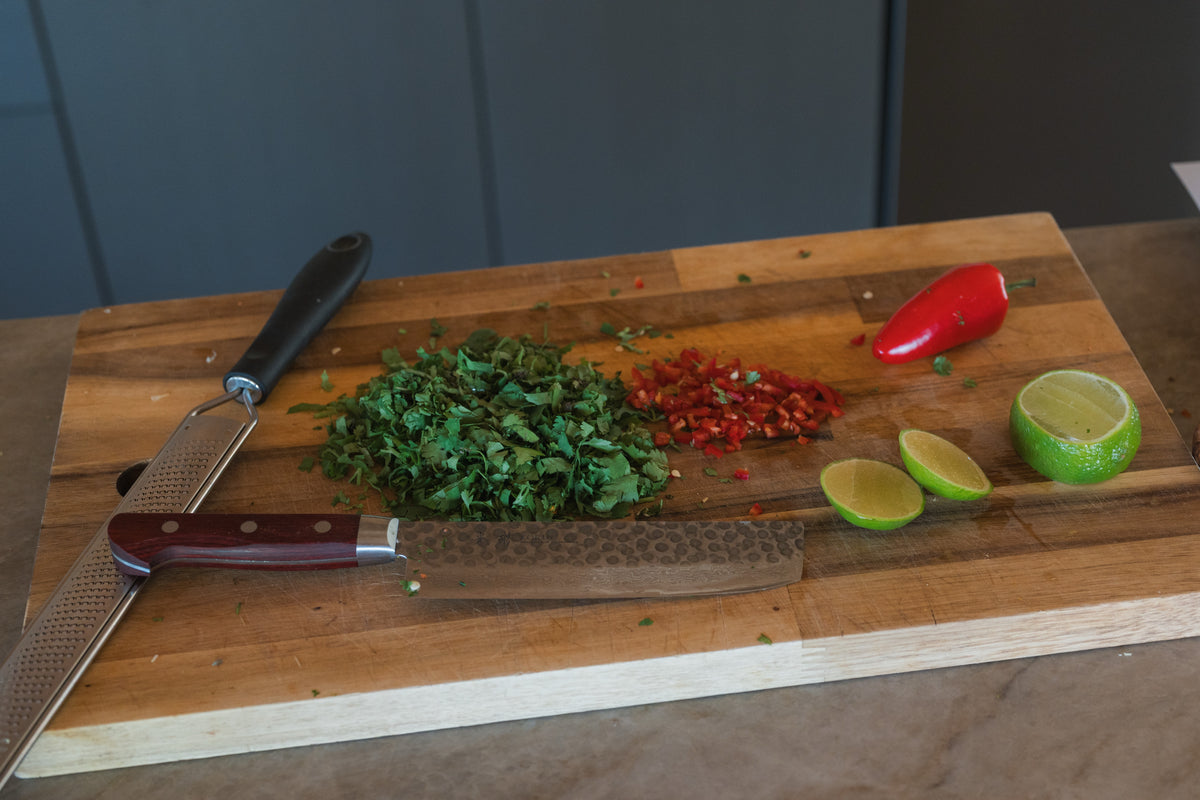
Meanwhile, cook the basmati according to package directions. Fluff it, then fold through most of the cilantro, the zest and juice of 1 lime and salt to taste. Cover and keep warm.
Toast the coconut flakes and pepitas in a dry skillet over medium heat, shaking often, until the coconut is golden and the seeds start to pop, 3–4 minutes. Tip them out and set aside — they catch fast, so don't walk away.
Reserve about ½ cup of the roasted pumpkin. Let the rest cool for a few minutes, then blend with the coconut milk, 1 tbsp butter, half the ginger, half the garlic, ½ tsp lime zest and a pinch of salt until smooth. Hot liquid builds steam in a blender — leave the lid vented and start on low.
Melt the remaining 2 tbsp butter in a large skillet over medium heat. Add the garam masala, crushed cardamom pods and the remaining garlic and ginger, and cook, stirring, for about 45 seconds, until fragrant. This is where the warming spice comes from — don't skip it. Add the red pepper and half the Fresno and cook 2–3 minutes, until softened.
Pour in the pumpkin-coconut sauce and simmer gently for 3–4 minutes. Stir in the vinegar and fish sauce, then taste and adjust with lime juice and salt. Fish out the cardamom pods.
Slip in the shrimp and simmer gently, stirring once or twice, for 3–4 minutes — just until they turn opaque and curl into a loose C. They keep cooking in the hot sauce, so pull them a shade early rather than late.
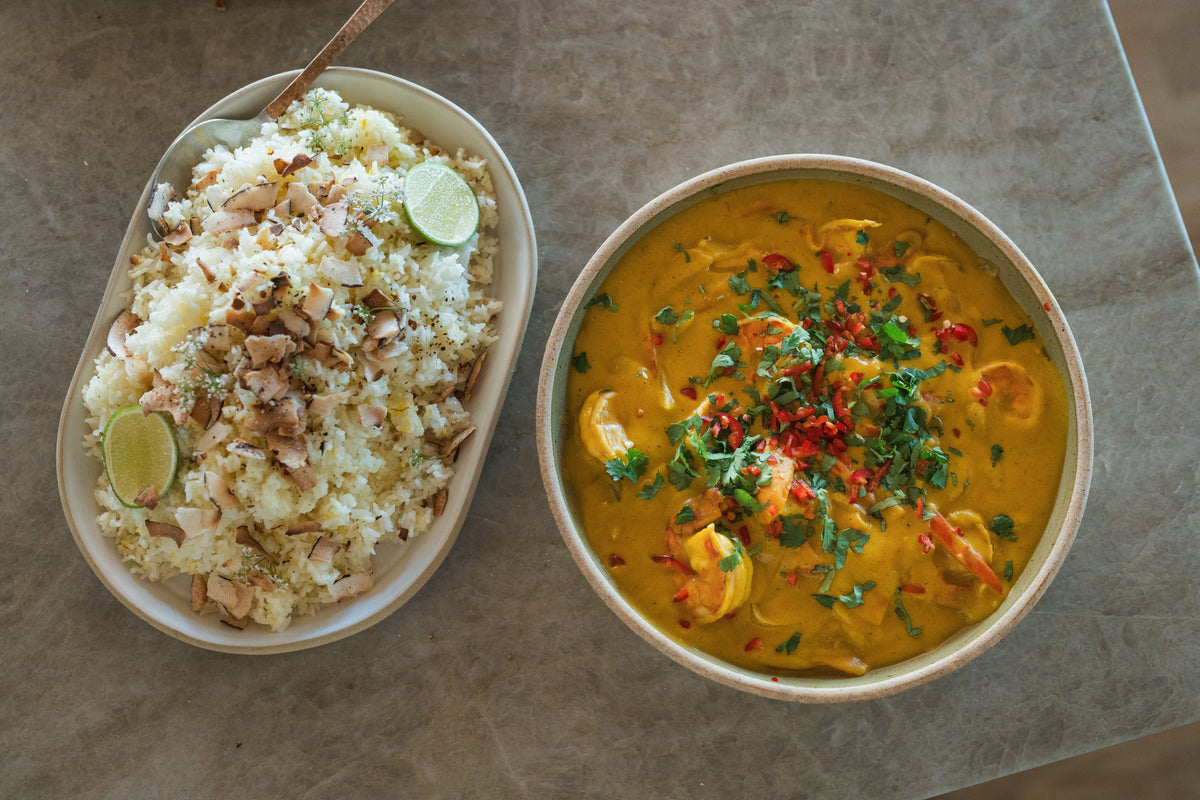
Spoon into a shallow serving dish and scatter with the reserved roasted pumpkin, the remaining Fresno, the last of the cilantro and the toasted pepitas.
Serve over the cilantro lime basmati with the toasted coconut. Cut the last lime into wedges for the table, and finish each plate with a generous squeeze.
Optional: if you can get cilantro flowers, scatter them over at the end — they're delicate and peppery and make the dish look like it came out of a restaurant.
One 16 oz bag of Mangrove Black Tiger Shrimp from Tarakan feeds four. Everything else is a greengrocer and a spice shelf — kabocha, coconut milk, garam masala and a couple of limes.
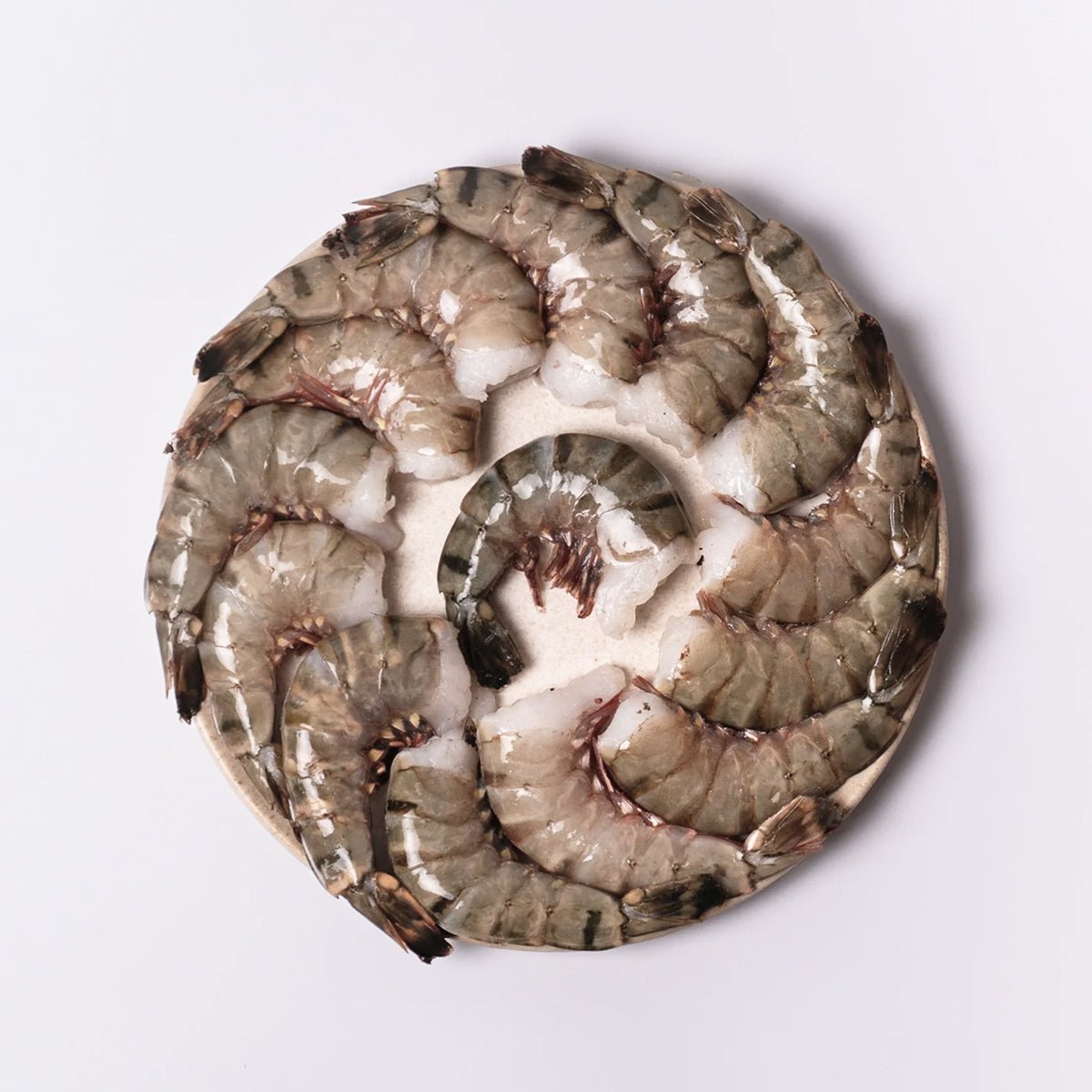
Sweet, briny shrimp with a natural richness, best enjoyed quickly seared for a delicate snap or pan-fried to preserve their depth.
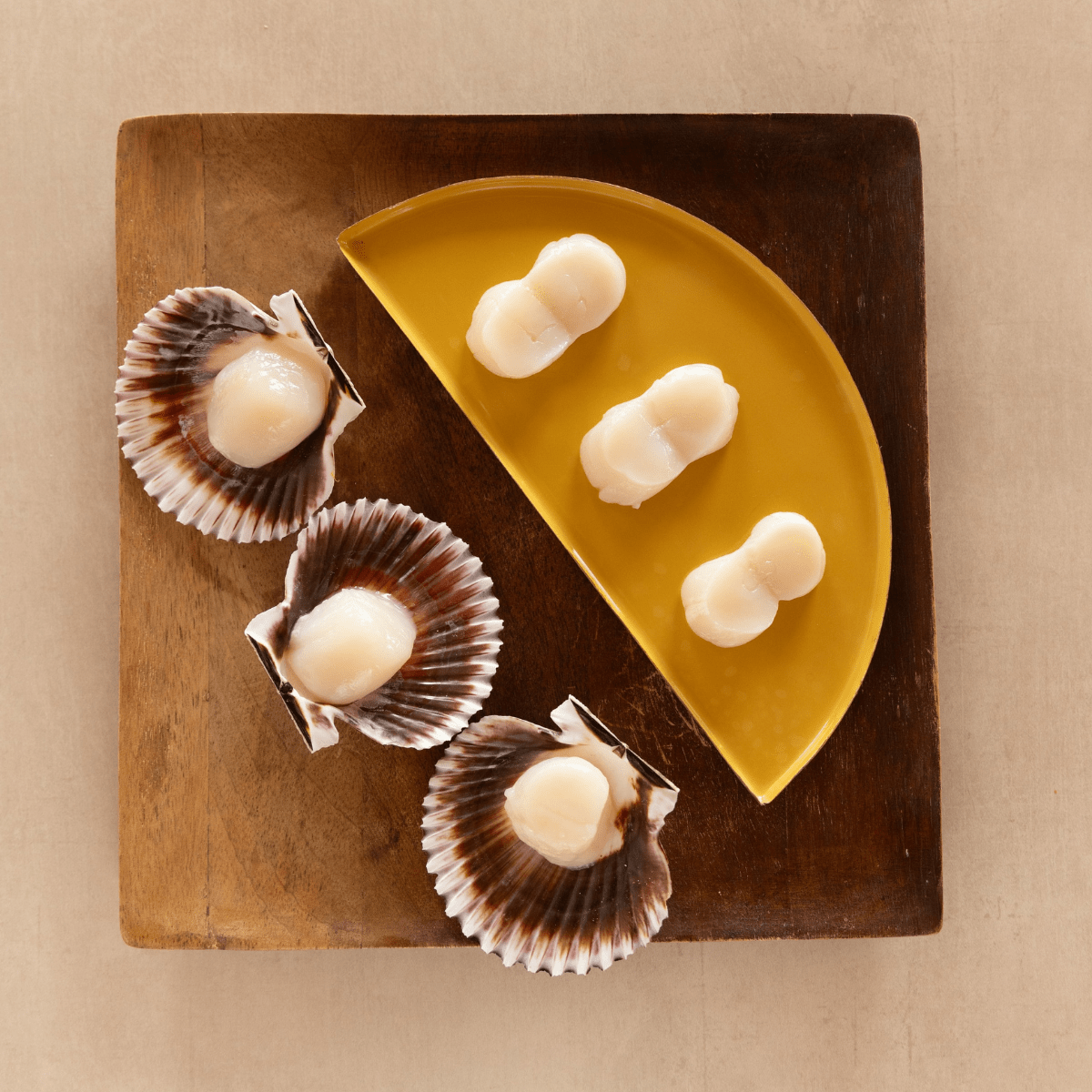
A celebration of clean flavor and coastal elegance. Contains salmon, whitefish, and peruvian scallops.

Freshwater elegance — tender, nutty, and superb when pan-fried with herbs or gently smoked
How the sauce actually gets built
Butter chicken gets its body from long simmering. This gets it from roasted squash put through a blender, which is why it takes fifty minutes instead of two hours. That means three separate moves, and doing them in the wrong order is the only way to get a flat, raw-tasting sauce.
425°F until the edges caramelise. That browning is where the sweetness comes from, and you cannot get it back later — simmered squash makes a sauce that tastes thin and vegetal no matter what you add to it.
Let the pumpkin cool a few minutes, then blend with the coconut milk on low before you go up. Hot liquid turns to steam in a sealed jug and pushes the lid off — keep it vented and hold a towel over the top.
Garam masala, crushed cardamom, garlic and ginger in butter for about 45 seconds, until they smell fragrant rather than dusty. Fat carries those flavours in a way liquid does not. Then pour the sauce in.

The method holds whatever you put through it — roast something sweet, blend it with something rich, bloom a warm spice in fat, and add the protein last.
| As written | Closest swap | If you are improvising | |
|---|---|---|---|
| The shrimp | 16 oz Mangrove Black Tiger Shrimp | Any raw peeled shrimp, same timing | Scallops — two minutes, turned once; or firm white fish in 1-inch pieces |
| The squash | 2 cups kabocha or sugar pumpkin | Butternut, which is sweeter and smoother | Sweet potato — denser, so thin the sauce with a splash more coconut milk |
| The richness | 1 can full-fat coconut milk | Coconut cream, thinned with water | Cashew cream, for something closer to a classic butter sauce |
| The spice | 1½ tsp garam masala + cardamom pods | Curry powder, with the cardamom kept | Cumin, coriander and a cinnamon stick, bloomed the same way |
| The heat | 1 Fresno chile, sliced | Red jalapeño, or half a serrano | A pinch of Aleppo stirred in at the end, for warmth without the bite |
| The grain | Cilantro lime basmati | Jasmine rice, same treatment | Warm naan or roti, and skip the rice entirely |
| The crunch | Toasted coconut flakes and pepitas | Toasted cashews or almonds | Fried shallots, which add salt as well as texture |
Everything up to the shrimp keeps. Roast the pumpkin, blend the sauce and bloom the spices, then refrigerate the finished sauce for up to three days — it thickens as it sits, so loosen it with a splash of water or coconut milk when you reheat. The toasted coconut and pepitas keep for a fortnight in a jar at room temperature.
Cook the shrimp fresh. They take four minutes, they are the one thing that cannot be reheated without going rubbery, and they are the reason to make this rather than a vegetable curry.
Black tiger shrimp are firmer and meatier than the small warm-water shrimp most curries are built on, which matters when the sauce is this thick — they stay distinct instead of disappearing into it. They also hold their snap through the four minutes of gentle simmering the recipe asks for, where a softer shrimp would go woolly.
Ours come from Tarakan, blast-frozen at harvest and vacuum sealed. Every supplier is tested before we approve them, then randomly audited to ensure consistent compliance with the Seatopia Standard — third-party lab tested for nutrition, mercury and microplastics, and sourced from best-in-class aquaculture.
By shape. A raw shrimp lies straight; a cooked one curls into a loose C; an overcooked one closes into a tight O. Pull the pan off the heat at the loose C — opaque through, still plump, with a clear gap between head and tail. The sauce is thick and holds heat, so they keep tightening after the burner is off.
You can, and it will taste noticeably flatter. Ground spices are fat-soluble — giving them 45 seconds in melted butter opens them up in a way stirring them into liquid does not. It is the single cheapest step in the recipe and the one that makes it taste like it took longer than it did.
With one precaution. Hot food turns to steam in a sealed blender jug and can force the lid off. Let the pumpkin cool for a few minutes first, fill the jug no more than two-thirds, remove the centre cap so steam escapes, hold a folded towel over the opening and start on the lowest speed before working up.
Butternut is the easiest swap and slightly sweeter; sugar pumpkin works too. Whatever you use, roast rather than boil it — the caramelised edges are where the sauce gets its depth, and boiled squash gives you a thin, vegetal sauce no amount of spice will rescue.
Mild to medium as written. One Fresno split between the sauce and the garnish gives warmth rather than burn. For less, seed the chile or use only the half that goes in early — the raw slices scattered at the end are the sharper hit. For more, add a second, or a pinch of cayenne with the garam masala.
Overnight in the refrigerator in the sealed pack, about 12 hours, then pat the shrimp dry. In a hurry, submerge the sealed pack in a bowl of chilled water for 20 to 30 minutes, changing the water once. Never at room temperature, and never in warm water.
Recipes from our kitchen and from the people who cook with us. Every Seatopia box includes a FREE virtual cooking class where we work through a dish like this one together.

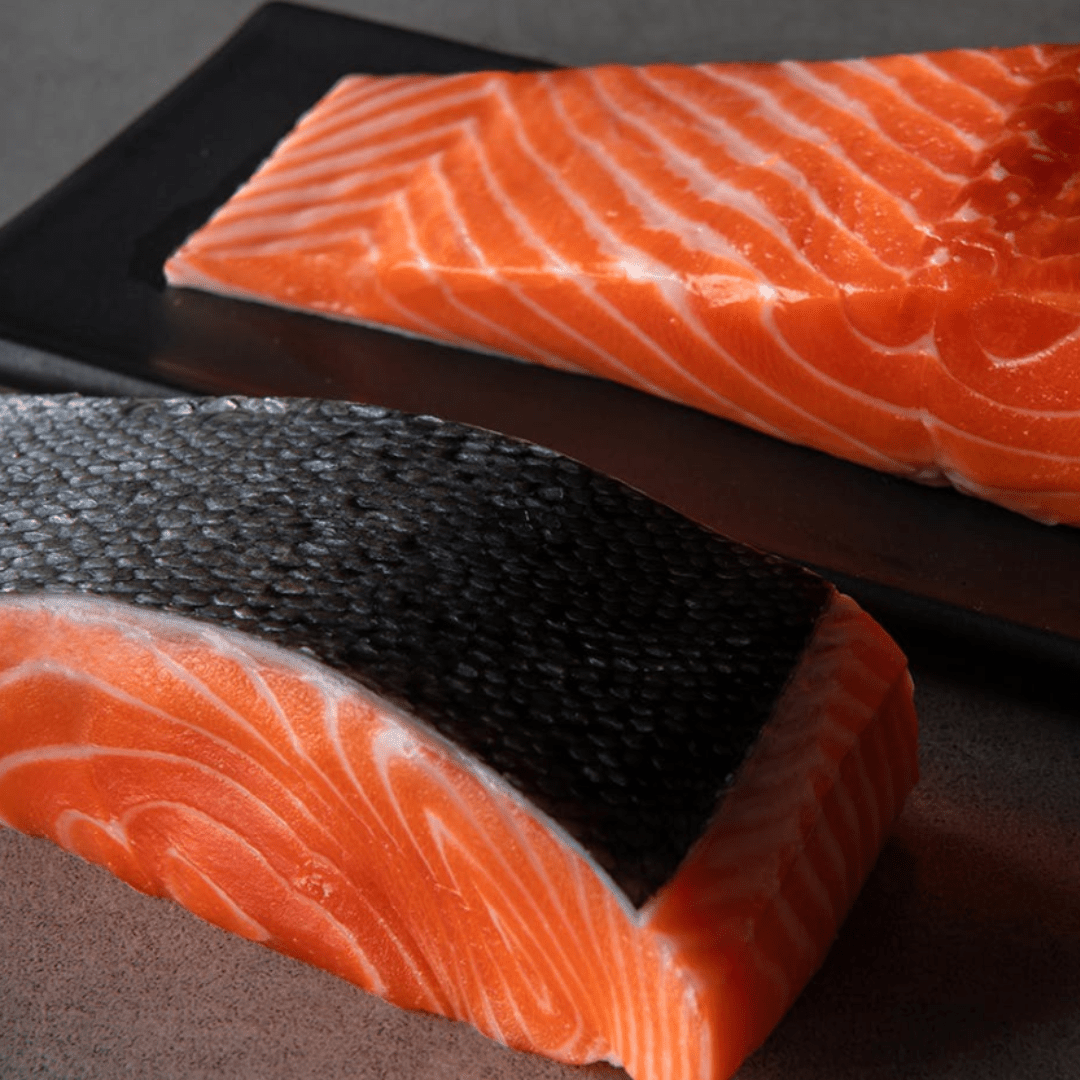
Rich flavor carrying oceanic depth and gentle sweetness across the palate. Contains a selection of King, Atlantic, and Steelhead.

A celebration of clean flavor and coastal elegance. Contains salmon, whitefish, and peruvian scallops.
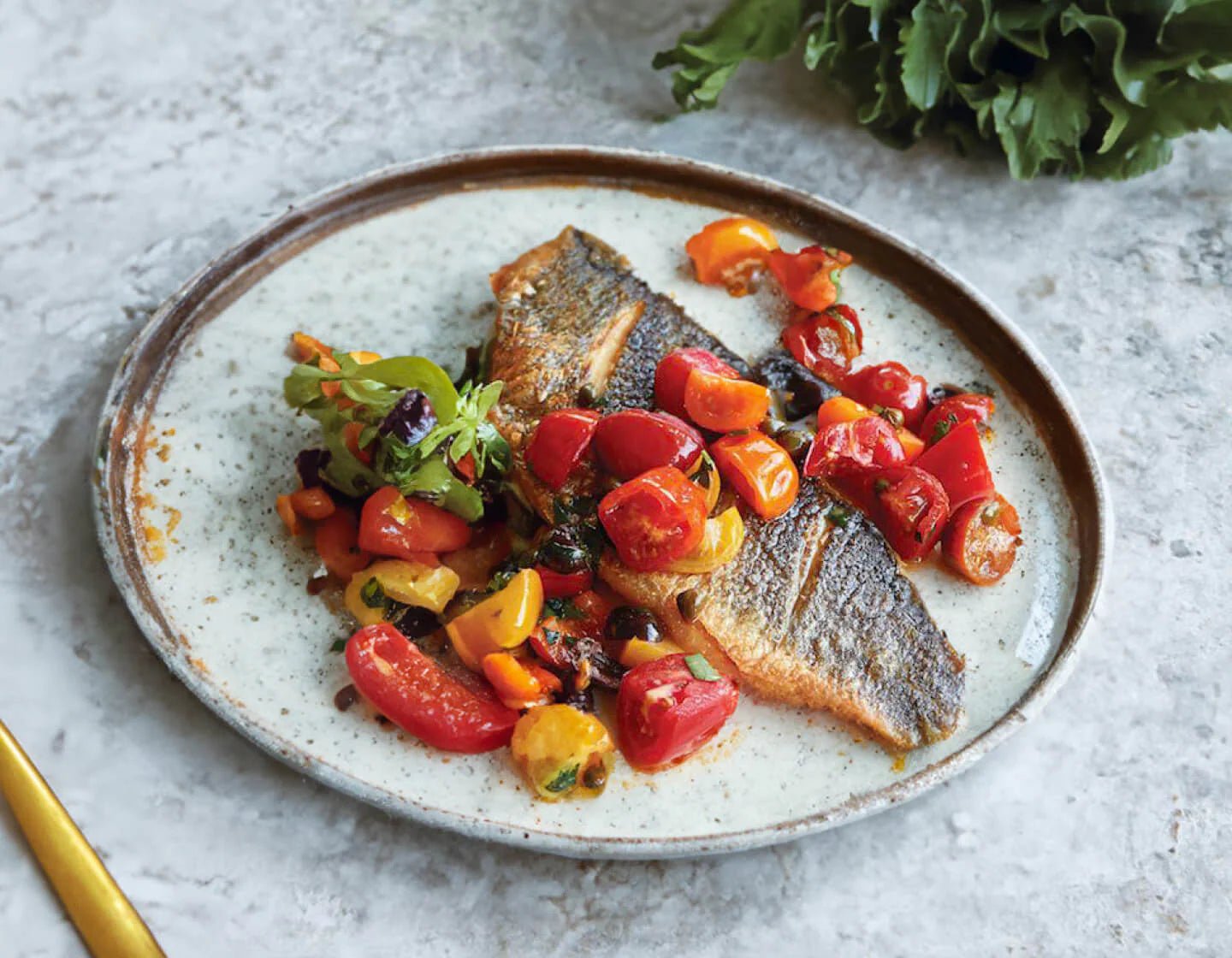
Expressive flavors from the clean, flavorful fish. Contains a selection of bream, branzino, yellowtail, and barramundi.