

Understanding Fats in Salmon (and Beef): A Guide for Health-Conscious Consumers
Let me introduce you to Ryan D, a recently hired employee at Seatopia. Ryan, a former marine and avid surfer, had been following a carnivore diet—big steaks, burgers, and plenty of red meat. He loved how it made him feel strong and energized. But recently, after doing a blood panel with Function Health (a service by Dr. Mark Hyman), Ryan found out his cholesterol levels were through the roof. His doctor recommended cutting back on saturated fats from all that red meat and switching to healthier fat sources. That's when Ryan started to rethink his diet and asked himself, “How do I keep eating animal protein, but in a way that’s good for my heart?”
That's where salmon comes into the picture. But before we dive into the world of fish, let’s talk about red meat for a moment. Not all red meat is the same. Just like there are differences between wild and farmed salmonids (Atlantic salmon, Pacific salmon, trout and Steelhead), there are key differences between pasture-raised and corn-fed beef. Both can affect your heart health, so let’s break down how these fats compare and why switching to salmon might be the best option for someone like Ryan—and you.
The Beef Breakdown: Pasture-Raised vs. Corn-Fed
1. Pasture-Raised Beef:
Pasture-raised beef (sometimes labeled "grass-fed") comes from cattle that live their lives on pasture, eating grass and natural forage. Our friends at Force of Nature is a great option. This type of beef has a healthier fat profile—lower in overall fat, higher in omega-3 fatty acids, and more conjugated linoleic acid (CLA), a fat that may help reduce inflammation and support metabolism. It’s a better choice for heart health, much like wild salmon.
2. Corn-Fed Beef:
Corn-fed beef, on the other hand, comes from cattle fed grains, particularly in the finishing stages. This increases their fat content, especially saturated fats and omega-6 fatty acids—both linked to higher cholesterol and inflammation. It’s still rich in protein, but the fat profile is less ideal for heart health, especially if eaten frequently.
Just like Ryan learned about the differences in beef, salmon also varies in fat content depending on how it's raised. Let's break down the types of salmon and their fat profiles.
The Salmon Breakdown: Wild, Farmed, and Seatopia
1. Wild Salmon:
Wild salmon is the avocado of the sea when it comes to fats. It’s lean, with a perfect balance of omega-3 to omega-6 fats. Wild salmon feed on krill and plankton, which keeps their fat profile natural and heart-healthy. For someone like Ryan, switching to wild salmon means enjoying animal protein that actually helps lower cholesterol, thanks to its high omega-3 content and balanced fat composition.
2. Conventional Farmed Salmon:
Conventional farmed salmon are raised in controlled environments and often fed diets that include soy and corn oils. These increase the fat content, particularly omega-6 fats. While farmed salmon is still better for heart health than corn-fed beef, the higher levels of omega-6 can lead to a less ideal balance, which may contribute to inflammation and higher cholesterol.
3. Seatopia Salmon:
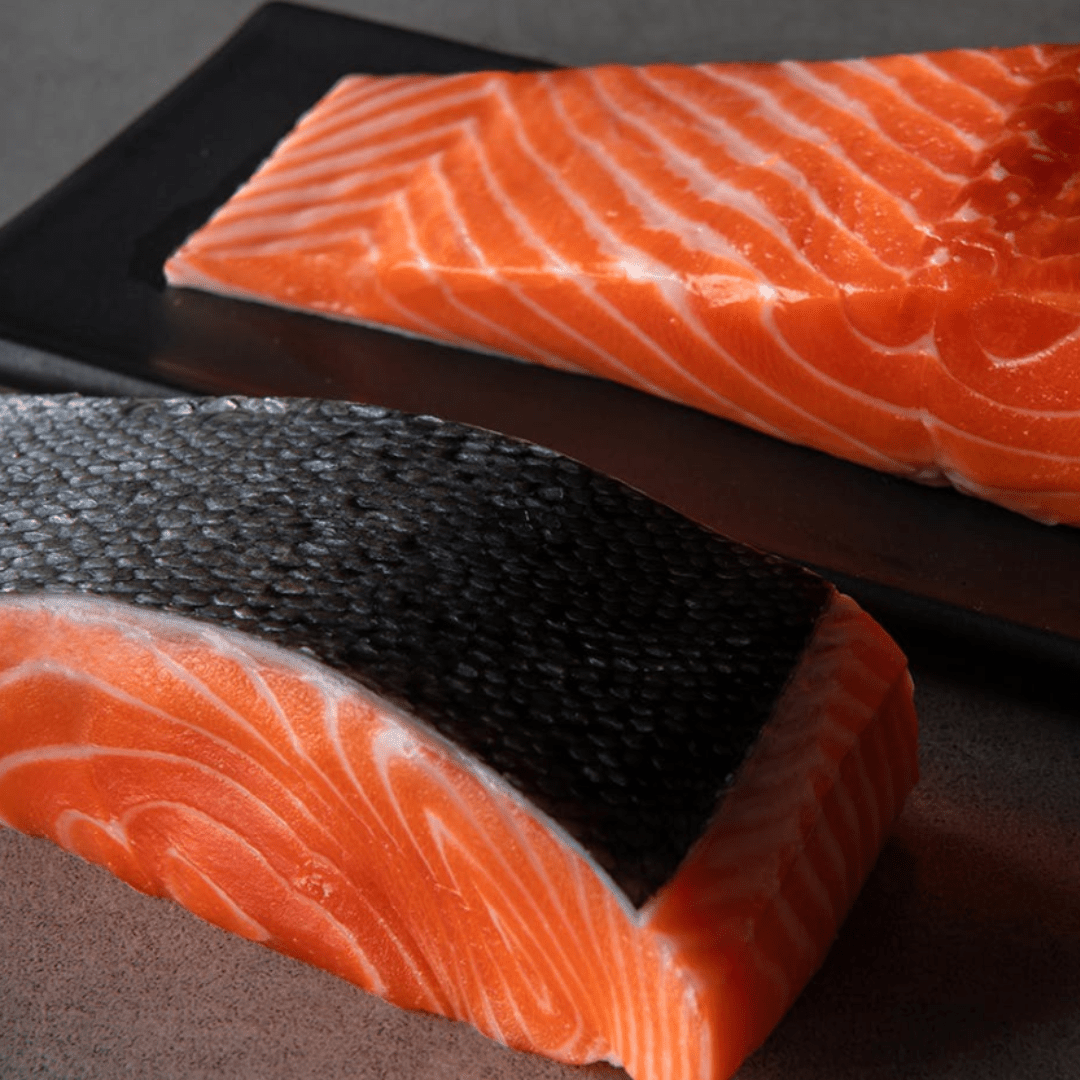
Seatopia’s selection of salmonids (salmon family) isn’t just a middle ground—it’s a leap forward in the evolution of sustainable seafood. From Atlantic and Pacific King Salmon to Coho Salmon, Steelhead, and Rainbow Trout, our offerings are raised on cutting-edge microalgae and insect protein diets, mimicking the natural diets of their wild counterparts while going beyond. With consistently higher levels of DHA and EPA (the essential omega-3s you want) than even wild-caught fish, these species are setting new standards for heart-healthy seafood. And it doesn’t stop there. Our salmonids are free of microplastics and contain lower mercury levels than wild-caught varieties, ensuring you’re enjoying the cleanest, purest seafood possible—without the environmental contaminants increasingly found in the ocean. Plus, each species we offer is raised in a truly sustainable and scalable system, so you can enjoy seafood that’s as good for your body as it is for the planet. Think of Seatopia’s salmon, trout, and steelhead as the future of seafood—delicious, nutrient-packed, and raised with a focus on both health and environmental responsibility. It’s the perfect blend of indulgence and mindful consumption, all in one incredibly healthy, mouth-watering bite!
Types of Fats in Salmon
To truly understand the health benefits, let’s quickly break down the three main types of fats found in salmon:
-
Saturated Fats (SFA):
These fats are often considered less heart-healthy, especially in large amounts. However, salmon—whether wild or farmed—contains only moderate levels of saturated fats compared to other animal proteins. -
Monounsaturated Fats (MUFA):
These heart-healthy fats help lower bad cholesterol and are abundant in all types of salmon. -
Polyunsaturated Fats (PUFA):
These include omega-3 and omega-6 fatty acids. Omega-3s (like EPA and DHA) are especially important for brain, heart, and joint health, and salmon is one of the best natural sources of these fats. Balancing omega-3s and omega-6s is key for reducing inflammation and supporting heart health.
Why Fats in Salmon and Beef Matter for People Like Ryan (and You)
For Ryan, who was used to eating a lot of corn-fed beef, switching to Seatopia salmon and even pasture-raised beef gave him all the protein he loved, without the heart health risks that come with too much saturated fat. The omega-3s in wild and Seatopia salmon (and pasture-raised beef) not only help lower cholesterol but also reduce inflammation. In contrast, the omega-6s in conventional farmed salmon and corn-fed beef aren't as heart-friendly, making it important to choose animal proteins wisely. It’s just like swapping butter for avocado—making a small change to healthier fats can make a big difference. By switching from corn-fed beef to pasture-raised beef or from red meat to the right kind of salmon, you’re making a heart-healthy move without sacrificing the enjoyment of a protein-rich meal.
Summary: The Avocado of the Animal Protein World
Just like avocados are known for being packed with “good fats,” wild and Seatopia salmon (and pasture-raised beef) are loaded with the good fats of the animal protein world. They’re rich in omega-3s, which help lower cholesterol and fight inflammation. For someone like Ryan, used to the high saturated fat content of corn-fed beef, switching to Seatopia salmon or pasture-raised beef can help keep cholesterol in check while still enjoying a hearty, protein-rich diet. Make the right choice, and your body—and your heart—will thank you!
But I said, “You’re good fat!”
Ryan's favorite Seatopia box for lowering this cholesterol:
Seatopia Salmon Lovers Box 



Share:
Branzino: A Heart-Healthy Choice in the Mediterranean Diet
FunctionHealth + Seatopia: Quantifiable Health Goals for 2025