



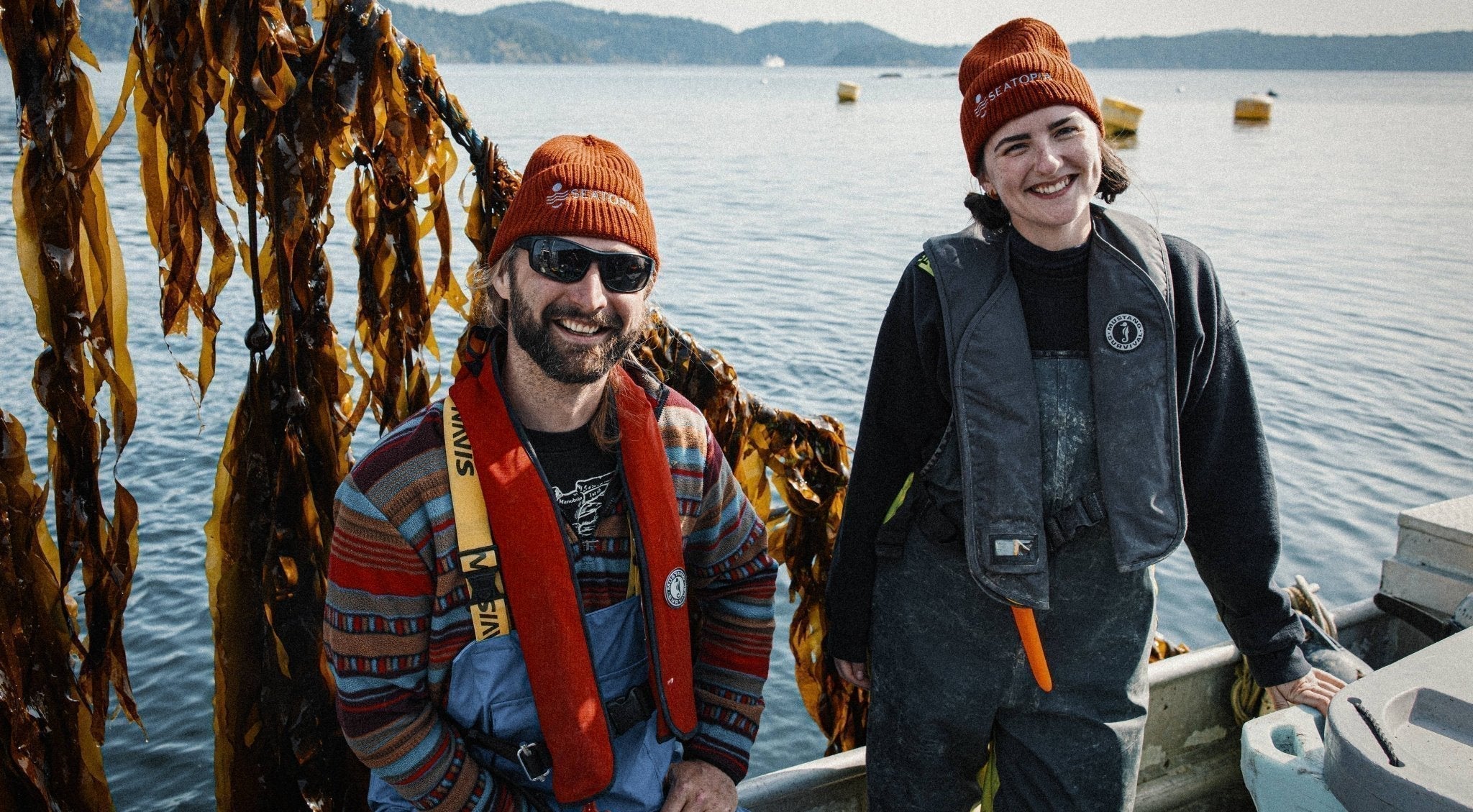
Today, we celebrate an incredible milestone in our journey to restore the oceans—and it’s a celebration that belongs to you, our Seatopia community.
Thanks to your support, we’ve successfully funded the planting of over 20,000 kelp trees in the pristine waters of British Columbia—creating our very first kelp forest. This achievement marks a new chapter in ocean regeneration, and we couldn’t be prouder of the positive impact we’re making together.
But this is just the beginning. The process of planting kelp is an intricate and awe-inspiring journey—one that began with sporophytes (baby kelp) on lines and has blossomed into a thriving underwater forest, providing shelter, food, and biodiversity for marine life. Here’s a behind-the-scenes look at how it all came together.
The Journey: From Sporophytes to Kelp Forest
The road to restoring kelp forests starts in a laboratory, where we carefully cultivate sporophytes—the tiny, immature kelp plants that will eventually grow into towering forests under the sea. These sporophytes are carefully placed on lines, where they’re nurtured until they’re ready to be planted in the ocean.
From there, the journey continues in the wild. We planted these young kelp lines along the coast of British Columbia, using precise GPS coordinates to ensure we’re creating the best possible foundation for the kelp forests. Over time, these lines begin to grow, and the kelp takes root in the ocean, anchoring itself to the seafloor, and growing taller with each passing day.
Witnessing the Transformation
The images below tell the story of how these tiny, fragile plants transformed into a vibrant, fully mature kelp forest. From the early days of planting to the growth stages, and finally to the mature forest, the process is nothing short of remarkable.
Phase 1: Planting Sporophytes
It all began with the careful planting of sporophytes on lines in the pristine waters of British Columbia. This initial step is critical—these young kelp are sensitive to their surroundings and require the perfect balance of water temperature, sunlight, and nutrients to thrive.

Phase 2: Early Growth and Monitoring
As the kelp grew, we began to monitor their development using time-stamped images. These early images show the kelp beginning to anchor itself to the seafloor and reach toward the surface, capturing the ocean’s energy and sunlight. During this phase, the kelp were also nurtured by the clean waters of the region, absorbing nutrients and CO2 to fuel their growth.


Phase 3: A Thriving Kelp Forest
Fast forward to today, and what was once a series of planted lines has now grown into a lush, fully mature kelp forest—a vibrant, thriving ecosystem that provides critical habitat for marine species like herring, salmonids, and countless other ocean inhabitants.
This kelp forest is doing what kelp forests do best: improving water quality, sequestering carbon, enhancing biodiversity, and even helping to offset ocean acidification.


A Community Effort
This achievement is not just a Seatopia milestone—it’s a community victory. Every member of the Seatopia community, every purchase, and every order made has helped fund this incredible restoration effort. Together, we’ve made ocean regeneration a reality.
You’ve helped us prove that ocean restoration is possible and that every small action adds up to a big impact. Whether it’s by choosing regenerative seafood or supporting projects like this one, you are part of the solution.
We’ve come a long way, but this is just the beginning. With your continued support, we’re excited to expand our efforts to restore even more kelp forests, enhance marine biodiversity, and continue making a positive impact on the oceans that sustain us.
What’s Next: A Future of Ocean Regeneration
As we celebrate the planting of 20,000 kelp trees, we’re looking ahead to the future. This project is just the first of many—we’re committed to scaling up our efforts to restore kelp forests, support regenerative aquaculture, and ensure that future generations of ocean life thrive.
Each kelp forest we restore is a step toward a healthier, more vibrant ocean, and with your support, we will continue to grow this movement.
Thank You, Seatopia Community
Thank you for being part of this journey. Together, we are regenerating the oceans, one kelp tree at a time. Let’s keep this momentum going and continue to make a real, lasting impact.
Join Us in the Movement
Want to learn more about how your support is helping to restore our oceans? Watch our latest video to see the full impact of our kelp restoration project and continue supporting ocean regeneration with every meal.













Share:
A Conversation on Regenerative Aquaculture & the Future of Clean Seafood
From Sustainability to Self: How the Ocean Taught Me That Food Is Medicine